 The Sports Guru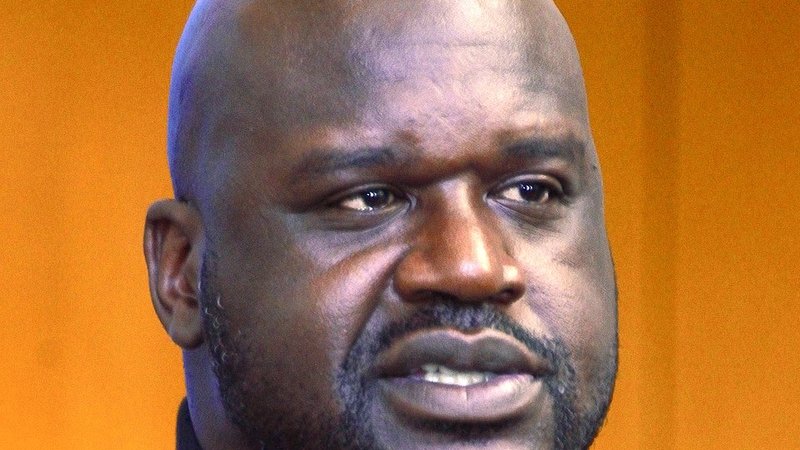
Alex McKechnie is arguably British sport's most remarkable unsung export: a Glasgow-born physiotherapist who arrived in North America in 1974 with $300, no contacts, and no plan, and ended up with six NBA championship rings, a patented rehabilitation product sold worldwide, and a treatment table that the greatest basketball players on the planet queued to get onto. This is the story of how he got there, and why, at 74, he is still very much in the game.
When Shaquille O'Neal, then the most dominant centre in the entire NBA, was sent to a physio's clinic in Vancouver in 1997 and told he would have to sit in the waiting room like everyone else, his entourage hung up the phone and flew straight back to Los Angeles. The following day, the Lakers rang to apologise. Alex McKechnie's response was short: Shaq could come to the clinic, and that was the end of it. They came. He treated O'Neal without surgery, and four days after that first consultation, McKechnie was on a plane to Los Angeles with a job offer in his pocket from one of global sport's most celebrated franchises.
That episode is, in miniature, the story of McKechnie's entire career. A man who has never chased the spotlight, who built his reputation on unconventional ideas and meticulous method rather than association with famous names, and who found that the famous names eventually came looking for him regardless. At 74, the Scotsman remains in active demand in the NBA, the holder of six championship rings and the first Briton to win one as either a player or a member of sideline staff.
The journey started about as far from the glitz of a Lakers courtside seat as it is possible to imagine. McKechnie grew up in Easterhouse, then one of the most deprived and dangerous districts in Glasgow. He had dreams of playing for Rangers, spent his youth with a football at his feet, and had no particular plan for what would come after. It was a family accident that changed the direction of his life entirely. A car crash that injured his father and brother introduced a teenage McKechnie to the world of physiotherapy, as he watched their slow, steady recovery with growing fascination. He went to study the discipline at a technical college in Leeds, qualified, and then made the kind of decision that takes either enormous courage or enormous naivety. On 7 September 1974, he packed up almost everything he owned, booked a one-way flight to Vancouver, and arrived with $300 and no job waiting for him.
Building a Method from Scratch
Within a week he had secured temporary hospital work. Within a month he was treating athletes across multiple sports at a university, and that environment pointed him towards the area that would define his career. Anterior cruciate ligament injuries were, at that time, effectively career-ending. Surgery could not reliably repair the damage, and the conventional wisdom held that a serious ACL tear meant the end of a sporting life. McKechnie was not content to accept that.
Working closely with injured athletes, he began to identify patterns. Cruciate injuries, he observed, were connected to weakness in core muscles and a lack of pelvic control. He built a rehabilitation programme around strengthening those areas, getting patients to work through exercises while wearing elastic resistance bands that made the relevant muscles work harder. It sounds straightforward now because it has become standard practice across sports medicine. At the time it was genuinely novel, and it produced results that attracted attention. The significance of that timing is worth noting: McKechnie was treating ACL injuries with core-focused protocols a full two decades before the wider sports medicine world began moving in the same direction.
His second significant innovation came not in a laboratory but in a park, while walking his dog. He noticed children rocking on spring-mounted horses and saw, in that simple mechanical principle, the blueprint for something useful: a wobble board that could develop core strength through controlled instability, training the body's muscles to maintain healthy alignment and overall stability. He built a prototype using a large engineering spring. Reebok recognised the commercial potential and licensed the design in 1999, taking it into mass production. The wobble board is now a fixture of physiotherapy practices and gyms across the world. McKechnie had the idea watching children play.
The Phone Call That Changed Everything
By 1997, McKechnie's reputation had spread quietly but effectively through the professional sports world. It reached Jerry West, the legendary general manager of the Los Angeles Lakers, at precisely the moment West needed it most. O'Neal had sustained a strained abdominal muscle and was facing surgery with a recovery time of up to ten months. The Lakers' entire title ambition was built around their enormous centre, and the prospect of losing him for that long was serious. McKechnie had recently treated Anaheim Ducks ice hockey player Paul Kariya for a comparable injury and got him back without an operation. West wanted that outcome for O'Neal.
What followed has become one of the more entertaining stories in McKechnie's telling. O'Neal arrived at the Vancouver clinic with bodyguards, friends, coaches, and trainers in attendance. McKechnie, who had already refused to rearrange his schedule for the initial approach and insisted O'Neal come to him rather than the other way around, sat down with his famous new patient and, as he puts it, acknowledged to himself that things could go in any direction from that point. The prescribed Core-X treatment, based on achieving alignment across different muscle groups throughout the body, was not the kind of programme O'Neal would have encountered before. It was unconventional, demanding, and at odds with the surgical solution most had assumed was inevitable. For a player of O'Neal's size and the specific demands his frame placed on surrounding musculature, addressing alignment rather than simply the injured tissue itself was a meaningful distinction.
A Career Defined by Results, Not by Names
What makes McKechnie's story genuinely unusual is that the famous names on his treatment table are almost incidental to the actual achievement. Kobe Bryant, Pau Gasol, O'Neal: these are not the story. The story is the decades of accumulated thinking that went into developing methods which nobody else had tried, which the established sports medicine world had not yet arrived at, and which turned out to produce outcomes that no surgeon could reliably match at the time McKechnie was pioneering them.
There is a particular kind of innovation that happens when someone arrives in a field without the full weight of existing orthodoxy behind them. McKechnie came to sports physiotherapy from outside the elite sporting world, worked with university athletes rather than professionals, and had the freedom to look at problems differently. The elastic band exercises were not the product of laboratory research. The wobble board was inspired by a children's playground. His approach to O'Neal's injury was based on principles developed over twenty years with far less glamorous patients. That is not a coincidence. It is precisely what allowed him to see things that specialists embedded within existing systems had not yet noticed.
His decision to hold firm with O'Neal and refuse to reshape his working day around the star's preferences speaks to the same quality. McKechnie's leverage was never contractual. It was reputational. By 1997, he had already demonstrated that his methods worked, and that gave him the confidence to insist on his own terms. The Lakers, having seen what he did for Kariya, understood the calculation and accepted it. Four days after treating O'Neal, McKechnie was in Los Angeles being offered an exclusive arrangement with one of the world's most high-profile sports organisations.
Six Rings and Still Going
The move to the Lakers placed McKechnie at the centre of one of the most successful periods in NBA history. To sit nightly in the courtside seats occupied by the coaching and training staff during that era was, as he describes it, comparable to a front-row position at a major title fight. O'Neal and Kobe Bryant were at the peak of their powers. The atmosphere in the arena on big nights was unlike anything European sports could offer. And throughout it all, McKechnie was the physio in the background, the one keeping the key bodies functional when the schedule and the physical demands of the NBA season made that genuinely difficult. The NBA's 82-game regular season, played across roughly six months with frequent back-to-back fixtures and extensive travel, places a load on soft tissue and joints that has no real equivalent in British professional sport. Keeping elite bodies available night after night is not a minor task.
Six championship rings over the course of his NBA career makes him, in a very specific and rarely noted statistical sense, one of the most decorated British figures in the history of American professional sport. No British player has won an NBA title. No British member of sideline staff had won one before McKechnie. He arrived in North America with nothing, built his methods from first principles, and accumulated a record that nobody from these islands has come close to matching in basketball.
Verdict: A Career Worth Knowing About
The arc of Alex McKechnie's career is a reminder that innovation in sport does not always come from within the established system. His most significant contributions, the resistance-band rehabilitation approach and the wobble board, both emerged from lateral thinking applied to problems that conventional medicine had struggled to solve. Neither required a large research budget or institutional backing. They required someone willing to look at things differently and trust what they were seeing in their patients' recovery.
At 74, the fact that McKechnie is still in active demand says something important about the durability of his methods. The NBA is a young person's environment, perpetually cycling through new talent, new staff, and new approaches. For someone who has been in the game for five decades to remain relevant is not something that happens through reputation alone. It happens because the methods still work, and because the knowledge accumulated over that length of time is not easily replicated.
From Easterhouse to six rings is a journey that defies straightforward summary. What is clear is that McKechnie arrived in North America in 1974 with $300, a qualification, and a willingness to try things nobody else was trying, and that this combination turned out to be worth considerably more than either he or the Lakers could have predicted on that first awkward afternoon in Vancouver when Shaquille O'Neal's limo driver was told to wait his turn.
Frequently Asked Questions
The article does not detail the precise treatment techniques used on O'Neal, but McKechnie's approach was grounded in his core-strengthening and pelvic-control rehabilitation methods rather than surgical intervention. The outcome was swift enough that within four days of the first consultation, McKechnie was offered a position with the Los Angeles Lakers and boarded a plane to begin what would become a career-defining role.
McKechnie identified a connection between ACL injuries and weaknesses in core muscles and pelvic control, and built a rehabilitation programme around addressing those areas using elastic resistance bands. This was genuinely novel at the time, as the prevailing view held that a serious ACL tear was effectively career-ending. He was working with these core-focused protocols roughly two decades before mainstream sports medicine began adopting similar methods.
The idea came to him during an ordinary walk in a park with his dog, when he watched children rocking on spring-mounted horses and recognised the mechanical principle behind that movement as something with therapeutic potential. This observation led him to develop what became a wobble board-type device, which he later patented and which is now sold worldwide.
The article does not cite a single definitive reason for the move, presenting it as a bold personal decision rather than one driven by a specific opportunity. He arrived on 7 September 1974 with only $300, no job arranged, and no contacts, securing temporary hospital work within a week of landing.
McKechnie had grown up with ambitions of playing football for Rangers and had no clear professional direction beyond that. A car accident involving his father and brother introduced him to physiotherapy as a discipline, and watching their gradual recovery sparked a lasting fascination that led him to study at a technical college in Leeds.
Sources: Profile and interview material from BBC Sport's coverage of Alex McKechnie, published April 2026.