 The Sports Guru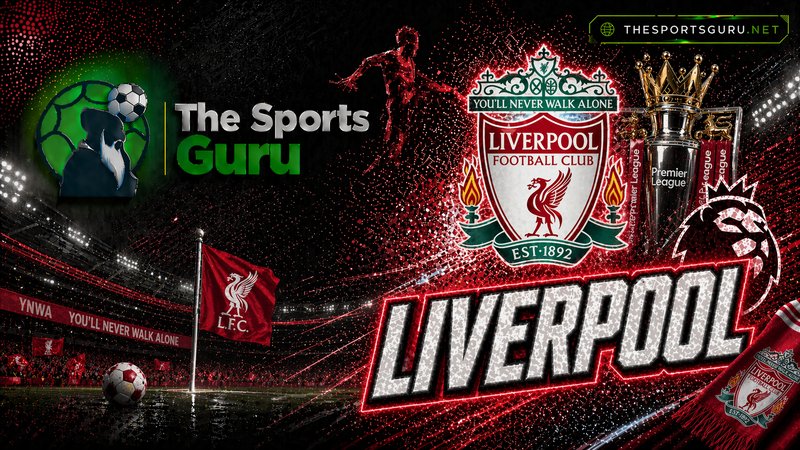
Arne Slot arrived at Anfield as the steady hand tasked with following a legend, and promptly won the Premier League at his first attempt. Twelve months on, he has been sacked. This piece examines the tactical intelligence that made his first season click, the grief and chaos that defined the summer that followed, and whether a record transfer outlay ultimately accelerated rather than prevented his exit.
Twelve months after Arne Slot lifted the Premier League trophy at his first attempt, Liverpool have dismissed him. The scale of that reversal is difficult to overstate. Title-winning managers do get sacked, but rarely from a position of such apparent strength, and almost never at a club whose identity has long been bound up with institutional patience and continuity.
The obvious comparison points carry an important caveat. Chelsea dismissed Carlo Ancelotti, Jose Mourinho and Antonio Conte in swift succession after comparable successes, but Roman Abramovich's ownership was a category of its own, an environment in which no result ever guaranteed security. Leicester City parted with Claudio Ranieri in February 2017, just nine months after his side produced one of the most improbable title wins the division has ever seen, doing so when the club sat only one point above the relegation places. These are the precedents, and none of them reflects well on the clubs involved. Yet the argument can still be made that Slot's exit is more striking than any of them. Liverpool spent approximately £450m reinforcing his squad in the summer after the title win. That is not the action of a board losing faith. Something went wrong at extraordinary speed.
Understanding how requires separating three distinct threads: the genuine quality of what Slot built in year one, the grief and disruption that engulfed the club across the summer, and whatever unravelled in year two. The source material for this piece covers the first two in considerable depth. The third, the precise shape of the collapse, is where the story remains incomplete.
A Title Built on Tactical Intelligence, Not Inheritance
The reductive reading of Slot's first season goes something like this: Jurgen Klopp left behind a ready-made squad, the Dutchman sat in the dugout and collected a trophy. That reading is lazy, and it does Slot a genuine disservice.
Yes, Klopp himself had described the group he handed over as Liverpool 2.0. Yes, Slot's only addition to the starting XI was Federico Chiesa, signed from Juventus for £10m. And yes, the squad had finished nine points off the title pace when Klopp departed. Something had to change, and it did, because of decisions Slot made rather than decisions that were made for him.
The most telling of those decisions concerned Ryan Gravenberch. Liverpool's primary midfield target in the summer of Slot's appointment was Real Sociedad's Martin Zubimendi, now at Arsenal. When that deal collapsed at the final stage, after Zubimendi chose to remain in La Liga, the reaction among parts of the fanbase was close to panic. Slot responded by promoting his compatriot Gravenberch, a player who had underperformed under Klopp, into the deep-lying role that had been earmarked for the Spaniard. Gravenberch was outstanding. The platform he provided allowed Liverpool to shed some of the high-wire unpredictability of the Klopp years and become a more controlled, cohesive unit. What made that call so instructive was that Slot was asking Gravenberch to suppress the more expansive, box-to-box instincts that had made him look ill-suited to Klopp's system, and replace them with disciplined positional intelligence. Getting a technically gifted player to accept a more restricted brief, and to thrive within it, is a mark of genuine coaching authority. The title was won by 10 points, with four games to spare, having lost only twice before the job was sealed with victory over Tottenham Hotspur.
Slot also repositioned Luis Diaz. The Colombian winger is gifted and occasionally unpredictable; playing him as a striker was not an obvious call, and it was not his natural position. It suited him regardless. He became a consistent match-winner in the role. Mohamed Salah, meanwhile, produced what was described as arguably his finest season as the squad bought into the new methods collectively. That collective buy-in is not something that falls from the sky. Managers earn it. Slot earned it.
The comparison some Liverpool supporters reached for when Slot arrived was a flattering one: the calm, methodical Bob Paisley following the larger-than-life Bill Shankly. It was always a stretch, but it spoke to what fans hoped they were getting. In year one, the evidence supported the parallel.
A Summer the Club Would Give Anything to Forget
Liverpool's 20th league title, the one that drew them level with Manchester United, was supposed to carry a whole summer of satisfaction behind it. The title parade through the city was everything supporters had imagined. Red smoke engulfed the Liver Birds above the Pier Head. The streets were full.
Then Paul Doyle drove his car into those same streets. He crashed into supporters on Water Street during the celebrations, injuring more than 130 people. Doyle subsequently pleaded guilty to 31 charges, among them 17 counts of attempting to cause grievous bodily harm with intent, nine counts of causing grievous bodily harm with intent, three counts of wounding with intent, as well as dangerous driving and affray. He was jailed for 21 years and six months. The horror of it sat alongside the memory of a joyful afternoon, and neither cancelled the other out.
Worse followed. On 3 July, Diogo Jota, 28, was killed in a car crash in the Spanish province of Zamora, along with his 25-year-old brother Andre Silva. Jota was not merely a popular player. By all accounts he was a central figure in the dressing room, genuinely loved by team-mates and supporters alike. Liverpool fans sing his name in the 20th minute of every game, the number he wore on his back. Andrew Robertson referenced his close friend publicly after Scotland qualified for the World Cup. The grief at the club has been largely private, which in some ways makes it harder to assess from the outside. What is clear is that it was, and remains, devastating.
It would be reductive to suggest that the trauma of that summer explains everything that followed in year two. Footballers and managers are professionals who continue to operate through grief, as Jota himself did through difficult personal moments during his career. But to ignore the emotional weight carried into pre-season would be equally wrong. A squad is not a machine. Pre-season is precisely the period when a manager sets the tone, builds team shape, and integrates new signings; doing all of that while a dressing room is processing collective bereavement is a fundamentally different task from doing it in normal circumstances. The human cost of what happened between the final whistle of the title-winning campaign and the opening of the new one was severe, and it would have tested any group.
The Salah Rupture and Its Consequences
Whatever the effect of the summer's grief, at least one of the fractures in Slot's Liverpool was structural rather than circumstantial. The relationship between Slot and Mohamed Salah deteriorated into something that became publicly damaging. The Egyptian, who had produced arguably the finest individual season of his career in 2024-25 as the squad united behind Slot's methods, turned sharply. Two public outbursts, one in an interview and one on social media, undermined Slot's authority in a way that is almost impossible to contain once it has happened. Salah subsequently announced that this would be his final season at Anfield after a magnificent career at the club.
The significance of that rupture goes beyond the football. When the most decorated player at a club breaks publicly with the manager, it shifts something in the dressing room dynamic regardless of how other individuals react. Other players must choose, consciously or not, where they stand. The cohesion that defined year one, the sense of a squad buying in as one, becomes much harder to sustain when one of its central figures has declared himself opposed. Slot had built something real in his first season. Salah's public hostility threatened to dismantle it from within. It is also worth noting that Salah's buy-in had been one of the more striking features of year one; a player of his seniority and contract status choosing to remain publicly aligned with a new manager is never guaranteed, which made the reversal in year two all the more corrosive.
Managers who face that situation have very limited options. They can isolate the dissenting player, which risks losing the performance that comes with him. They can attempt a private reconciliation, which requires both sides to want one. Or they can absorb the reputational damage and hope the squad holds together regardless. None of those options is comfortable, and there is no guarantee that any of them works.
What the £450m Question Cannot Yet Answer
The investment made in the squad following the title win was extraordinary by any measure. Approximately £450m was committed in a single summer. For a club that had spent carefully and strategically under Klopp, this represented a different kind of ambition, or perhaps a different kind of anxiety. Either way, the money did not produce the outcomes the board required.
There is a pattern worth noting in the history of the Premier League era: title-winning managers who are reinforced heavily after their success and then struggle tend to fall victim to a specific problem. The players brought in for substantial fees carry expectations that disrupt whatever social and tactical equilibrium produced the championship. The new arrivals are not always aligned with the methods that worked. The team becomes harder to organise, not easier. This matters particularly at a club like Liverpool, where Slot's first season had been defined by low levels of individual ego and a clear collective identity; the more expensive the incoming players, the more actively that identity needs to be managed and protected. Whether that applied here cannot be confirmed from the available reporting, but the pattern is real and it fits the timeline.
What can be said with confidence is that the £450m was not sufficient insulation. A club that spent that sum then dismissed its manager anyway either misjudged the investment, misjudged the manager, or found itself overtaken by events, possibly all three. The honest answer, at this stage, is that the full picture of year two remains incomplete.
Verdict: A Cautionary Tale About the Fragility of Success
Arne Slot leaves Liverpool with a Premier League title on his record and a sacking to follow it. The title was earned, not inherited: he made specific tactical changes, trusted unfashionable calls on his own players, and held his nerve when external pressure was at its most intense. The Gravenberch decision alone, converting a perceived underachiever into a title-winning midfielder by simply asking him to do the job properly, is the kind of call that defines a head coach's credibility.
That credibility evaporated inside twelve months. A summer of genuine tragedy, a public falling-out with the club's most important player, and a transfer outlay so vast it created its own pressures combined to produce an outcome that nobody predicted when the confetti settled at Anfield in the spring. The club that prided itself on stability dispensed with a champion faster than almost anyone in the modern era.
For Slot personally, the Liverpool story is genuinely painful: a first-season achievement that would have defined most managerial careers, followed by a collapse he could not arrest. Whether the circumstances were primarily of his making, or whether a different head coach would have fared any better in a summer bookended by a tragic parade and the death of a beloved team-mate, is a question supporters will argue about for years. What nobody can dispute is that the gap between the high of May and the dismissal that followed was one of the shortest and most brutal in the history of title-winning management in England.
Frequently Asked Questions
The article presents that outlay as evidence that the board were not losing faith at the point those deals were sanctioned. The suggestion is that whatever caused the breakdown happened rapidly and after that investment was committed, which makes the timeline of the collapse all the more difficult to explain.
The most significant shift was deploying Ryan Gravenberch in a deep-lying midfield role, which gave Liverpool greater control and reduced the high-wire unpredictability that had characterised the Klopp era. Slot also repositioned Luis Diaz, asking both players to operate within more disciplined positional briefs than they had previously been given.
The article cites Carlo Ancelotti, Jose Mourinho and Antonio Conte at Chelsea, and Claudio Ranieri at Leicester, as the closest precedents. It argues that each of those cases involved mitigating context, whether the particular nature of Roman Abramovich's ownership or Leicester sitting near the relegation zone, whereas Slot's exit followed a record spending spree and came from a position of apparent strength.
Zubimendi, then at Real Sociedad, was Liverpool's primary midfield target but chose to remain in La Liga at the final stage of negotiations and subsequently joined Arsenal. Rather than pursue an alternative signing, Slot promoted Gravenberch into the role, a decision the article presents as a demonstration of coaching authority given how poorly the Dutchman had fitted Klopp's system.
The article is explicit that this remains the incomplete part of the story. It identifies three threads worth separating, the quality of year one, the grief and disruption of the following summer, and the collapse of year two, but acknowledges that the source material covers only the first two in any depth.
Sources: Reporting draws on UK sports press coverage of Liverpool FC's 2024-25 season and its aftermath, with competition records verified against official Premier League sources.