 The Sports Guru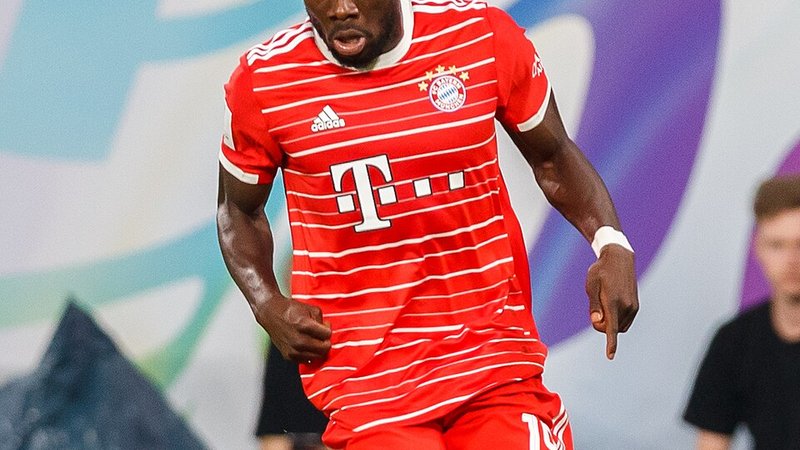
Canada have never won a point at a World Cup, but with home support across all three group fixtures in 2026, this is the most realistic opportunity the nation has ever had to reach the knockout rounds. Group B contains a clinical Swiss side, a Qatar team built on remarkable domestic ambition, and a Bosnia and Herzegovina outfit that stunned Italy to get here. We break down every team, the key players, and what this group means for the co-hosts.
For forty years between 1986 and 2022, Canada's World Cup story was one of absence. Their return to the tournament in Qatar produced three defeats, no points, and a single goal in a 4-1 hammering by Croatia. Now, in the summer of 2026, Canada return as co-hosts, and for the first time they will play all three group games in front of their own supporters. The difference in context could hardly be more stark, and the weight of expectation that comes with it has never been heavier.
Group B draws together four sides at very different stages of their international development. Switzerland are the seasoned European professionals, consistently reaching the last sixteen but unable to push beyond it. Qatar arrive as the group's longest shot, a team ranked 56th in the world still constructing the credibility of their programme. Bosnia and Herzegovina come in as perhaps the most dramatic presence of all, having ended Italy's World Cup campaign in a penalty shootout just weeks ago. And then there is Canada, ranked 30th, carrying the hopes of an entire nation and the scrutiny that co-hosting the planet's biggest sporting event invariably brings.
Jesse Marsch, the American coach who has sought to instil a direct, physical and high-tempo approach, believes his side's attributes are genuine and not simply the product of advantageous draw circumstances. Canada open their tournament against Bosnia and Herzegovina on 12 June in Toronto, and what happens in that first fixture will shape the group's entire dynamic.
Canada: History, Hope and the Home Advantage
Canada's two previous World Cup appearances, separated by 36 years, offer a useful context for understanding just how significant this moment is. In Mexico in 1986, they were eliminated without scoring a single goal. In Qatar, they at least registered on the scoresheet when Alphonso Davies converted against Croatia, but three defeats meant another group-stage exit. The pattern of early elimination is the one Marsch has been tasked with breaking.
What makes 2026 genuinely different is not only the home crowd but the quality of the squad itself. Davies, operating for Bayern Munich at the highest level of club football, is the headline name and the most naturally gifted footballer Canada have ever produced. Alongside him, Juventus forward Jonathan David offers a goalscoring threat of genuine Serie A pedigree, while Cyle Larin, based at Southampton, provides physical presence in attack. The challenge for Marsch is not whether the individual talent exists but whether the collective can function under the specific pressure of a tournament played at home. That distinction matters: individual quality and collective tournament resilience are not the same thing, and Canada have not yet had the opportunity to demonstrate the latter.
Marsch has spoken openly about wanting his side to play with confidence and aggression, accessing what he describes as the raw abilities of the group. That ambition is clear, and the style he has built is identifiable. What remains unproven at World Cup level is whether Canada can sustain that approach when the result is on the line and 60,000 Canadian supporters are watching from the stands in Toronto.
Switzerland: The Reliable Contenders Who Want More
Switzerland have been one of European football's most consistent presences at major tournaments for over a decade. Their appearance in 2026 will be their sixth consecutive World Cup, and in each of the last three they have reached the last sixteen. The frustration is that they have never taken the next step. Their three quarter-final appearances all came in the 1930s and 1950s; modern Switzerland has repeatedly been a side that qualifies comfortably and then falls at the first knockout hurdle.
The numbers from qualification underline how organised and defensively sound they are. Murat Yakin's side did not lose a single qualifying game and conceded just two goals across six matches. That kind of defensive economy does not happen by accident; it reflects a team that is disciplined in shape, difficult to transition against, and comfortable managing games. The concern heading into the tournament is form: a 4-3 defeat to Germany in a March friendly suggested the defence can be exposed by high-quality opposition when the structure is stretched.
Granit Xhaka, now captaining the side from his Premier League base at Sunderland, is the leader of a team that knows how to function in tournaments. With more than 140 international appearances, he brings the kind of composure that managers build systems around. Switzerland, ranked 19th in the world and higher than Canada, will likely be considered Group B's second favourite behind the co-hosts, and they will not be content with another round-of-sixteen exit.
Qatar: Ambition, Infrastructure and a Long Road Still Ahead
Qatar's football story is one of the most unusual in the international game. Their only previous World Cup appearance came as hosts in 2022, and that tournament ended in elimination at the group stage. Mohammed Muntari's goal against Senegal in a 3-1 defeat remains the nation's only World Cup strike. Four years on, Qatar return having qualified through merit rather than geography, which represents genuine progress regardless of how the group unfolds.
The squad is built almost entirely from players operating in the Qatar Stars League, which reflects the deliberate strategy the nation has pursued in developing a domestic football ecosystem. That concentration of players within one league creates strong tactical familiarity but also limits exposure to the varied demands of European-standard football. The physical intensity and pressing rhythms that sides like Canada and Switzerland will apply are not conditions Qatar's players routinely encounter at club level, and Julen Lopetegui, the experienced Spanish coach who arrived after a brief spell at West Ham, will need to compensate for that through tactical discipline and organisation.
The squad does contain genuinely prolific attackers. Almoez Ali has scored 55 goals in 118 appearances for the national team, and captain Hassan Al-Haydos, who came out of international retirement to participate in this campaign, has 41 goals in 184 appearances. Those are not trivial numbers. Whether the overall squad ranking of 56th reflects a ceiling or a temporary position for a programme still maturing is something the group stage will help answer.
Bosnia and Herzegovina: The Giant-Killers With a Fragile Star
Nothing in Group B's recent history quite matches the drama of what Bosnia and Herzegovina produced on 31 March 2026. Italy, four-time world champions and a nation whose footballing identity is inseparable from the World Cup, were eliminated in the European playoffs by a side ranked 66th in the world. The penalty shootout victory sent celebrations across the Balkans and confirmed Bosnia's second ever World Cup appearance, a decade after their 2014 debut in Brazil also ended in the group stage.
The irony is that the moment of greatest triumph came at significant cost. Edin Džeko, the 40-year-old forward who is unambiguously Bosnia's greatest ever player and their all-time top scorer with 73 goals in 148 appearances, suffered a shoulder injury during the Italy match. His fitness ahead of the tournament will be a central concern for coach Sergej Barbarez, who himself captained the national side as a player and understands what Džeko means to the programme both practically and symbolically. Džeko is not simply a goalscorer; he is the focal point around whom Bosnia's attacking patterns are organised, and his absence or limited mobility changes the team's structure in ways that cannot simply be covered by a replacement. A fully fit Džeko changes Bosnia's attacking ceiling considerably.
Bosnia face Canada first, on 12 June in Toronto, and that opening fixture carries enormous significance for both sides. The co-hosts will want a statement victory in front of their own supporters; the Bosnians will want to demonstrate that eliminating Italy was not simply fortune but a reflection of real quality. How Džeko's fitness is managed between now and kick-off may prove to be the most consequential individual storyline of Group B's opening round.
Verdict: Canada's Best Chance, and Their Biggest Test
Group B is not the most fearsome collection of sides Canada could have drawn, but it is not a straightforward passage to the last sixteen either. Switzerland have the structure and experience to take points off anyone in this pool, and their defensive record in qualifying makes them genuinely hard to break down. Bosnia, even without a fully fit Džeko, carry the momentum and psychological confidence of having beaten Italy. Qatar, while ranked lowest, are a known quantity with a goalscoring pedigree that cannot be entirely dismissed.
The home factor is real and it matters. Playing in Toronto, Vancouver and whatever other Canadian venue features in their schedule means Canada will receive consistent, passionate backing across all three fixtures. That removes the psychological challenge of performing in hostile or neutral environments, and for a young squad still building its international tournament experience, that is not a trivial advantage. History, however, is an honest reminder that home support alone does not guarantee results.
The most important question for Canada is not whether Alphonso Davies can produce moments of individual brilliance, because he almost certainly will. It is whether the collective cohesion that Marsch has been building holds firm under tournament conditions. Canada have the squad, the coach, the setting and the support. If they cannot advance from this group, the conversation about when Canadian football will truly arrive on the world stage will become considerably more difficult. The June fixtures in Toronto will go a long way towards providing that answer.
Sources: Group information, squad details, coaching quotes and statistics sourced from Canadian Press reporting published by TSN on 15 April 2026.