 The Sports Guru
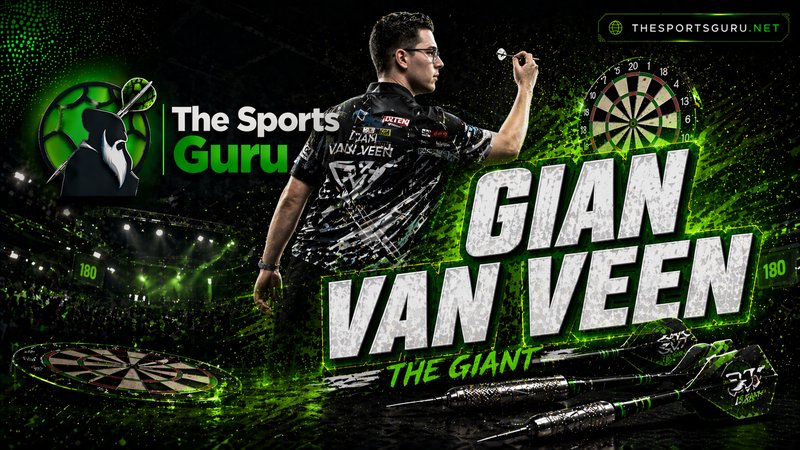
Three weeks after one of the most talked-about moments in Premier League Darts this season, Gian van Veen is standing his ground. The Dutchman has heard Luke Littler's version of events and remains completely unmoved, while the two players could find themselves on the same stage again in Rotterdam on Thursday. We break down both sides of the argument, what Michael van Gerwen made of it all, and why the lingering tension might actually be the best thing to happen to darts in years.
There is a certain kind of stubborn clarity that elite sport occasionally produces: a moment where two competitors look at the same event, reach opposite conclusions, and neither is willing to blink. That is precisely where Luke Littler and Gian van Veen find themselves in the days leading up to Night Ten of the 2026 Premier League Darts in Rotterdam, with a potential semi-final meeting looming and a resolution to their Manchester flashpoint seemingly no closer.
Van Veen has reviewed the footage. He has listened to Littler speak publicly about the incident for the first time. And his position, by his own admission, has not shifted a single millimetre. For a player who freely admits he would rather watch the sport's needling drama from the outside than be at the centre of it, he has found himself squarely in the middle of the story that has dominated darts discussion since early April.
The incident at Night Nine in Manchester came at the worst possible time for both players, in a decisive leg of their Premier League quarter-final. Van Veen turned towards Littler while preparing to throw his match darts. He maintains that Littler had been "out of order" by celebrating towards the crowd, which prompted the stare. Littler, for his part, has since said those celebrations were directed at his girlfriend and father, and he took exception to Van Veen setting his darts down before the leg was concluded, branding his Dutch opponent a "cry baby." Littler then missed match darts at double himself and ultimately lost the contest.
Van Veen's Position: Unchanged and Unbothered
Speaking ahead of the Rotterdam event, Van Veen was asked whether he felt the two players needed to sit down and clear the air. His answer was direct: "For myself, not really. He said his piece the other day. I still have the same view as I had two weeks ago when it all happened." He went on to say that if Littler wants to move forward then he is open to that, adding that he holds no resentment. But he is not seeking a meeting, and he is not altering his account of what took place on that stage in Manchester.
What makes Van Veen's stance particularly interesting is that he has actually done the homework. He said he went back and watched the videos more than once and came to the same conclusion each time. There is something quietly stubborn about that. Many players in a similar situation would opt for the diplomatic route, offer a vague acknowledgement that things got heated, and attempt to defuse attention before a high-profile fixture. Van Veen has done none of that. "He has got his opinion and he is entitled to it. I still have mine," he said simply. It is worth noting that holding a firm public position before a rematch is a double-edged move: it keeps the pressure on Littler, but it also removes any room to quietly recalibrate if the Rotterdam match does not go his way.
For all the composure he is projecting, Van Veen also showed a flash of genuine excitement at the prospect of facing Littler again in Rotterdam. He acknowledged that Littler will likely arrive with even more motivation, perhaps averaging 110 or 112 as a consequence of the added intensity. That is not false modesty. It reflects a realistic understanding of just how dangerous Littler becomes when he has something to prove, and it also tells you something about Van Veen's own preparation: he is not trying to talk Littler down, he is preparing to match him at his best. Van Veen seems almost energised by the challenge rather than threatened by it.
Littler's Account: A Different Set of Facts
Littler broke his silence on the episode in the build-up to Rotterdam, offering his interpretation of what happened from the moment the tension began. His position rests on two key points. First, the celebrations that Van Veen took issue with were not directed at his opponent but at his girlfriend and father who were watching from the venue. Second, and perhaps more pointedly, Littler argued that Van Veen had no grounds to stare at him because the match was still in progress and Van Veen had not yet thrown his final three darts.
The "cry baby" remark came from Littler's frustration at seeing Van Veen place his darts down before the leg had been concluded. It is the kind of accusation that, in a sport where composure under pressure is everything, carries real weight. The oche demands a very particular mental discipline: any break in your own routine, or visible reaction to your opponent's behaviour, can be as costly as a missed double. Littler lost the match, but he clearly felt the manner in which events unfolded was unjust regardless of the scoreline. It is worth noting that Littler missing match darts himself in the deciding leg adds an extra layer of complexity. Both players, in their own way, let composure slip at the critical moment.
Van Gerwen Calls for Perspective
The most senior Dutch voice to weigh in on the incident belongs to Michael van Gerwen, and his reading of the situation stands in stark contrast to the media narrative that has built around it. The three-time world champion was blunt in his assessment, insisting that too much is being made of a moment that, in the broader history of darts rivalry, is relatively minor. He drew on his own long-running battles with Phil Taylor, suggesting that if incidents of that nature were deemed front-page material, he and Taylor would have been generating headlines on a weekly basis throughout the peak years of their rivalry.
Van Gerwen's perspective is not without merit. The Taylor-Van Gerwen clashes were frequently abrasive and ran across multiple years and dozens of high-profile matches. By comparison, one stare-down in a Premier League quarter-final in Manchester, however dramatic it looked in the moment, is a single data point. The "Green Machine" chalked it up to emotion and the natural intensity of competitive darts, dismissing calls to treat it as a significant falling-out. "This is absolutely nothing," he said, pointing out that emotion in the heat of competition is entirely normal.
What Van Gerwen perhaps underestimates is the context. The Littler-Van Veen story has taken hold not simply because of what happened in Manchester but because Littler occupies a unique space in the sport right now. His talent is extraordinary and his age makes every match feel consequential. When someone disrupts his rhythm, or when he disrupts someone else's, it carries amplified significance. Van Gerwen navigated years of intense rivalry with Taylor before the sport had the kind of broadcast reach and social media scrutiny it has today; the same flash of on-stage needle now travels further and faster than it ever did during those Taylor years. The sport's needle has always existed; it simply has a new and particularly compelling protagonist at its centre.
What Needle Means for Darts and What Rotterdam Could Deliver
Van Veen himself offered a candid and quite revealing observation about the role of on-stage conflict in darts. He said he genuinely enjoys the needle in the sport, the friction and intensity that turns a sporting contest into something with a narrative edge. But he also admitted, with notable honesty, that he prefers to be a spectator of that drama rather than a participant. The Manchester incident pulled him into precisely the kind of attention he would rather observe from a distance.
That tension between enjoying the sport's theatre and being uncomfortable when the spotlight falls on him personally gives a more nuanced picture of Van Veen as a competitor. He is not someone who courts controversy or cultivates a combative persona. The friction with Littler appears to have been genuine and spontaneous rather than calculated. That, in some ways, makes it more interesting. There was no pantomime to it; two players reached a boiling point in a decisive leg and neither handled it flawlessly.
If the draw in Rotterdam produces a semi-final between the two players, as the schedule allows for, then the occasion will carry a weight that goes well beyond the usual Premier League night format. Van Veen has already said he is looking forward to the prospect specifically because of what happened in Manchester. Whether or not they shake hands or exchange words before the match, the competitive dynamic between them has shifted permanently. Littler will want to prove the Manchester result was an aberration fuelled by frustration. Van Veen will want to demonstrate that his victory was legitimate and that the controversy surrounding it was, as he sees it, entirely of Littler's own making. Rotterdam will not resolve the argument between them. But it may well settle something more important: who plays better when the needle is real.
Sources: Quotes and match details from Sky Sports Darts coverage of Premier League Darts 2026, including Van Veen and Van Gerwen interviews published on 15 April 2026.