 The Sports Guru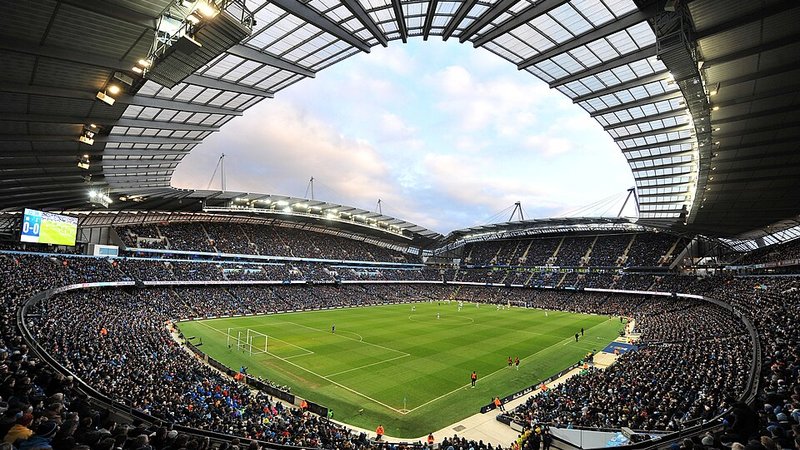
The most compelling subplot ahead of Sunday's Premier League title clash at the Etihad is not tactical, it is personal. Pep Guardiola and Mikel Arteta share a bond stretching back nearly three decades, one that has been tested by professional distance, silence, and now the fiercest possible sporting competition. This piece traces how two managers who began as idol and admirer have evolved into the Premier League's defining rivals, and what that means for the match that could decide the title.
It is one of the more quietly remarkable stories in English football right now. The manager of the league leaders and the manager of the team hunting them down not only speak the same footballing language, they helped write it together. Pep Guardiola and Mikel Arteta arrive at the Etihad on Sunday separated by three points at the top of the Premier League table and by a relationship that has been rebuilt after years of careful, almost deliberate, distance.
A win for Guardiola's second-placed Manchester City would reduce Arsenal's lead to just three points, with City holding a game in hand. The stakes could hardly be clearer. But the story behind the fixture goes far deeper than league positions.
Their connection began in 1997 when a teenage Arteta arrived at Barcelona's academy and encountered his idol: the club's captain and midfield conductor, Guardiola himself. The time they shared as team-mates was limited, but something lasting was established. Two decades later, Arteta was at Guardiola's side at Manchester City, not as a figurehead assistant but as what those inside the building remember as a genuinely influential voice. When Arteta left in 2019 to take the Arsenal job, the communication between them cooled sharply. The silence that followed was not born of animosity but of professional focus and, perhaps, a quiet recalibration of what the relationship now meant. It is worth noting that Arteta's departure came at a moment when Arsenal were in genuine disarray, which made the appointment a significant personal risk as well as a professional one.
How Guardiola Rewrote the Rules of the Game
To understand what Arteta absorbed during those years in Manchester, it helps to understand precisely what Guardiola had built over the previous decade. When his Barcelona side were in their pomp, Sunday evenings in Spain attracted the attentive eyes of coaches across Europe. Andy Mangan, an opposition scout who now works with Brazil, recalls that period as an inadvertent coaching education for an entire generation. In his words, every week Guardiola would identify a space to attack, and every Sunday those players performed with something close to joy.
What Guardiola established at Barcelona was not simply a successful team. It was a new grammar of winning. Pep Segura, former director of football at Barcelona, puts it plainly: before Guardiola, most teams built themselves around defensive shape and reacted to whatever the game offered. Guardiola reversed the premise entirely, insisting that the starting point for everything was how his team attacked. Possession, positioning and numerical superiority with the ball became the organising logic of the sport at its highest level. The effect on coaching thought globally was profound and largely irreversible; even teams that rejected the model were forced to define themselves in relation to it.
That revolution, however, invited its own counter-revolution. As Segura explains, teams across Europe began asking how to combat this approach, and the answer was pressing and rapid transitions. The game that grew in response to Guardiola's model was, in many respects, the game Arteta had already been playing his entire professional life in England.
The Apprentice Who Was Never a Fundamentalist
Those who worked within City's training environment during Arteta's time there are careful to resist the simple narrative of master and student. He is described as a formidable dance partner for Guardiola, someone who helped raise standards in training through intensity, competitive detail and sharpness of thought. Crucially, Arteta also brought knowledge Guardiola genuinely lacked. Having played for both Everton and Arsenal, he gave the City manager a lived understanding of the Premier League: its tempo, its refereeing culture, the emotional volatility of its supporters and the specific physical demands of the English game. That experiential knowledge is not easily replicated by analysis alone, and it mattered precisely because Guardiola was still calibrating his approach to the English game during those early City seasons.
But insiders are clear that Arteta was not a disciple in any doctrinal sense. While his principles aligned closely with Guardiola's during those years, he was already developing his own perspective, imagining how the game would evolve and what adaptations would be required. Segura draws an important distinction: unlike Guardiola, who had to consciously learn and incorporate transitions during his time in Germany, Arteta grew up with them. He played in England. They were already part of his instincts.
Arteta's Arsenal and the Cost of Precision
The Arsenal that Arteta has constructed over the past few seasons is a genuinely distinctive creation, not a copy of anything Guardiola produced. Former Celta Vigo assistant David Martinez identifies the key strategic insight that drove its development: Arteta recognised that Arsenal, in terms of raw talent and financial resources, could not simply outplay top sides in open, expressive football. The response was a system built on domination across all phases, a team that controls matches through disciplined structure rather than individual brilliance alone. That is a meaningful philosophical choice, not just a pragmatic one; it reflects a manager who has thought seriously about what collective organisation can achieve when individual quality has limits.
Mangan, observing the game from a scouting perspective, points to something else: Arteta's almost forensic awareness of where modern football is heading. Duels, set-pieces, long throws, the marginal details that increasingly decide matches at the highest level. Arsenal under Arteta have become unusually proficient in exactly those areas. Robert Moreno, the former Spain coach, goes further, arguing that Arteta has developed a genuinely independent voice and produced one of the most effective collective units in European football.
Yet there is a tension built into this approach. The more a team depends on rehearsed mechanisms and precise execution, the more vulnerable it becomes when that precision slips. This, observers suggest, is a meaningful difference between Arteta and Guardiola. Guardiola's teams, even when disrupted, tend to maintain an underlying idea that functions independently of any single system. The players think within the framework rather than executing it. That adaptability, built across years of coaching in multiple countries and cultures, represents perhaps the most significant gap that still separates the pupil from the teacher.
Silence Broken, Rivalry Defined
The professional distance that opened between the two after 2019 has since closed. Contact was re-established within the past year, tensions eased, and they speak again. Nobody, it seems, wants to volunteer who made the first call. That small detail says something revealing about the nature of the relationship: competitive, proud, but ultimately grounded in genuine mutual regard.
Both men now occupy that particular isolated space that comes with managing elite football clubs. The pressure is relentless, the scrutiny total, the margin for error almost nonexistent. In that sense they are less mentor and student now than two people who understand, perhaps better than most, exactly what the other is going through.
Verdict: Sunday and Beyond
Sunday's match at the Etihad carries obvious immediate significance. Three points separate the sides, and the direction of the title race could tilt decisively. But the fixture means something beyond its table implications. It is, in a sense, the clearest test yet of whether Arteta's evolution has produced a system capable of not just competing with Guardiola's blueprint but genuinely surpassing it.
What Arteta has done at Arsenal is remarkable in its own right: building a title-contending squad on a fraction of City's historical resources, instilling tactical discipline and collective identity that have made them genuine contenders for sustained periods. Whether that is enough to win a title, and specifically enough to win it against the man who shaped him, remains the central footballing question of this Premier League season.
Whatever happens on Sunday, the relationship between Guardiola and Arteta will endure. They are bound together by history, by philosophy, and now by the sharpest competitive edge either has faced. The idol became a mentor. The mentor became a rival. Now, finally, the rival stands three points clear at the top of the table.
Frequently Asked Questions
The article describes their time as team-mates as limited, beginning when Arteta arrived at Barcelona's academy in 1997 as a teenager and encountered Guardiola as the club's captain. Their shared time at the club was brief rather than an extended playing partnership, though something lasting was established between them.
The article is clear that the silence was not the result of any falling out or animosity. It is attributed instead to professional focus on both sides and what the article calls a quiet recalibration of what the relationship now meant, given that the two men had moved from colleagues to direct rivals at the top of the game.
Arteta served as Guardiola's assistant at City, but the article pushes back against any suggestion he was merely a figurehead in that role. Those inside the club at the time remember him as a genuinely influential voice rather than a secondary presence alongside the head coach.
Segura argues that before Guardiola, most teams organised themselves around defensive shape and responded to what the game presented. Guardiola instead made attacking intent, possession, positioning and numerical superiority with the ball the starting point for everything, which forced even teams that rejected the model to define themselves in opposition to it.
Arsenal currently lead the Premier League by three points ahead of the fixture. A City win would reduce that gap to three points while City would also hold a game in hand over Arsenal, meaning the effective title advantage would swing significantly towards Guardiola's side.
Sources: Match context, biographical detail, quotes and coaching analysis drawn from BBC Sport's feature coverage of the Guardiola-Arteta relationship ahead of the Manchester City vs Arsenal Premier League fixture, April 2025.