 The Sports Guru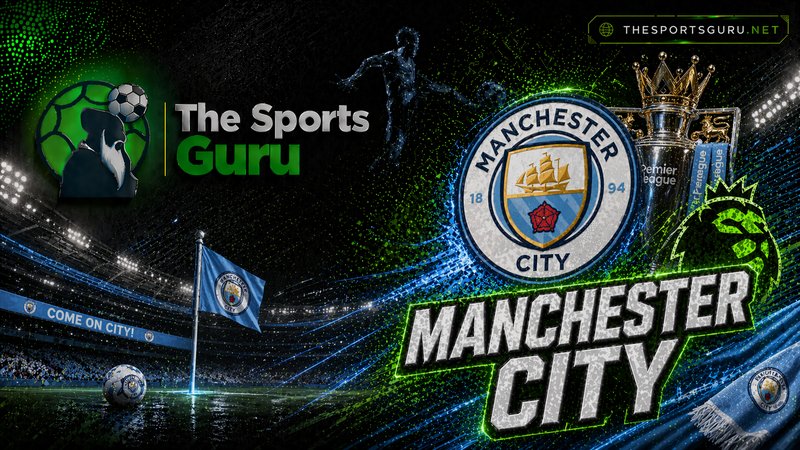
Pep Guardiola goes into Saturday's FA Cup final against Chelsea with a smile on his face and a deliberately vague answer about his future. This piece examines what his playful non-denial actually tells us, what 19 trophies in a decade really means, and why the uncertainty around his future is louder than the occasion itself.
There was a smirk, a flexed bicep, and then he was gone. Pep Guardiola has spent a decade turning Manchester City into a trophy-collecting institution, and on the eve of an FA Cup final against Chelsea, he is still managing his own narrative with the same precision he applies to a high press. Asked directly whether Saturday at Wembley could be his last as City manager, he gave two words: "No way." Then came the grin, the suggestion that he has "one more year" on his contract, and a swift walk out of the press conference room.
The timing of his exit from the room was, it should be noted, already scheduled - it was the final question of the briefing. But in the theatre of a Guardiola press conference, the optics were perfect regardless. Whether the composure was genuine or performative barely matters. The effect is the same: nobody knows, and he intends to keep it that way for now.
What is clear is that speculation around his future is not going away quietly. BBC Sport has reported that sources close to the club convey a genuine, tangible uncertainty over whether Guardiola will see out the remaining year of his current deal, even as City publicly prefer for him to stay as long as possible. Former Chelsea head coach Enzo Maresca is understood to be among the leading candidates identified should a vacancy materialise. That a successor shortlist appears to exist at all tells its own story.
A Decade of Dominance and What Comes Next
To understand the weight of this moment, the numbers Guardiola himself volunteered in that press conference deserve proper attention. He lifted his arms, flexed, and said: "19 titles in 10 years is not bad." He is right. Six Premier League titles, the Champions League, two FA Cups, and a string of domestic cups represent a volume of success that no other manager in the Premier League era has come close to replicating at a single club over a comparable span. What makes that figure particularly striking is the consistency of delivery across different squad generations: Guardiola has won league titles with Kompany and Aguero, with De Bruyne at his peak, and more recently with a transitional group still finding its shape.
Heading into Saturday's FA Cup final against Chelsea, City are already FA Cup holders having won the Carabao Cup with victory over Arsenal in March. A win at Wembley would complete a domestic double and push Guardiola's haul to 20 trophies in 10 years, which is the target he himself framed in that press room. That framing matters: it suggests he is still thinking in terms of legacy accumulation rather than wind-down, which is either an honest statement of intent or a very well-constructed piece of misdirection.
This is also City's 24th appearance at Wembley in a domestic cup semi-final or final during his tenure, an extraordinary frequency that reflects how thoroughly Guardiola has turned cup runs from an ambition into a near-annual expectation. Most clubs dream of reaching Wembley once in a generation. City have been making the journey roughly twice every year. That relentless presence at the national stadium is itself a measure of structural excellence, not just peak-season fortune.
The Title Race Backdrop and the Double Ambition
Saturday's final does not exist in isolation from the Premier League run-in, and the dual pursuit adds a layer of pressure and opportunity to the occasion. City trail Arsenal by two points with two league games still to play, meaning the prospect of a league and FA Cup double remains alive. That arithmetic also reveals something about what kind of season this has been: not the dominant, points-hoarding campaign of City's peak years, but a competitive, grinding chase where the outcome is unresolved deep into May. In Guardiola's title-winning seasons of 2017-18 and 2018-19, the question of who would win the league was answered by Easter. This version of City has had to fight considerably harder for far less certainty.
It is worth noting that finishing the season with a double, even from a position of slight deficit in the title race, would represent one of the more satisfying final chapters a manager could write. Should Guardiola depart in the summer despite his "one more year" tease, the possibility of leaving on a double is precisely the kind of conclusion that could make such a decision easier to reach. Staying becomes equally compelling when there is still a Premier League title to chase. The tension between those two realities is probably why nobody, including Guardiola himself, appears to have settled on an answer.
"19 titles - fight for 20 in 10 years - it's not bad, honestly."
Pep GuardiolaWhy the Uncertainty Is Louder Than the Occasion
In most pre-final press conferences, the football takes centre stage. Tactics, team news, the opponent's strengths - these are the currency. Here, they have been largely overshadowed by a question about one man's employment status. That is not a criticism of the journalists asking the question; it reflects genuine, widespread uncertainty that has been building for months.
BBC Sport has reported similar soundings from sources, and the emergence of Maresca as a named candidate for the role carries real weight. Maresca spent this season managing Chelsea, the very team City face on Saturday, which introduces an almost theatrical irony to the occasion. If Guardiola does leave and Maresca does succeed him, the two men will have faced each other on the biggest domestic stage of the club calendar just weeks before the managerial baton potentially changed hands.
There is also a broader pattern worth considering. Guardiola has previously spoken about the emotional toll of sustained high-level management, and the 2023-24 season, which ended without a major trophy for the first time during his City tenure, appeared to weigh heavily. This campaign has been a recovery of sorts, with the Carabao Cup already secured and a double in sight. But recovery and renewal are different things, and it is entirely possible that Guardiola views this moment as a natural high point from which to step back, rather than a platform from which to extend. Managers who have built systems as total and demanding as his tend to find that sustaining intensity across a decade extracts a particular kind of cost that is not always visible from the outside.
Chelsea's Opportunity in the Shadow of the Storyline
The noise around Guardiola's future risks reducing Chelsea to supporting cast in a narrative that should be a contest between two major clubs. That would be a disservice. Chelsea arrive at Wembley with genuine ambition under Maresca and the occasion carries significant weight for their own season's conclusion.
From City's perspective, the risk of a manager's future dominating the build-up is that it creates either distraction or, conversely, an extra layer of motivation. Players who have won repeatedly under Guardiola will have heard this kind of speculation before. Several of them have been with him long enough to understand how he operates, and how little external noise typically penetrates the training ground environment he constructs. If anything, a farewell narrative can sharpen focus rather than dilute it.
Verdict: Trust the Trophy Count, Not the Smile
Guardiola's press conference exit was immaculate in its ambiguity. The flexed bicep, the self-congratulatory observation about 19 trophies, the "one more year" comment delivered with a grin - all of it communicated confidence and deflection simultaneously. The man who has built one of the most analytically precise footballing operations in European history is not going to confirm or deny his future in a pre-final press conference. That would be entirely out of character.
What we can say with confidence is this: regardless of what happens next season or in the summer, Guardiola's decade at City is already one of the most decorated managerial spells in the history of the sport. Nineteen trophies across ten years at a single club is a record that will outlast the speculation, the press conference smirks, and whatever decision he eventually makes. Saturday at Wembley is another chapter in that story, whether it is the penultimate one or something approaching the last.
City's fans will be hoping the "one more year" is more than a punchline. The rest of English football, particularly those chasing a league title with Arsenal colours, might be hoping for something rather different.
Frequently Asked Questions
Guardiola said "No way" when asked if Saturday could be his last FA Cup final as City manager, then referenced having one more year on his contract before leaving the press conference. Despite that public denial, BBC Sport has reported that sources close to the club acknowledge genuine uncertainty over whether he will see out that remaining year, and a successor shortlist is understood to already exist.
Former Chelsea head coach Enzo Maresca is understood to be among the leading candidates identified should a vacancy arise at City. The fact that a shortlist appears to exist at all has added weight to the speculation surrounding Guardiola's position.
A win at Wembley would take Guardiola to 20 trophies in 10 years at Manchester City, a figure he himself framed as a target during the pre-match press conference. City are already FA Cup holders and won the Carabao Cup this season with victory over Arsenal in March, meaning Saturday's final offers the prospect of a domestic double.
Saturday represents City's 24th appearance at Wembley in a domestic cup semi-final or final during Guardiola's tenure, which amounts to roughly twice every year across a decade. The article notes that most clubs consider reaching Wembley once in a generation an achievement, making City's frequency a reflection of structural excellence rather than occasional good fortune.
Guardiola has claimed six Premier League titles across notably different squad generations, including sides built around Vincent Kompany and Sergio Aguero, a peak-era Kevin De Bruyne, and more recently a transitional group still developing its identity. The article highlights that consistency of delivery across changing personnel as one of the more striking elements of his overall record.
Sources: Reporting draws on pre-match press conference coverage and background sourcing from UK sports journalism, with career statistics and competition context cross-referenced against official Premier League and FA records.