 The Sports Guru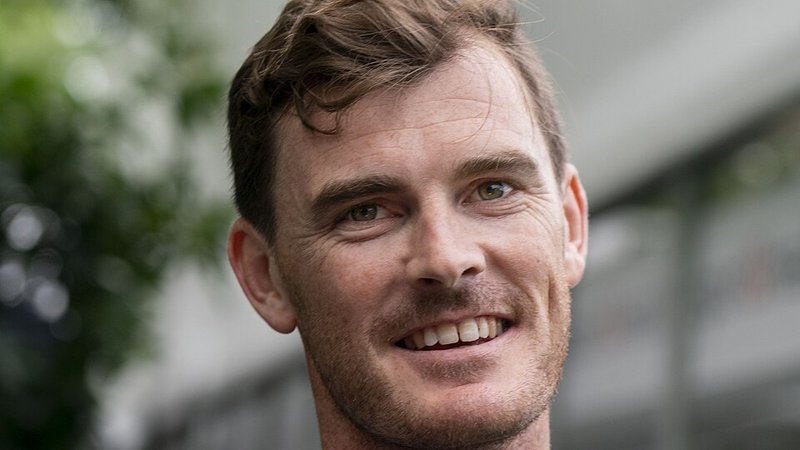
Jamie Murray has announced his retirement from tennis at the age of 40, bringing the curtain down on a 36-year journey that made him the greatest British doubles player of the Open Era. This piece examines the career of a man who carved out his own remarkable legacy in a family where the spotlight almost always shone elsewhere, and asks what made him so special at the net.
There is a photograph that tells you everything about what the Murray family means in British sport. It is approaching one in the morning in Melbourne, January 2016, and Jamie Murray has just claimed his first Grand Slam men's doubles title alongside Bruno Soares. Standing in the coaching box, camera in hand, is his younger brother Andy, who is due to face Novak Djokovic in the Australian Open singles final less than 18 hours later. "Shouldn't you be in bed?" Jamie asked, as he accepted the trophy. The exchange captures something warm and unguarded about their relationship, and it feels like a fitting place to begin understanding a career that has now, at 40, come to a close.
Murray announced his retirement on Instagram on Sunday, confirming he had not competed since last August's US Open. "My tennis journey comes to an end after 36 years," he wrote, adding that he felt "very fortunate and privileged" for everything the sport had given him, and that he was "excited to enter the real world." He signed off with thanks to his parents Judy and Will, to Andy, and to his support team. No fanfare, no lengthy farewell tour. Just a post, and then it was done.
What he leaves behind, however, is anything but modest. Seven Grand Slam titles. Thirty-four tour-level doubles crowns. A historic rise to world number one in men's doubles, the first British player ever to reach that position. More Grand Slam and tour doubles titles than any British player in the Open Era. By any measure, Jamie Murray was not simply a passenger in a famous sporting family; he was an elite competitor who reached the very summit of his discipline.
The Craft Behind the Titles
To understand what made Murray so effective as a doubles specialist, you have to look at the specific skills that defined his game. He was a left-hander, which already gave him an angular advantage on serve, but his real currency was at the net. His volleying was described as razor-sharp, and the angles he produced from close range were genuinely unorthodox, the kind that opponents knew were coming but still could not read in time. That unpredictability at the net is particularly valuable in doubles, where patterns repeat quickly and opponents can anticipate conventional volleyers within a match; Murray's ability to disguise direction under pressure was what made him difficult to neutralise even when facing the same pair across multiple sets. His return of serve was similarly unconventional, and he was particularly fond of the lobbed return, a weapon used not just to win points but to disrupt the rhythm and confidence of opposing net players.
Those qualities did not appear from nowhere. Jamie's mother Judy, who coached both sons in their early years and knows a thing or two about hand-eye co-ordination, believed Jamie actually had the edge over Andy in that particular department when they were young. It is a detail that sheds light on why his net play was so instinctive, and why, when he finally committed fully to doubles, he rose so quickly through the ranks.
A Singles Career That Never Quite Was
What is rarely discussed with enough seriousness is how different Murray's story might have looked. As a teenager he was very much on course for a professional singles career, and early on he was the more dominant of the two brothers on the court. Andy has admitted as much, recalling with some amusement how, on the journey back from Solihull after Jamie had lost to him in an under-12 final, he wound his older brother up to such a degree that Jamie punched him on the hand and left him with scars that are apparently still visible today. The anecdote is funny, but it also underlines just how competitive Jamie was as a young player, and how real his singles ambitions once were.
The shift away from singles came not through any shortage of talent but through a damaging experience at an LTA training school in Cambridge during his early teens. Struggling to adapt to living away from home within an intense elite environment, his forehand suffered and he has acknowledged that he was never quite the same player after that period. It is one of British tennis's more quietly painful what-ifs. Whether the LTA's approach was right or wrong, the effect on a young player's confidence and technique was significant enough to redirect an entire career. What makes this particularly striking is that the forehand is the foundation of any singles game; once doubt enters that stroke at a formative age, it is extraordinarily difficult to rebuild the automaticity that elite singles competition demands. Murray has never sought to apportion blame, but the context matters in understanding why one of the most gifted British players of his generation ended up specialising in doubles rather than competing for singles majors.
Davis Cup, Grand Slams, and a Year at the Top
Whatever the road that brought him there, the destination was remarkable. Murray's 2016 season with Bruno Soares stands as the high point of his men's doubles career. The pair won the Australian Open title in January, with Andy watching on from that coaching box in the early hours of the morning, and then added the US Open later in the year, finishing the season as the world's top-ranked doubles pair. Winning two Slams in the same calendar year with the same partner requires not just individual quality but a sustained cohesion under pressure; the fact that Murray and Soares managed it in their first full season together says something about how quickly the partnership clicked. That Andy simultaneously finished the year as the world's top singles player made the Murray family achievement almost absurdly singular in British sporting history.
Mixed doubles brought five Slam titles of its own, including two at Wimbledon. The first came with Jelena Jankovic in 2007, the second with Martina Hingis a full decade later. Those two titles are separated by ten years of persistence, adaptation, and excellence at a tournament where British champions of any description were a rarity for most of that period.
Then there was the Davis Cup. Britain's 2015 triumph in Ghent was the nation's first in 79 years, and Jamie's contribution was central to it. He played brilliantly alongside Andy in the quarter-final against France at Queen's Club, then endured a gruelling five-set, four-hour semi-final against Australia before the brothers combined to see off the Belgian pairing in the final. The Davis Cup title meant something beyond tennis, a moment of collective national pride, and Jamie was at the heart of it.
Advocacy, Fraternity, and a Legacy Beyond the Trophies
Murray spent a significant part of his career fighting a quiet battle for respect on behalf of doubles players as a whole. He was consistently vocal about the perception that doubles was somehow a lesser pursuit, a safety net for players who could not cut it in singles. His position was unambiguous: the standard was high, the competition was fierce, and the players who reached the top of the doubles rankings had done so through genuine excellence rather than good fortune. It was advocacy borne from personal experience, and it gave his retirement announcement a particular resonance. He leaves the sport having done more than simply win titles; he spent years arguing that his discipline deserved to be taken seriously.
The relationship with Andy has been the thread running through it all, sometimes strained, occasionally fractious in public, but ultimately one of deep mutual affection. Jamie criticised Andy's late withdrawal from a 2008 Davis Cup tie in Argentina. Andy vented about Jamie sleeping through his alarm and suffering heatstroke at the 2014 Australian Open. These were the kind of frictions that come with competing at the highest level while sharing a surname and a sense of family honour. But they were never more than temporary turbulence.
Verdict: A Career That Deserves Its Full Recognition
It has always been tempting to define Jamie Murray in relation to his brother, and to some extent that is unavoidable given the circumstances of both their careers. But the retirement announcement is a moment to stand back and assess Jamie Murray purely on his own terms. He is the most decorated British doubles player of the Open Era. He reached world number one. He won seven Grand Slam titles across two disciplines. He was a crucial figure in Britain's 2015 Davis Cup victory. That is a career of genuine substance, not reflected glory.
What makes his story particularly compelling is that it was not the career he originally planned. The pivot to doubles, prompted partly by a damaging spell in a training environment that failed him as a teenager, could have become a source of bitterness. Instead, Murray turned it into something that brought him to the very top of international tennis. That takes a particular kind of resilience and self-knowledge, and it deserves to be recognised as such.
The rivalry with his brother on the golf course, apparently now the primary battleground for Murray competitive instincts, will no doubt be conducted with the same intensity that characterised every other phase of their relationship. But the tennis chapter, 36 years in the making, seven Grand Slams to its credit, and marked by an honesty and outspokenness that made Murray one of the sport's more distinctive voices, has now closed. British tennis is richer for everything he gave it.
Sources: Match information, career statistics, and quotes from BBC Sport's coverage of Jamie Murray's retirement announcement, reported by Russell Fuller.