 The Sports Guru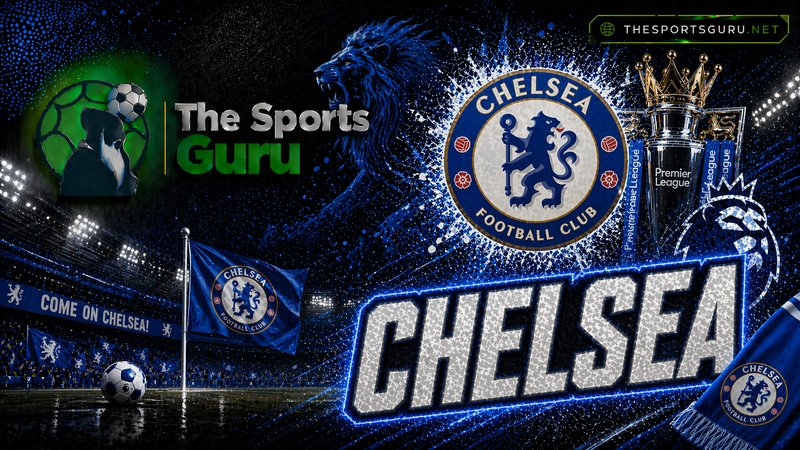
Ken Bates has died at 94, and English football has lost one of the last of a particular breed: the owner as public character. He bought Chelsea for £1 when the club was drowning, sold it for £140m to the man who would turn it into a superpower, ran Leeds through their darkest financial decade, and fell out with more or less every institution the game possesses along the way. This covers the announcement of his death, the Chelsea years that defined him, and the rest of a life his own club summed up in three words: colourful, outspoken and controversial.
Former Chelsea and Leeds United owner Ken Bates has died at the age of 94. Chelsea announced his death on Saturday, saying he "passed away peacefully in Monaco this morning surrounded by his wife and family". The club sent its condolences to his wife Suzannah, his family and his friends, and said in its statement: "Ken's determination to fight for Chelsea when times were tough, and drive the team on to winning trophies will never be forgotten."
The £1 gamble that saved a football club
The defining transaction of Bates's life cost him a pound. He bought Chelsea in 1982, when they were in the old Second Division, taking on debts of £1.5m along with the nominal fee, and set about the long, quarrelsome business of turning the club around. In those early years he fought off interest from property developers who eyed Stamford Bridge the way developers eye any large piece of west London, and he formed the Chelsea Pitch Owners group to put the ground's future beyond their reach. The same instinct produced his most notorious idea: with hooliganism at its height in the 1980s, Bates built a high perimeter fence around the pitch and applied to electrify it. The local council said no. The fence stands in the memory as the man in miniature, a genuine problem addressed with a solution nobody else would have said out loud.
From Second Division debts to the Abramovich sale
The football caught up with the fighting eventually. John Neal, John Hollins, Bobby Campbell, Ian Porterfield and David Webb all managed under Bates before he turned to a run of appointments that changed the club's ambitions: Glenn Hoddle, Ruud Gullit, Gianluca Vialli and Claudio Ranieri. It was under Gullit that Chelsea ended a 26-year wait for a major trophy, winning the FA Cup in 1997, and the League Cup, the European Cup Winners' Cup and another FA Cup followed before he sold. The buyer, in 2003, was Roman Abramovich, the price was £140m, and the club he handed over was in the top flight but heavily in debt. Bates stayed on as chairman before stepping down in 2004, and the era that followed delivered the Premier League and Champions League titles his own decades of scrapping never quite reached. The Chelsea Supporters' Trust called him "one of the most significant figures in Chelsea Football Club's modern history" and said his place in the club's history is assured. On the first claim there is no argument available. He took charge during one of the club's most difficult periods and, as the Trust put it, played a defining role in securing its future at Stamford Bridge.
Wembley, Leeds and the quarrels in between
Bates never confined himself to one club's business. He spent five years on the Football League management committee from 1986, leaving that role soon after Chelsea were fined £105,000 for alleged illegal payments to players, and was an active member of the Football Association executive in the 1990s. He was appointed chairman of Wembley National Stadium Ltd to oversee the rebuilding of the national stadium, resigned over what he considered a lack of progress and support, and was quoted by the Telegraph as saying the best way to move the project forward would be to shoot the minister for sport at the time, Kate Hoey. Diplomacy was never the product he was selling.
Having failed in a bid to invest in Sheffield Wednesday, he bought Leeds United in January 2005 and stayed until December 2012, an eight-year tenure that brought five managers, among them his old Chelsea captain Dennis Wise, and rather less glory than west London had. Leeds lost the Championship play-off final in 2006, went into administration a year later and dropped into English football's third tier for the first time. Bates was part of the consortium that bought the club back from the administrators, and Leeds returned to the Championship in 2010. He sold his stake towards the end of 2012, stayed on as chairman and then briefly as honorary president, and left in July 2013. Before any of it, there had been five years as Oldham Athletic chairman in the 1960s and a spell as Wigan Athletic's co-owner from 1980 to 1982. He gave English football half a century of service and half a century of arguments, usually in the same afternoon.
Colourful, outspoken and controversial
Those are the three words Chelsea chose in announcing his death, and it says something about the man that his own club's tribute reads like an honest reference rather than an airbrushed one. Bates was one of English football's best-known characters and rarely far from the headlines, and he belonged to an era when an owner was a face and a voice rather than a fund. The modern Chelsea, a club that moves midfielders for eight figures without blinking, is built on foundations he spent two decades defending for the price of a pound and an argument. He died peacefully, in Monaco, at 94, with his family around him. English football will not see his kind again, mostly because it no longer builds them.
Frequently Asked Questions
Chelsea announced on Saturday that Bates "passed away peacefully in Monaco this morning surrounded by his wife and family". He was 94. The club sent condolences to his wife Suzannah, his family and his friends.
Bates bought Chelsea for £1 in 1982, when the club was in the old Second Division, taking on £1.5m of debt as part of the deal. He sold the club to Roman Abramovich in 2003 in a deal worth £140m, with Chelsea back in the top flight but heavily in debt, and stepped down as chairman in 2004.
Chelsea won the FA Cup in 1997 under Ruud Gullit, ending a 26-year wait for a major trophy, and added the League Cup, the European Cup Winners' Cup and a second FA Cup before the 2003 sale to Abramovich.
Bates owned Leeds from January 2005 to December 2012. Leeds lost the 2006 Championship play-off final, entered administration in 2007 and were relegated to the third tier for the first time, before a consortium including Bates bought the club back and returned it to the Championship in 2010. He left the club fully in July 2013.
Sources: BBC Sport.