 The Sports Guru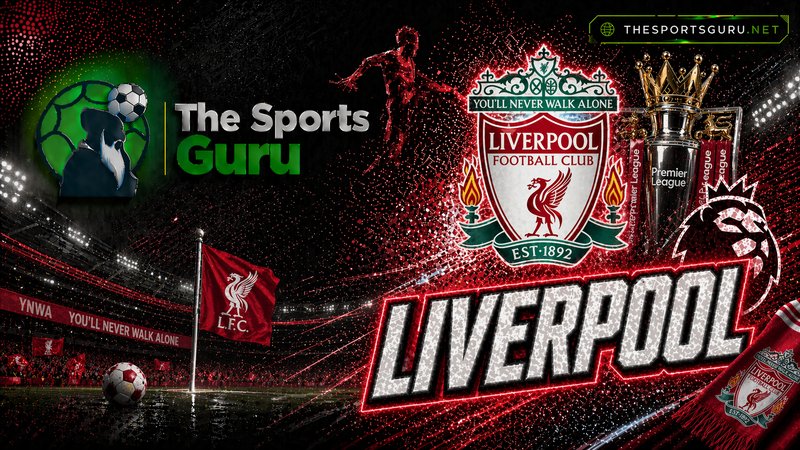
Liverpool have stepped back from a three-year ticket pricing plan that tied increases to inflation, following organised protests from supporters groups. This piece examines what was agreed, what remains unresolved, and why the outcome matters beyond Anfield.
When Liverpool announced they would link ticket prices to the consumer price index for inflation across three consecutive seasons, they likely anticipated some grumbling. What followed was something considerably more coordinated. Within days, supporter groups had organised protests, launched targeted boycott campaigns, and applied enough collective pressure to bring the Premier League champions back to the table. The result: a reduced rise and, for one season at least, no rise at all.
It is a partial victory for fans, and one that should not be dismissed as merely symbolic. In English football, where supporter influence over commercial decisions has become increasingly diluted under American and Gulf-state ownership, an organised fan base publicly reversing a pricing model at one of the world's richest clubs is genuinely significant. Liverpool, owned by Fenway Sports Group, have not capitulated entirely, but they have moved. And in the current landscape of elite football economics, that movement is notable.
The revised arrangement, agreed following discussions with the club's supporters board, will see general admission ticket prices rise by 3% for the 2026-27 season, followed by a price freeze in 2027-28. The original plan had proposed CPI-linked increases across three seasons, with no guaranteed ceiling. The club and supporters board have also committed to continuing talks, including exploring commercial alternatives that might reduce the need for ticket price increases going forward.
What the Original Proposal Would Have Meant
To understand why supporters reacted as sharply as they did, it helps to understand what the initial announcement actually proposed. Tying ticket prices to CPI for inflation effectively removes any fixed cap on rises. CPI moves with broader economic conditions, and at various points over the past few years, inflation in the United Kingdom has run at levels that would have produced substantial year-on-year increases in matchday costs. For supporters already managing travel, accommodation and other Anfield-related expenses, an open-ended inflationary model offers no budgetary certainty whatsoever. The compounding effect across three seasons is what made the original model particularly difficult to accept: even a moderate annual CPI figure, applied consecutively with no ceiling, can produce a cumulative increase that meaningfully alters who can afford a season ticket.
There is also a broader principle at stake. Liverpool are not a club struggling to balance the books. They are Premier League champions, playing in the Champions League, with commercial revenues that place them among the top tier of European football. Supporters were being asked to absorb inflation-linked price increases at a club that, by any reasonable measure, does not need the extra income generated by those specific rises. The perception gap between institutional financial strength and the cost burden placed on regular supporters is precisely the fault line that fan groups exploited in their campaign.
What makes this episode particularly pointed is that it is not the first time supporters have mobilised against pricing decisions under Fenway Sports Group's ownership. The history of such protests at Anfield is not a short one, and fan groups have developed both the organisational infrastructure and the institutional memory to mount credible campaigns when they believe ownership has overstepped.
Spirit of Shankly and the Art of Targeted Pressure
The campaign that emerged from these protests deserves particular attention, because it was not simply a petition or a banner in the stands. The supporters group Spirit of Shankly launched an initiative called "Not a Pound in the Ground", encouraging fans to purchase food and drink from local businesses in the Anfield area rather than from inside the stadium on matchdays.
The tactical logic here is straightforward and quite sharp. Stadium concourse spending is a meaningful revenue stream for football clubs, and diverting that spending to the surrounding community carries a dual message: it demonstrates that supporters are willing to act on their frustration in financially tangible ways, and it redirects money back into a neighbourhood that has historically had a complicated relationship with the economic footprint of a major football club. The campaign does not require supporters to boycott matches, which would be an unrealistic ask for the vast majority of fans. It simply asks them to change where they spend within an existing matchday routine. That is tactically significant: it imposes a cost on the club without asking supporters to sacrifice the thing they actually value, which is attending the match itself.
Whether "Not a Pound in the Ground" directly influenced the club's decision to revise its pricing model is difficult to measure. But campaigns of this kind work precisely because they force clubs to quantify the cost of supporter dissatisfaction. Liverpool's commercial operation at Anfield is not peripheral to the club's finances, and any sustained redirection of matchday spending carries implications that a boardroom will eventually notice.
"We welcome the decision that Liverpool FC will no longer proceed with its previously announced three-year ticket pricing model."
Joint statement from Liverpool fan representative groups
The Statement, and What It Does Not Resolve
The joint statement from fan representative groups acknowledged the revision while carefully managing expectations. Welcoming the abandonment of the three-year CPI model and noting that talks on long-term affordability solutions would continue, the statement also acknowledged that some supporters would remain disappointed at next season's 3% increase. That is an honest framing. A reduced rise is not the same as no rise, and for some regular attendees, any upward movement in ticket costs represents a further squeeze on access.
The club's own position is equally candid in a different direction. Liverpool have made clear that without meaningful progress on alternative commercial solutions, future inflationary increases may still be required. In practical terms, this means the current agreement is a pause in a longer negotiation rather than a permanent resolution. The supporters board and the club will need to identify and implement viable commercial alternatives if the pricing model is to change fundamentally, and that is a more complex challenge than organising a campaign or issuing a statement.
This is the part of the story that tends to get less attention in the immediate aftermath of a concession. The pressure worked, a revision was secured, and both sides have committed to further talks. But the structural tension between the financial demands of elite football and the affordability concerns of supporters who have followed clubs through far leaner decades has not been resolved. It has been deferred.
Why This Matters Beyond Liverpool
There is a tendency in football coverage to treat fan protests at individual clubs as self-contained stories. The Liverpool ticket pricing dispute is worth reading more broadly than that. The question of who can afford to attend top-flight matches in England has been a live debate for years, and it has accelerated as Premier League revenues have grown while the real-terms cost of attending matches has often risen faster than wages for supporters in many parts of the country.
Liverpool's willingness to revise their pricing plan demonstrates something important: that organised, disciplined and commercially-aware supporter action can still produce results, even within the context of global ownership structures that are not naturally disposed to grassroots pressure. The "Not a Pound in the Ground" campaign, combined with the supporters board's formal engagement with the club, represents a model worth noting. It combines economic leverage with institutional dialogue, which is a more durable combination than either approach alone. Other supporter groups watching this outcome will note that the two elements worked in tandem: the campaign created visible pressure while the formal board channel gave the club a structured route to respond without appearing to capitulate to a protest alone.
For rival supporters watching this episode, the lesson is that the mechanisms exist to push back. Spirit of Shankly and the wider coalition of fan groups that contributed to this outcome did not achieve everything they sought. A 3% rise in 2026-27 is still a rise, and the future remains open-ended. But they shifted a decision made by one of the most commercially powerful clubs in European football. That is not a small thing.
Verdict: A Concession With Conditions Attached
Liverpool's revised pricing plan is a meaningful outcome for supporters who organised and applied pressure at speed. The abandonment of the open-ended three-year CPI model, and the agreement of a price freeze for 2027-28, represent a more favourable position than the one that prompted protests just days ago. The supporters board has earned some credit for maintaining a formal channel into these discussions, and Spirit of Shankly's campaign demonstrated that creative, targeted economic pressure retains its potency.
But the small print matters. The club has been explicit that inflationary increases remain a possibility if alternative commercial solutions cannot be found. The 3% rise for 2026-27 is still happening. And the conversations about long-term affordability and access are precisely the kind of discussions that can extend indefinitely without producing binding commitments. Liverpool's ownership has shown it will respond to pressure. Whether it will ultimately share the view that supporter access is a value in itself, rather than a variable to be managed alongside commercial priorities, is a question that the next round of talks will begin to answer.
The debate over who can realistically attend Premier League football is not going away. Liverpool's partial U-turn has kept it squarely in focus, which may be the most consequential outcome of all.
Frequently Asked Questions
Under the revised arrangement, general admission ticket prices will rise by 3% for the 2026-27 season, followed by a complete price freeze in 2027-28. The original proposal had tied increases to the consumer price index across three consecutive seasons with no guaranteed ceiling, meaning cumulative rises could have been substantially higher depending on broader economic conditions.
Linking prices to CPI removes any fixed cap, leaving supporters with no budgetary certainty from one season to the next. UK inflation has run at significant levels in recent years, and the compounding effect of even moderate CPI figures applied across three consecutive seasons could meaningfully alter who can afford a season ticket over time.
The article references Spirit of Shankly among the groups involved, and notes that fan organisations mounted coordinated protests and targeted boycott campaigns within days of the original announcement. The piece also states that Liverpool fan groups have developed significant organisational infrastructure through previous campaigns against Fenway Sports Group ownership decisions.
Yes, the article explicitly states this is not the first time supporters have organised against pricing decisions under Fenway Sports Group's ownership, and that fan groups have built both the institutional memory and organisational structures to mount credible campaigns when they believe ownership has overstepped.
The club and supporters board have agreed to continue talks, with one specific area of focus being commercial alternatives that could reduce the need for ticket price increases in future seasons. The article does not detail what those commercial alternatives might look like, but the commitment to ongoing dialogue was part of the revised arrangement.
Sources: Reporting draws on UK sports press coverage of Liverpool's revised ticket pricing announcement, with supporter group statements and club communications cited as primary reference material.