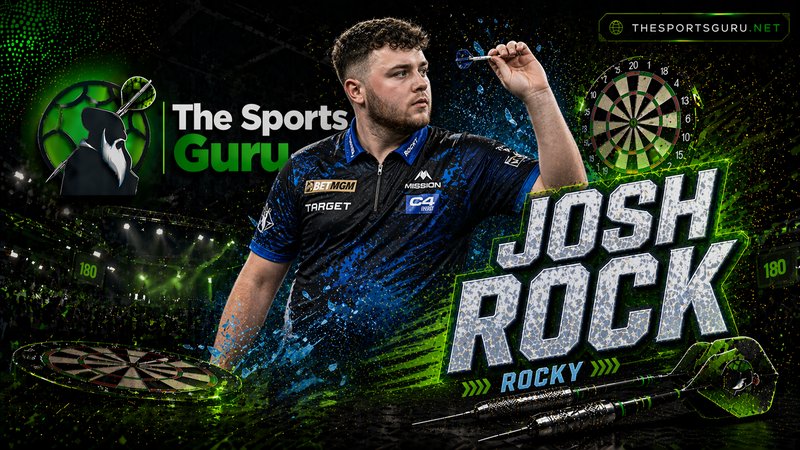
 The Sports Guru
Luke Littler produced one of the great Premier League Darts recoveries in Aberdeen on Thursday night, reeling off three consecutive legs from 5-3 down to beat Luke Humphries 6-5 in the Night 13 final and seize top spot in the standings. We break down how that turnaround unfolded, what it means for the play-off picture with three nights remaining, and why Wayne Mardle believes Littler handles pressure better than anyone else in the sport right now.
With two legs to spare and the throw in his favour, Luke Humphries looked like a man about to claim his first Premier League Darts nightly title since Nottingham on Night Six. That was the moment the contest truly began. From 5-3 down, Luke Littler won three legs in succession, closed out a 6-5 victory, and moved to the top of the 2026 Premier League table for the first time this season. It was the 19-year-old's fifth nightly win of the campaign and his second on the trot.
The final in Aberdeen was, remarkably, the first time the world's two best players had met in a nightly showpiece this year. Humphries had worked his way through a demanding bracket, beating Gian van Veen 6-3 in the semi-finals and knocking out world number one Michael van Gerwen 6-3 at the quarter-final stage earlier in the evening. By the time he stood at the oche for the final, he had already done serious damage to the wider play-off picture. The trouble was, the most dangerous opponent of all was waiting at the other end.
Littler had opened his own night with a clinical 6-3 dismissal of Josh Rock and then dismantled Gerwyn Price 6-1 in the semi-finals, a result that extended his dominant head-to-head record against the Welshman to fifteen wins from his last sixteen meetings. That kind of consistency against a former world champion speaks to more than good form; it reflects a mental edge that Price has visibly struggled to overcome in their recent encounters. He arrived in the final in form, and he showed it immediately with an 11-dart opening leg. The standard from both players in the early exchanges was genuinely high, Humphries responding with a 130 checkout to level at two legs apiece before finding a 10-dart break of throw to move 4-3 ahead. A subsequent hold of throw put him within one leg of the title. Then Littler took over.
The Comeback That Defined the Night
There are players who raise their level under pressure, and there are players who appear impervious to it. Littler belongs firmly in the second category. When Humphries led 5-3 and needed just one more leg, the situation demanded something exceptional from the teenager. He provided exactly that, reeling off three legs without reply to complete a 6-5 win that was as emphatic in its finishing as it was unforgiving to his opponent.
What makes that sequence all the more striking is the context in which it was delivered. Littler was again booed by sections of the Aberdeen crowd during his walk-on, an unwelcome reception that has followed him in recent weeks. He appeared unbothered. His practice had gone well before the night began, and that confidence translated into composure when the match reached its sharpest edge. Winning from that position, against that opponent, in that atmosphere, is not an accident of form. It is a statement of mentality.
The victory also pushed Jonny Clayton off the top of the table. Clayton had already secured his place at Finals Night at The O2 on 28 May alongside Littler, but his Night 13 ended in the quarter-finals where van Veen beat him 6-2. The Welshman now finds himself overtaken by a player who is openly chasing history.
Littler's Eyes on His Own Record
In year one of his Premier League career, Littler won four nightly titles. In year two he won six, setting a benchmark that stood as a personal best. He enters the final three nights of 2026 with five, and the ambition to surpass that tally is not something he is keeping quiet about. What is notable is that his five wins this season have come in clusters rather than being spread evenly across the campaign, suggesting he builds rhythm across consecutive nights rather than grinding out isolated results.
That framing is significant. Littler is not positioning himself against the other players in the field so much as against his own previous version. At nineteen years old, he is already in a competitive dialogue with himself about standards. He also noted that his practice had been sharp in the build-up to Aberdeen and that he felt comfortable throughout the night, a combination that bodes well for the remaining rounds ahead of the Leeds fixture next week, which he said he is particularly looking forward to.
The crowd situation in Scotland drew a characteristically measured response from him. He acknowledged the atmosphere was not the loudest he has played in front of and, with a degree of dry wit, suggested that a Scottish player in the Premier League field might help lift the mood. It is the sort of remark that reveals a player who has fully settled into the circus of professional darts, boos and all.
The Play-Off Race Tightens Considerably
If the main storyline of the night was Littler's ascent to the top of the table, the subplot was equally compelling. With three nights left before Finals Night, the battle for the remaining two play-off places is now extremely tight. Van Gerwen, Humphries, and van Veen are all in contention, but none of them can afford many more slip-ups.
Van Gerwen's quarter-final defeat to Humphries was a double blow. Not only did it cost him points when he had the opportunity to extend his lead over the chasing pack, but it was Humphries who benefited directly. The result means both Humphries and van Veen now trail MVG by just two points heading into the final three nights, a gap that could evaporate in a single week given the format of the competition. In a league where nightly wins are worth three points and runner-up finishes worth two, that arithmetic shifts quickly and is worth keeping in mind when reading the standings. Gerwyn Price, meanwhile, collected two points from his 6-5 quarter-final win over Stephen Bunting and remains in the conversation, though the gap is more significant for him.
Bunting and Rock appear to be running out of runway. Rock was beaten comfortably 6-3 by Littler at the start of the evening, and his position at the foot of the table reflects a difficult season. With three nights remaining and the points deficit he faces, qualification for Finals Night would require a remarkable sequence of results to go in his favour. The same applies, to a slightly lesser degree, to Bunting.
Mardle's Assessment: Pressure Is Where Littler Thrives
Wayne Mardle offered a precise diagnosis of what separates Littler from the rest of the field at this stage of the season. His observation that Littler deals with pressurised moments better than anyone else on the circuit is not just commentary on the Aberdeen final in isolation. It speaks to a pattern that has been visible across the entire campaign, and indeed across Littler's short but already substantial professional career.
The specific moment Mardle highlighted was Humphries holding the throw at 5-3 and finding himself one leg from the title. In most scenarios, that is a position of considerable strength. Against Littler, it became the trigger for a three-leg collapse. Mardle's point was that Humphries did not technically play poorly from that position; Littler simply refused to allow him the space to close the match out. The distinction matters because it speaks to the quality of Littler's response rather than any error on Humphries' part.
From a tactical standpoint, the finish also highlighted something worth noting about how Littler manages his own momentum. He has now won consecutive nightly titles, and the timing of those victories, as the season enters its final stretch, gives him both the points and the confidence that tend to compound on the oche. Players who arrive at a Finals Night having won back-to-back nightly titles carry a different kind of psychological weight into that single-elimination format. The evidence of recent Premier League history suggests that form in the closing nights of the regular season translates more reliably to Finals Night performances than table position alone.
Verdict: Littler Setting the Pace When It Matters Most
The Premier League Darts season has always rewarded players who peak at the right time. Littler, who spent a portion of the middle section of the campaign watching his nightly win tally stall, has timed his resurgence with something close to precision. Two consecutive nightly titles in the final weeks of the regular season, combined with top spot in the standings, puts him in an almost ideal position heading to Leeds and beyond.
Humphries will be the more frustrated of the two Lukes this morning. He produced genuinely excellent darts across the night in Aberdeen, removing van Gerwen and van Veen from the competition before pushing the world number one teenager to five legs in the final. But the 5-3 lead that turned into a 5-6 defeat encapsulates the difficulty of playing against Littler at his best. The margins are slim and the punishment for not converting is immediate.
With three nights left, the standings are delicately balanced enough that any of four or five players could reasonably claim a play-off spot. But the player who looks most likely to go into Finals Night at The O2 on 28 May with maximum momentum is the one already sitting at the top of the table. Luke Littler did not just win in Aberdeen on Thursday night. He sent a very clear message to everyone around him.
Frequently Asked Questions
Humphries had an impressive route to the final, beating Michael van Gerwen 6-3 in the quarter-finals and Gian van Veen 6-3 in the semi-finals. He also produced a 130 checkout and a 10-dart break of throw during the final itself, so the defeat was not down to poor play. Losing from 5-3 up against the tournament's form player will sting, and the result leaves him two points behind van Gerwen in the play-off standings with just three nights remaining.
Littler has now won 15 of his last 16 meetings with Price, a run that extends beyond simple good form. The article notes that Price has visibly struggled to overcome the mental edge Littler holds over him in their recent encounters. Beating a former world champion with that kind of consistency points to a psychological dominance that goes well beyond match-by-match preparation.
Sections of the Aberdeen crowd booed Littler during his walk-on, continuing a pattern that has followed him in recent weeks. He gave no indication of being unsettled, and his composure during the decisive three-leg comeback suggested the hostile reception had no bearing on his performance. The article attributes his ability to block out that atmosphere to strong pre-match practice and an unusually high threshold for pressure.
Littler has moved to the top of the 2026 Premier League table for the first time this season, overtaking Jonny Clayton, who lost in the quarter-finals to van Veen. Clayton and Littler have both already secured their places at Finals Night at The O2 on 28 May. Van Veen and Humphries sit two points behind van Gerwen with three nights left, meaning the remaining play-off spots are still very much up for contention.
In his debut Premier League season, Littler won four nightly titles in total. With five wins already in 2026 and three nights still to play, he is on course to surpass that tally and set a new personal benchmark. The article frames this as Littler openly chasing his own record, adding another layer of motivation to the closing stages of the campaign.
Sources: Match statistics and quotes sourced from Sky Sports coverage of Premier League Darts Night 13 in Aberdeen, 30 April 2026.