 The Sports Guru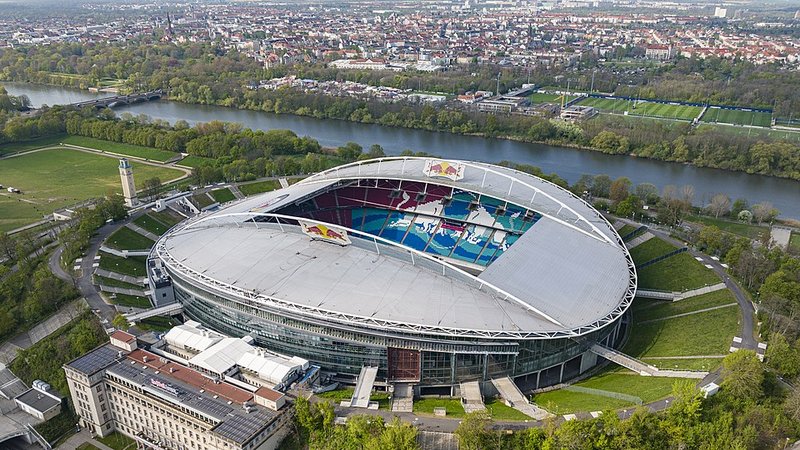
Bournemouth have identified their man to lead the club into what could be its most ambitious era yet, with Marco Rose agreeing a three-year deal to take charge at the Vitality Stadium this summer. The appointment is cost-free given Rose's availability, but comes loaded with genuine European pedigree, a track record of developing elite players, and the experience of navigating Champions League football at multiple clubs. This piece looks at what Rose brings, why Bournemouth chose him, and what his arrival means for a club that could be preparing for European competition for the very first time.
There is a compelling argument that the most important decision Bournemouth will make this year has nothing to do with transfers. The identity of their next head coach will shape everything that follows, from recruitment strategy to European ambition to the club's ability to retain its identity after four transformative seasons under Andoni Iraola. On Monday, that decision became public: Marco Rose has agreed a three-year contract to take over at Vitality Stadium when Iraola departs at the end of the current campaign.
The appointment is, in many respects, a statement of intent. Rose is not a bargain option born of limited ambition. He is a manager with a decade and a half of senior experience across some of European football's most demanding environments, a man who has worked in the Champions League for five consecutive years and helped shape the careers of players who now rank among the best on the continent. That Bournemouth were in a position to attract him speaks to how far this club has travelled.
The timing of the announcement is also significant. Bournemouth sit eighth in the Premier League after Saturday's win at Newcastle, level on goal difference with sixth-placed Chelsea. Europe is not a dream; it is a live possibility. Rose, who has been without a club since his dismissal by RB Leipzig in March 2025, will arrive knowing his first season in English football could involve continental preparation from the outset.
| # | Team | P | W | D | L | GF | GA | GD | Pts |
|---|---|---|---|---|---|---|---|---|---|
| 1 | Arsenal | 34 | 22 | 7 | 5 | 64 | 26 | 38 | 73 |
| 2 | Manchester City | 33 | 21 | 7 | 5 | 66 | 29 | 37 | 70 |
| 3 | Manchester United | 33 | 16 | 10 | 7 | 58 | 45 | 13 | 58 |
| 4 | Liverpool | 34 | 17 | 7 | 10 | 57 | 44 | 13 | 58 |
| 5 | Aston Villa | 34 | 17 | 7 | 10 | 47 | 42 | 5 | 58 |
| 6 | Brighton & Hove Albion | 34 | 13 | 11 | 10 | 48 | 39 | 9 | 50 |
| 7 | AFC Bournemouth | 34 | 11 | 16 | 7 | 52 | 52 | 0 | 49 |
| 8 | Chelsea | 34 | 13 | 9 | 12 | 53 | 45 | 8 | 48 |
| 9 | Brentford | 33 | 13 | 9 | 11 | 48 | 44 | 4 | 48 |
| 10 | Fulham | 34 | 14 | 6 | 14 | 44 | 46 | -2 | 48 |
| 11 | Everton | 34 | 13 | 8 | 13 | 41 | 41 | 0 | 47 |
| 12 | Sunderland | 34 | 12 | 10 | 12 | 36 | 45 | -9 | 46 |
| 13 | Crystal Palace | 33 | 11 | 10 | 12 | 36 | 39 | -3 | 43 |
| 14 | Newcastle United | 34 | 12 | 6 | 16 | 46 | 50 | -4 | 42 |
| 15 | Leeds United | 34 | 9 | 13 | 12 | 44 | 51 | -7 | 40 |
| 16 | Nottingham Forest | 34 | 10 | 9 | 15 | 41 | 45 | -4 | 39 |
| 17 | West Ham United | 34 | 9 | 9 | 16 | 42 | 58 | -16 | 36 |
| 18 | Tottenham Hotspur | 34 | 8 | 10 | 16 | 43 | 53 | -10 | 34 |
| 19 | Burnley | 34 | 4 | 8 | 22 | 34 | 68 | -34 | 20 |
| 20 | Wolverhampton Wanderers | 34 | 3 | 8 | 23 | 24 | 62 | -38 | 17 |
Why Rose Beat the Other Candidates
Bournemouth's search was not a rushed one. Three names were seriously considered: Rose, Ipswich Town's Kieran McKenna, and Rayo Vallecano's Inigo Perez. Each represented a different philosophy and a different level of risk. McKenna has built enormous credibility in English football and was reportedly also considered by Tottenham Hotspur earlier this year. Perez, meanwhile, has drawn attention for quietly overachieving with limited resources at Rayo. Both would have been defensible choices.
Yet Rose offered something neither of the others could match at this particular moment: breadth of experience at the highest European level, combined with an availability that removed any compensation costs entirely. His record of 69 wins from 124 matches at Leipzig alone demonstrates he is no passenger at clubs operating at the sharp end of the Bundesliga. He guided Red Bull Salzburg to two Austrian Bundesliga titles and the Austrian Cup, and won both the DFB-Pokal and the DFL-Supercup with Leipzig. Perhaps most relevant to Bournemouth's ambitions, he qualified for the Champions League with Borussia Monchengladbach using a squad that had no right to compete with the Bundesliga elite on financial terms. That Monchengladbach side was built on collective pressing and disciplined structure rather than individual quality, which is precisely the kind of overachievement Bournemouth's own model depends upon. That particular achievement will not have gone unnoticed at a club whose matchday revenue and commercial income remain constrained by the capacity of their compact stadium.
Bournemouth's hierarchy were specifically impressed by his five years of continuous Champions League involvement and his Europa League experience. The club may well be entering European football for the first time next season, and the learning curve for everyone involved will be steep. Having a head coach who has already navigated those waters at multiple clubs is not just convenient; it is strategically shrewd.
The Player Development Factor
One thread running through Rose's CV is consistently underappreciated in public discourse: his ability to accelerate the development of players who go on to reach the very top of the game. At Borussia Dortmund, he worked with both Erling Haaland and Jude Bellingham during critical stages of their careers. At RB Leipzig, Dominik Szoboszlai developed under his management into the player Liverpool would eventually pay significant money to acquire. These are not peripheral associations; Rose's teams have consistently created the conditions, through high-intensity pressing systems that demand decision-making under pressure, in which young players of that calibre tend to accelerate. They are meaningful managerial contributions to the formation of elite talent.
This matters enormously to Bournemouth because player trading is central to their financial model. The club cannot compete with the wage bills and transfer budgets of the Premier League's upper tier, so the ability to sign players at the right moment, develop them effectively, and sell them at a premium is not just a nice addition to the business plan. It is the foundation of it. Rose's track record in this area aligns precisely with what Bournemouth need from a long-term head coach, not simply someone to manage results week to week but someone whose presence adds value to the players around him.
The Cherries proved last summer that their replacement strategy can work. When Milos Kerkez departed for Liverpool, Illia Zabarnyi moved to Paris Saint-Germain, and Dean Huijsen signed for Real Madrid in a combined outlay approaching £150m, many observers questioned whether the squad could maintain its quality. Adrien Truffert, Bafode Diakite, and Rayan each stepped in and contributed positively. The club will be hoping Rose follows the same pattern of seamless succession, arriving without disruption and making an immediate impact.
Iraola's Legacy and the Weight of Succession
It would be a disservice to this appointment to discuss Rose without acknowledging the scale of what he is walking into. Andoni Iraola has not simply been a good Premier League manager; he has been one of the most tactically refined operators in the division, building a pressing system of genuine intensity and producing results that repeatedly defied the resource gap between Bournemouth and their rivals. The club announced last Tuesday that he would not be extending his contract, and while Iraola himself has indicated he has no other role agreed, he is widely expected to attract significant interest this summer.
Succeeding a beloved and highly regarded manager is never simple, and Rose will be aware that comparisons will be inevitable in the early months of his tenure. His approach to the game, forged in the Red Bull football philosophy at Salzburg before evolving through his time at Monchengladbach, Dortmund, and Leipzig, shares some broad characteristics with Iraola's methods in terms of pressing intensity and positional structure, though Rose has his own distinct voice as a coach and has shown, particularly at Monchengladbach, a willingness to adapt his system to the personnel available rather than imposing a rigid template. Navigating that comparison, while establishing his own identity quickly enough to maintain momentum, will be among his first challenges.
Bournemouth have offered reassurance of their own, pointing to the current 13-game unbeaten run as evidence of a squad that remains fully committed through the transition period. The focus for players and staff alike remains on finishing the season as strongly as possible, which given the proximity to a potential European place, is no small ambition in itself.
A First Season Unlike Any Before
When Rose takes his seat in the dugout at Vitality Stadium this coming summer, Bournemouth will be preparing for their fifth consecutive Premier League season. That alone is a remarkable achievement for a club that was playing in the third tier of English football not so many years ago. But the fifth season could be the most consequential of all.
If Bournemouth maintain their current league position or improve upon it between now and May, Rose will inherit a squad that is capable of European competition. Planning for a first-ever European campaign while simultaneously managing Premier League expectations and the inevitable summer transfer activity will demand exactly the kind of multi-layered managerial experience Rose has accumulated. The fact that he has managed clubs through Champions League group stages, navigated the physical and logistical demands of European midweeks, and emerged with silverware in Germany means he is better equipped for that challenge than most available candidates. Crucially, those experiences also taught him the importance of squad rotation and managing player load across congested schedules, a discipline Bournemouth have not previously needed to exercise at this level.
It is also worth noting that Rose began his managerial career back in 2012 with Lokomotive Leipzig, a full fourteen years before this appointment. He has seen enough in football to know that projects take time, and that the clubs which sustain success at Bournemouth's level are those that build coherently rather than reactively. His decision to sign a three-year contract suggests both parties are thinking along those lines.
Verdict: A Calculated Appointment With Real Upside
Bournemouth's decision to appoint Marco Rose is intelligent on multiple levels. It carries no financial risk in terms of compensation, yet it delivers a manager whose experience and track record are genuine. The absence of any prior management in English football is the one legitimate question mark, but Rose arrives with enough evidence from comparable environments to suggest the adjustment, while real, should not be insurmountable.
The club's instinct for this type of appointment has been sound before. Iraola arrived without Premier League experience and produced results that earned him a reputation as one of the division's finest coaches. The template exists. The culture of the club, the clarity of the playing model, and the quality of the recruitment infrastructure around the head coach have consistently absorbed new arrivals and helped them thrive.
What Rose offers that most managers of his availability level would not is the specific combination of European know-how and player development expertise. For a club potentially standing on the edge of continental football for the first time, with a financial model built on buying and selling talent intelligently, those qualities are not incidental. They are exactly what is needed. Bournemouth have made a considered, well-reasoned appointment, and if Rose can carry even a fraction of his best work from Germany into the south of England, the Cherries' next chapter could be their most exciting yet.
Frequently Asked Questions
Rose was dismissed by RB Leipzig in March 2025, leaving him without a club ahead of the summer. Because he was out of contract and unattached, Bournemouth were able to appoint him without paying any compensation to a previous employer.
Rose qualified for the Champions League with a Monchengladbach squad that could not compete financially with the Bundesliga's top clubs. He achieved that through collective pressing and disciplined structure rather than individual quality, which mirrors the overachievement model Bournemouth themselves depend upon given the constraints of their compact stadium and limited commercial income.
Both were considered seriously and would have been defensible appointments, but neither could match Rose's breadth of experience at the highest European level. With Bournemouth potentially entering European competition for the first time, the club prioritised his five consecutive years of Champions League involvement and his Europa League experience over the other candidates' credentials.
At Leipzig, Rose won the DFB-Pokal and the DFL-Supercup. He also recorded 69 wins from 124 matches at the club, underlining that his tenure produced results at a side competing at the sharp end of the Bundesliga.
At the time of writing, Bournemouth sit eighth in the Premier League following their win at Newcastle, level on goal difference with sixth-placed Chelsea. Europe is described in the article not as a distant ambition but as a live possibility, meaning Rose could begin his first season in English football already preparing for continental competition.
Sources: Match information, managerial statistics, transfer details, and quotes from BBC Sport's coverage of the Bournemouth managerial appointment, including reporting by Bobbie Jackson and analysis by Nizaar Kinsella.