 The Sports Guru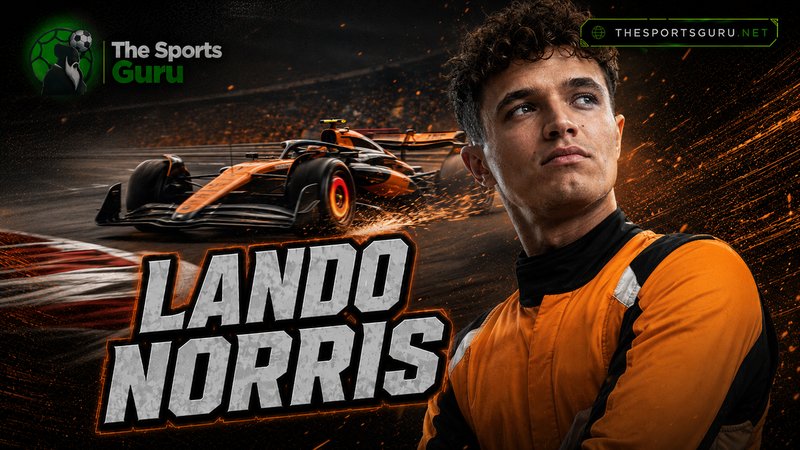
Lando Norris won the last Dutch Grand Prix staged at Zandvoort, but the championship gap behind him did not close. This article explains how a red-flagged start, a bold tyre strategy and a tense Mercedes team orders episode combined to produce a result that flattered McLaren more than it damaged the title leader. Read on to understand why the race that mattered most on the day mattered far less in the standings.
Kimi Antonelli walked away from Zandvoort with his championship advantage untouched and a fright he won't forget in a hurry. Lando Norris claimed victory in the final Dutch Grand Prix ever held at the circuit, out-thinking rather than outpacing Antonelli through a delayed second pit stop, yet the 59-point cushion separating the Mercedes driver from title rival George Russell stood exactly where it had before the race began. A McLaren driver delivering a smart strategic win without shifting the championship battle at all - that tension sits at the heart of Formula 1's first weekend back from its summer shutdown.
A Red Flag Before the Race Had Really Started
Norris claimed pole, though the early running belonged to Antonelli. At the first standing start the Italian slipped past Russell into second, the Mercedes driver caught out by a patch of track on the grid's inside line that stayed greasier than the rest after a rain shower had passed through. Any sense of order lasted barely a lap. Approaching the end of it, Max Verstappen carried too little speed through Zandvoort's sweeping, flat-out final bend, clipped the wet paint marking the racing line with his inside tyres, and watched the rear of his Red Bull step out from under him before he speared front-first into the barrier. He walked away without injury. Just behind, Audi's Gabriel Bortoleto also went sideways but managed to keep all four wheels on the tarmac and carried on, a near-miss overshadowed by the red flag that followed Verstappen's crash.
Once the field regrouped for a fresh standing start, sunshine had dried the surface. Antonelli made the sharper getaway and grabbed the lead. Given how dominant he had looked at points this season, and after Russell had comfortably beaten Norris in Saturday's sprint, the early signs pointed toward the championship leader simply taking charge again rather than anything out of the ordinary unfolding.
The Pit Stop That Rewrote the Race
Norris and Antonelli both pitted for the first time on lap 21, rejoining second and third behind Lewis Hamilton, who held off his own stop for four extra laps. It was across that middle stint that Norris found his rhythm, shrinking Antonelli's cushion to inside two seconds by the point the Mercedes driver made his second stop on lap 40. McLaren then held Norris out for seven further laps, a deliberate gap-building tactic that saw him return to the track only 4.8 seconds adrift of the leader. By lap 52 the trio - Antonelli, Hamilton and Norris - were running in close company.
Two laps on, Antonelli dummied an inside move on Hamilton's Ferrari that never materialised, opening the outside line. Norris seized it, holding his braking point as late as he dared and gliding around Antonelli's outside through the banked Tarzan corner. Hamilton then ran wide at Turn 10, handing Norris the exit speed to complete the move around the Ferrari's outside into the next chicane and take the race lead. McLaren subsequently gambled by keeping Norris out during a later virtual safety car when almost every other frontrunner pitted, a call that added a little risk but still left him comfortably clear at the flag.
Mercedes' Team Orders Squeeze
Antonelli moved past Hamilton for second soon after Norris took over at the front, just before Esteban Ocon's stricken Haas near Turn Three brought out a virtual safety car. Hamilton and Antonelli both used the neutralised laps to change tyres, as did Ferrari's Charles Leclerc - whose earlier frustration stemmed from his team's refusal to let Hamilton by while the two Ferraris ran contrasting strategies.
That left Antonelli, Hamilton and Leclerc all bearing down on Russell, who had yet to make his stop. Mercedes instructed Russell to hand second place to Antonelli, an order he initially resisted, preferring the pair to work together to keep the chasing Ferraris at bay. Russell told his team they were gambling with the podium, and the gamble would likely have failed but for a second virtual safety car with two laps remaining, triggered to let marshals clear debris just as Hamilton readied an attack. That reprieve proved decisive - Russell kept Hamilton behind him to the flag and claimed third, with Leclerc classified next.
Alonso and Aston Martin's Honda Signal
Further down the order, Fernando Alonso put together the standout drive of the day from a lowly grid slot. He had qualified 18th after Aston Martin's new Honda power unit struggled through a tough Saturday, then built his race around a single stop - 34 laps on soft tyres before switching to hards, a strategy that left him defending on ageing rubber late on. Alpine's Pierre Gasly and Racing Bulls' Yuki Tsunoda both closed hard on fresher tyres, yet Alonso timed his pace to hold Gasly off by just over a second at the flag, with Tsunoda a further 4.7secs behind. Ninth place delivered Aston Martin's first points since the chaotic Monaco weekend and, on a day when qualifying had painted a murky picture of the team's form, suggested Honda's engine may finally be turning a corner. Alonso himself has yet to confirm whether he will race on in Formula 1 next season.
Oscar Piastri brought the second McLaren home sixth, ahead of Liam Lawson's Red Bull and Nico Hulkenberg's Audi.
Why the Title Picture Barely Moved
Here the day's theatre has to be weighed against what it actually changed. Norris's victory - his second consecutive win, after also winning the Hungarian Grand Prix from pole before the summer break - trims his deficit to championship leader Antonelli to 83 points. On paper that is enough to call Norris an outside title threat if McLaren can keep up this form, though the shift matters far more to Norris himself than to the two drivers actually contesting the championship. Antonelli's advantage over Russell remains precisely 59 points, unmoved from before the race, because both of his nearest challengers finished behind him whoever crossed the line first. Russell, meanwhile, is tied on points with Hamilton but ranks above him on two wins to one - a detail that could prove decisive if that tie is still standing when the season ends.
Norris and McLaren produced the day's best performance. Antonelli produced the result that keeps shaping the season.
Frequently Asked Questions
Max Verstappen crashed out at the end of lap one, losing the rear of his Red Bull after clipping the wet racing line through Zandvoort's fast final corner and hitting the outside wall, which brought the session to a stop.
McLaren kept Norris out seven laps longer than Antonelli's second stop to create fresher tyres, letting him close in and overtake around the outside of the Tarzan corner before also getting past Lewis Hamilton for the race lead.
George Russell was told to let Antonelli by for second place late on, a call he pushed back against, and a fortunate second virtual safety car helped him keep Hamilton behind for third regardless.
Yes - Alonso finished ninth for Aston Martin, the team's first points since Monaco, after a long opening stint on soft tyres followed by a switch to hards.
Antonelli still leads Russell by 59 points, unchanged from before the weekend, while Norris's win moves him to 83 points off the championship lead.
Research: This article uses the archived evidence supplied for this story. Story inspiration: BBC Sport's original report.