 The Sports Guru
Ollie Robinson has gone from believing his England career was finished to receiving personal reassurances from the head coach and managing director. We look at what those conversations mean, where Robinson stands among a thin pool of available fast bowlers, and whether a Test comeback is genuinely plausible ahead of the New Zealand series.
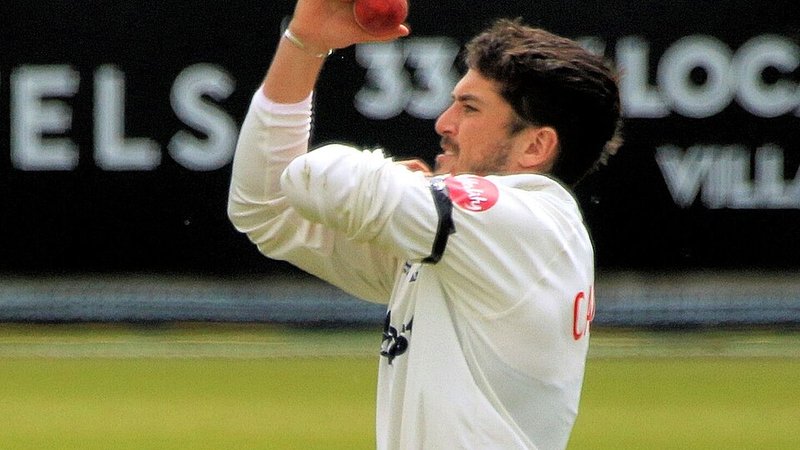
There are moments in a cricketer's career when a single text message carries more weight than any contract clause. For Ollie Robinson, a message from head coach Brendon McCullum at the start of this county season landed precisely that way, arriving at a time when the Sussex seamer had quietly accepted that his England chapter was over. It was not over. And Robinson, now captaining Sussex and rediscovering the rhythm that made him such a potent Test operator, is allowing himself to believe in one more opportunity.
Robinson had accumulated 76 wickets at 22.92 across 20 Test caps between June 2021 and February 2024, a record that places him comfortably among the more productive England seamers of recent years. His method at Test level was always built on accuracy and lateral movement rather than pace, which makes his wicket average particularly meaningful: bowlers of his type generally need conditions to assist them, yet Robinson's numbers held across a range of surfaces. Yet his time in the Test arena was persistently undermined by fitness concerns, notably back spasms that curtailed his effectiveness against Australia in 2021-22 and against India two years later. The India tour also appears to have cooled his relationship with both McCullum and captain Ben Stokes, though Robinson, to his credit, is largely resistant to rehearsing the grievances. The practical consequence was a loss of his central contract in October 2024.
What followed was a quiet rebuild at Hove. Robinson took 39 wickets at 24.74 in 10 matches for Sussex through 2025 and has picked up further momentum this summer, adding 11 wickets at 28.54 from 104 overs alongside a contribution that underlines his value as a genuine lower-order batter. An unbeaten century, his second in first-class cricket, formed part of a ninth-wicket stand with Jack Carson against Surrey that spoke to a competitor in full command of his faculties. This is not a bowler coasting through county cricket; this is someone making a pointed argument to selectors.
What McCullum and Key Actually Said
The significance of the direct outreach from McCullum and managing director Rob Key should not be understated. England's management rarely makes courtesy calls. "I had a text from Baz at the start of the season, just to say that the door was still open, which was nice," Robinson told ESPN Cricinfo. That message alone shifted Robinson's entire frame of reference for the summer. He had assumed the door was firmly shut; suddenly he understood it was not.
Key went further than a text. "Keysy rang me as well, to say 'take wickets, knock the door down' and there's still a spot for you," Robinson said. Key also attended Sussex's match against Warwickshire at Hove and followed up with a personal note on Robinson's bowling. "Keysey came down to the Warwickshire game at Hove and just text me saying how well I bowled, how nice my rhythm looked. It was really nice to hear that from him." The physical attendance matters as much as the message. When a managing director travels to watch a county game and takes the time to comment on a specific bowler's rhythm, it is not a casual observation. It is reconnaissance. For a bowler whose action is built on repeatable, high-release-point precision, rhythm is not a vague compliment; it is the single quality selectors most want to see sustained over a county season before committing to a Test recall.
Robinson's own reading of the situation has transformed accordingly. "For me, at the start of the season when I took the captaincy on, I didn't realise the door was still open. I thought it was closed. It's definitely spurred me on this season." Taking the Sussex captaincy appears to have sharpened his focus rather than divided it, lending him the kind of ownership and purpose that England's management may well regard as a proxy for the maturity they once doubted.
A Bowling Attack Running Short of Options
England's seam bowling resources for the New Zealand series, which opens on 4 June with the squad expected to be named in mid-May, are thinner than they have been at almost any point during the Stokes-McCullum era. Chris Woakes retired last summer, joining Stuart Broad and James Anderson in departing the Test scene within a short window. Mark Wood, who managed only 11 overs in the opening Ashes Test before a knee injury ended his winter, has not yet returned. Brydon Carse is also sidelined, and Jofra Archer remains occupied in the Indian Premier League. Matthew Potts endured a difficult Ashes outing in Sydney, which further muddies his claims.
That leaves Gus Atkinson and Josh Tongue as the only bowlers widely considered to be certainties for the squad. Two confirmed seamers for a four or five-match series is a precarious position, and it creates precisely the kind of vacancy that Robinson, with his height, movement off the pitch, and proven ability to take wickets at Test level, is designed to fill. His ability to bowl long spells at a consistent length is an underappreciated part of his value to a side that often asks its seamers to share a heavy workload. Essex's Sam Cook, who earned a Test cap against Zimbabwe last summer, is a credible alternative. Sonny Baker, the 23-year-old Hampshire seamer who has been clocked at 92mph this season, represents a more speculative option. But neither carries the Test pedigree that Robinson does.
The Maturity Argument
Perhaps the most striking aspect of Robinson's public position is the combination of accountability and restraint he has brought to discussing the India fallout. He acknowledges something went wrong without constructing a narrative around it. "I have no issues with McCullum and Stokes. I never have to be honest. A few things went on in India. I don't know what they really were. We've never really ironed anything out." It is an unusual admission: a senior professional conceding he remains uncertain about the precise nature of a falling-out. But the tone is pragmatic rather than aggrieved, and the conclusion he draws is telling. The outreach from McCullum and Key suggests that, whatever the friction was, it is no longer a barrier.
Robinson has also been candid about his own evolution as a cricketer and a person. "I probably feel more ready now than I did when I first got into the England team. And I've probably grown up a bit since then as well." That kind of reflection, honest rather than performative, is exactly what England's management will want to hear from a bowler they are considering reintegrating into a dressing room that demands collective accountability. County captaincy has a way of accelerating that process, forcing a player to consider the whole picture rather than just their own performance. The fact that Robinson sought the Sussex captaincy rather than simply accepting reduced county duties suggests the instinct runs deeper than image management.
Verdict: The Case Is Compelling
Robinson will not secure his place back in the England Test side on sentiment or past contribution. The 76 wickets at under 23 are a compelling argument, but what really matters between now and mid-May is whether he continues to take wickets for Sussex and does so in a way that makes the selectors' decision straightforward rather than debatable. Given the depletion of England's seam options, the bar is arguably lower than it has been at any point since he first earned a cap. The personal contact from McCullum and Key, the captaincy, the century against Surrey, the 104 overs already in his legs this season, all of it points towards a player who has used a difficult 18 months productively. England, quietly, appear to agree.
Frequently Asked Questions
McCullum sent Robinson a text at the start of the 2025 county season confirming that the door to England selection remained open, while Key followed up with a phone call telling Robinson to "take wickets, knock the door down." Key also attended Sussex's match against Warwickshire at Hove and messaged Robinson afterwards to praise the quality of his rhythm. The combination of direct personal contact and a physical visit from the managing director signals that England's management are actively monitoring Robinson rather than simply being polite.
Robinson's central contract was not renewed following persistent fitness problems, most notably back spasms that reduced his effectiveness on the Australia tour in 2021-22 and again during the India tour two years later. The India tour also appears to have damaged his working relationship with both McCullum and Ben Stokes, though Robinson has largely avoided discussing the specifics of that falling out publicly.
Robinson took 39 wickets at an average of 24.74 across 10 matches for Sussex in 2025 and has continued that form into the current summer with 11 further wickets at 28.54 from 104 overs. He also contributed an unbeaten century, his second in first-class cricket, as part of a ninth-wicket stand with Jack Carson against Surrey, reinforcing his value as a lower-order batter capable of influencing matches.
Robinson relies on accuracy and lateral movement rather than pace, which means he is more dependent on helpful conditions than a genuinely quick bowler would be. Seamers who operate that way typically see their averages inflate on unhelpful surfaces, so sustaining a 22.92 average across 20 Tests on varied pitches demonstrates that his method was consistently effective rather than merely flattered by favourable conditions.
Robinson has said that when he accepted the Sussex captaincy at the start of the season, he had already concluded that his England career was over and framed his summer around county responsibilities rather than international ambitions. It was McCullum's message, arriving around the same time, that changed that outlook and gave him a clear competitive target beyond leading his county side.
Sources: Reporting draws on UK sports press coverage of the England cricket selection picture, with career statistics and squad context verified against official county and international cricket records.