 The Sports Guru
After nearly a decade of near-misses, contractual complications, and rival bouts getting in the way, the all-British heavyweight collision between Tyson Fury and Anthony Joshua is officially confirmed for the final quarter of 2026. This piece traces the tortuous path that brought both men to this point, what stands between them and fight night, and why this contest carries a weight that transcends the sport. Read on for the full picture.
For a generation of British boxing supporters, this moment has been so long in arriving that belief in it has worn thin. Yet on Monday 27 April 2026, with two short words and the unmistakable energy of a promoter who has been waiting years to type them, Eddie Hearn made it real. "Signed, sealed and delivered! AJ vs Fury is on!" the Matchroom chief posted on social media, ending nearly a decade of speculation, false dawns, and scheduling heartbreak surrounding the two biggest heavyweights this country has ever produced.
Ring Magazine independently confirmed the fight as a "done deal" set for Q4 2026, lending institutional weight to Hearn's announcement. Fury had already provided the loudest early signal earlier this month when, microphone in hand after beating Arslanbek Makhmudov at Tottenham Hotspur Stadium, he publicly demanded Joshua step up. What felt like theatre in that moment has since taken on an entirely different character. Both sides of this deal are now pointing in the same direction.
Hearn framed it in terms that spoke to years of personal investment as much as commercial calculation. He called it "the biggest piece of business we've ever done but more importantly the one we've always wanted," adding that "the biggest year of AJ's career" was now firmly underway. That phrasing matters. This is not merely a fight being sold. For those inside the Joshua camp, it represents the culmination of a career narrative that has swung dramatically between triumph and setback.
A Decade of Circling, Crashing, and Coming Back
The story of why this fight has taken so long to materialise is, in many ways, the story of heavyweight boxing over the past ten years. Fury first claimed a world title in November 2015 when he dethroned the seemingly immovable Wladimir Klitschko. Joshua, having captured Olympic gold at London 2012, was accelerating through the professional ranks at precisely that moment. By the time Joshua collected his first world championship belt in 2016, however, Fury had already stepped back from the sport, disappearing into a prolonged period of personal difficulty that kept him away for nearly three years.
The two men's timelines refused to align. When Fury returned and eventually captured the WBC title by defeating Deontay Wilder, Joshua was the unified IBF, WBO, and WBA champion. An undisputed heavyweight title fight looked not just possible but inevitable. It did not happen. Fury went into a third bout with Wilder; Joshua, shockingly, lost to Oleksandr Usyk, and then lost to him again. Fury was beaten by Usyk too, a result that sent him into a second retirement at the start of 2025. Both men's world title belts were gone. Yet paradoxically, their appeal to the British public had not diminished. If anything, the shared experience of defeat made this meeting feel more human, more necessary. There is a version of this fight that would have been a collision of champions at their peak; what we are getting instead is something rawer and, arguably, more compelling because of it.
Fury's return earlier this month, a controlled points win over the formidable Makhmudov in north London, served as his proof of concept. He was fit, focused, and immediately on message about who he wanted next. The timing was deliberate. Joshua, meanwhile, had been navigating recovery from injuries sustained in a deeply distressing accident that claimed the lives of two close friends and members of his team. That context deserves acknowledgement. The fact that Joshua is now back in training camp, with Usyk of all people in his corner offering preparation support, speaks to a resilience that goes beyond the professional.
One Hurdle Remaining: Kristian Prenga on July 25
Before Joshua can contemplate Fury, he must first navigate a comeback bout against Kristian Prenga on July 25, the location confirmed as Saudi Arabia. Comeback fights for elite heavyweights carry their own particular anxiety. They are not merely warm-ups; they are psychological and physical stress tests following lay-offs, and the scrutiny on Joshua in that contest will be immense given everything that has preceded it. For a fighter whose confidence was visibly shaken in both Usyk defeats, the Prenga bout is as much about re-establishing his own belief in himself as it is about conditioning.
Hearn had previously identified November as the target month for the Joshua-Fury showdown, a timeline that remains plausible if the Prenga bout proceeds cleanly. Sky Sports Boxing expert Andy Scott, who has spoken directly with Spencer Brown of Gold Star Promotions, the company representing Fury, confirmed the picture on the Fury side is equally clear. Brown's message was unambiguous: "go ahead and confirm it."
Scott also confirmed that the arrangement in place is a two-fight deal, a detail that significantly raises the commercial and sporting stakes. Should the first contest be as competitive as both men's records suggest it could be, a rematch clause adds another layer of longevity to this rivalry. It also signals that both camps are not viewing this as a one-off spectacle but as a structured, sustained partnership between two of the sport's most marketable names. A two-fight structure also changes the psychological dynamic of the first bout: neither man can simply bank on one night to define the outcome of this particular chapter.
Venue, Date, and One Unexpected Demand
The specific date and venue remain unconfirmed. Hearn has consistently pointed towards a British stadium setting, and given both men's history of filling large outdoor venues, that ambition is entirely credible. Wembley, an outdoor Liverpool venue, and a return to Cardiff's Principality Stadium would all be logical candidates. Saudi Arabia, which hosted Joshua's recent bouts and has become an increasingly significant player in global boxing promotion through its association with Turki Alalshikh, cannot be entirely ruled out either, though the appetite for a home-crowd atmosphere in Britain would appear to favour a domestic setting.
Scott relayed one particularly memorable condition attributed to Turki, the Saudi promoter with significant influence over this deal: that pop star Dua Lipa must perform at the event. "I don't know if they're pulling my leg here," Scott said, "but I'm hearing that Turki has stipulated that Dua Lipa needs to perform at the fight." Whether that condition is literal, aspirational, or simply a colourful negotiating flourish remains to be seen, but it underlines the scale at which everyone involved is thinking. This is not a boxing event. It is a cultural moment being constructed from the ground up.
What is analytically interesting here is the role Saudi investment and international promotional influence has played in finally forcing this fight over the line. For years, the structural barriers between Hearn's Matchroom operation and Fury's various promotional arrangements made the fight commercially complex. The arrival of a third party with deep pockets and an appetite for marquee events appears to have provided the neutral ground on which both camps could finally reach agreement. Saudi Arabia did not just finance recent heavyweight bouts; it may have provided the architecture that made this one possible.
What Usyk in Joshua's Corner Actually Means
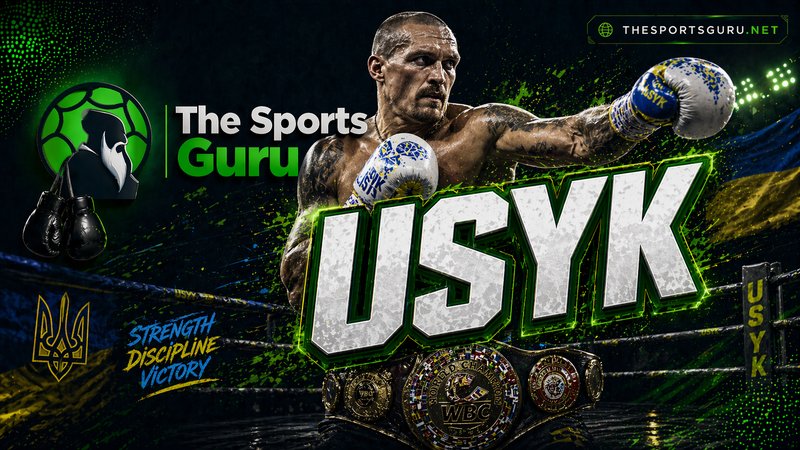
One of the more remarkable subplots in this story is the presence of Oleksandr Usyk actively working with Joshua in training camp ahead of the Fury fight. Usyk is the man who beat Joshua twice and who also handed Fury a unanimous decision defeat. His intimate knowledge of both men in a competitive context is genuinely unprecedented. That Joshua has the man who twice defeated him preparing him to beat the man who Usyk also beat tells you something about the unusual, borderless nature of the current heavyweight landscape.
Usyk has publicly backed Joshua to beat Fury, and while promotional solidarity plays a part in that assessment, there is a substantive argument underneath it. Fury, for all his gifts, showed defensive vulnerabilities and signs of ring rust against Makhmudov before finding his range. A sharper, more physically imposing Joshua, rebuilt in confidence and guided by the one man who knows what it takes to beat Fury, could present a genuinely troubling proposition for the Mancunian. Crucially, Usyk's style against Fury relied on volume and movement; Joshua's greater physical power means his route to victory, should he arrive in the right condition, may look quite different.
Verdict: Why This Fight Still Matters Deeply
There is a temptation, after so many years of waiting, to greet this confirmation with cautious reserve rather than enthusiasm. That caution is understandable. Joshua and Fury have been "close" to fighting before. Contracts have allegedly been near completion only for the bout to dissolve. But the weight of evidence this time is qualitatively different. Both promoters, both camps, and an independent authority in Ring Magazine are all confirming the same outcome. A two-fight deal is in place. A comeback bout is scheduled. A window is confirmed. The pieces are arranged.
Tactically, this match-up offers genuine intrigue. Fury's unorthodox movement, lateral footwork, and ability to neutralise pressure through awkward angles will test a Joshua whose own evolution under various trainers has emphasised physical power and intensity. Whether Joshua can cut off the ring effectively and impose his size and strength, or whether Fury can frustrate and outpoint him across twelve rounds, is a question that no amount of analysis can definitively answer in advance. That uncertainty is precisely what makes it compelling.
British heavyweight boxing has produced world champions, undisputed fights, and unforgettable nights. But it has never produced this particular match-up, and the two men at the centre of it have spent their entire professional lives being compared to one another without ever sharing a ring. By the final quarter of 2026, that changes. For the sport in this country, the wait is over.
Frequently Asked Questions
Eddie Hearn, the Matchroom chief, announced the fight on Monday 27 April 2026 via social media, declaring it "signed, sealed and delivered." Ring Magazine independently confirmed the bout as a "done deal" scheduled for Q4 2026, lending the announcement institutional credibility beyond a promoter's social media post.
The two men's careers repeatedly refused to align. Fury disappeared from the sport for nearly three years after his 2015 title win, and when he returned and won the WBC belt, Joshua was suffering shock consecutive defeats to Oleksandr Usyk. Fury was then beaten by Usyk himself and entered a second retirement in early 2025, meaning neither man held a world title belt when the fight was eventually agreed.
The Makhmudov fight served as Fury's proof of concept following his second retirement, demonstrating that he was fit and focused after his defeat to Usyk. Immediately after the points win, Fury publicly called out Joshua by name, a demand that initially appeared theatrical but was shortly afterwards validated by the formal confirmation of the fight.
Joshua sustained injuries in an accident that claimed the lives of two close friends and members of his team. The article notes that he has since returned to training camp, though it stops short of providing full details. Hearn's description of 2026 as "the biggest year of AJ's career" carries additional weight given that personal backdrop.
The article argues that the shared experience of defeat has made the contest feel more human and compelling than a straightforward clash of reigning champions would have been. For British boxing supporters who have followed both careers through setbacks as well as triumphs, the fight carries a narrative weight that the belts alone could not supply, representing the culmination of a decade-long story rather than simply a title unification.
Sources: Fight confirmation details, quotes, and background information drawn from Sky Sports Boxing reporting by John Dennen, published 27 April 2026, with additional context from Ring Magazine's social media announcement and Sky Sports Boxing expert Andy Scott's commentary.