 The Sports Guru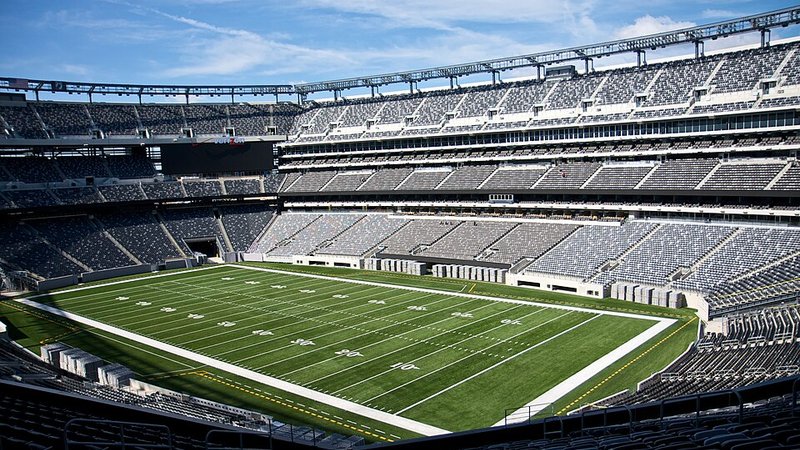
A row between the New Jersey state government and FIFA has broken out over the eye-watering cost of getting to World Cup matches at MetLife Stadium this summer. With train fares potentially topping $100 for a 30-minute journey, and no concession prices for children or seniors, this piece looks at who is responsible, what both sides are saying, and what it means for England and Scotland supporters travelling to the New York-New Jersey area.
Before a ball has been kicked at the 2026 World Cup, one of the tournament's marquee venues has already become the centre of a political and financial dispute. The issue is not ticket allocation or stadium safety. It is how supporters are supposed to get there, and who should be footing an enormous bill to make that happen.
Plans understood to be in place at NJ Transit would see the price of a train ticket from Penn Station in New York to MetLife Stadium in New Jersey rise to more than $100 (£73.80) for a return journey. That represents a near sevenfold increase on the standard fare of $12.90 (£9.50). Critically, no concession pricing is planned, meaning children and senior citizens would face the same charge as any adult supporter.
The MetLife Stadium, which will be rebranded as New York/New Jersey Stadium during the tournament in line with FIFA's rules on corporate venue names, is one of the most significant sites in the entire competition. Eight matches are scheduled there, including the final on 19 July, making the question of affordable access anything but a minor logistical footnote.
A Governor Takes Aim at FIFA's Finances
New Jersey Governor Mikie Sherrill has been direct in naming where she believes responsibility lies. Writing on X on Wednesday evening, Sherrill made clear that she regards FIFA, not New Jersey taxpayers or commuters, as the party that should be covering the cost of World Cup transport. Her core argument is straightforward: FIFA is generating enormous revenues from this tournament, while local infrastructure is being asked to absorb costs it was never designed to carry.
Sherrill revealed that NJ Transit is facing a bill of approximately $48 million to operate safe transport for fans travelling to and from matches. Against that, she pointed out that FIFA is expected to generate around $11 billion from the tournament overall. The governor's position is that an organisation sitting on revenues of that scale has no justification for contributing nothing to the transport burden placed on a host state.
"We inherited an agreement where FIFA is providing $0 for transportation to the World Cup," Sherrill wrote. "And while NJ Transit is stuck with a $48m bill to safely get fans to and from games, FIFA is making $11bn. I'm not going to stick New Jersey commuters with that tab for years to come. FIFA should pay for the rides. But if they don't, I'm not going to let New Jersey get taken for one."
FIFA's Response and the History of the Host Agreement
FIFA has pushed back against the governor's characterisation, describing itself as "surprised" by her comments. A spokesperson for the governing body argued that the original Host City Agreements signed in 2018 actually required free transportation for fans to all matches, a provision FIFA says it later softened in recognition of the financial pressure that obligation placed on host cities.
In 2023, FIFA adjusted those agreements so that supporters would be able to travel "at cost" rather than for free, a change the governing body presents as a concession to host cities rather than an abdication of responsibility. That framing is debatable. Moving from "free" to "at cost" only represents a concession if the host city is the one bearing that cost rather than the fan at the ticket barrier. The FIFA statement added that the organisation had spent years working with host cities on transport and mobility planning, including lobbying for federal funding to support infrastructure costs.
FIFA also questioned the premise that other major events at MetLife had required organisers to subsidise fan transport, pointing out that major sports fixtures and global concert tours had not come with such an expectation. The implication is that the World Cup is being treated differently to comparable large-scale events, a point likely to generate debate on both sides of the argument. The distinction worth pressing, however, is that no concert promoter commits a host city to eight fixtures across two months and then steps back from the transport question entirely.
Not Just New Jersey: Foxborough's Own Pricing Problem
MetLife is not an isolated case. The Gillette Stadium in Foxborough, outside Boston, has seen comparable fare increases applied to rail travel for World Cup matches. Train tickets there have been set at $80 (£59) per journey, while coach tickets are priced at $95 (£70). The pattern suggests this is a broader structural problem with how the tournament's transport economics have been designed, rather than a difficulty specific to the New York metropolitan area.
What makes these figures particularly striking is that neither venue is remote. Foxborough is a short journey from central Boston, and MetLife is a 30-minute train ride from Penn Station. These are not stadiums requiring complex multi-modal connections. They are accessible urban venues where the standard travel infrastructure already exists. The pricing uplift is therefore not a reflection of extraordinary logistical demands but of a financial model where match-day revenue flows to FIFA while operational costs fall on public transport networks.
The parking situation adds another layer of expense for those who choose to drive. A parking space at MetLife on a match day will cost $225 (£166), while Foxborough charges $175 (£129) per car. For a family of four combining tickets, transport, and parking, the costs before a single drink or meal are substantial.
The Impact on England and Scotland Supporters
The practical consequences will land most heavily on travelling fans who have already committed to the tournament. England supporters face both affected venues directly. Gareth Southgate's successor will lead the Three Lions against Ghana in Foxborough on 23 June, before a second group-stage fixture at MetLife against Panama on 27 June. Anyone following England through both games will need to navigate the elevated transport costs at two separate venues across less than a week. That is not a hypothetical inconvenience. It is a near certainty for the thousands of supporters who will have booked travel and accommodation around those specific fixture dates.
Scotland supporters, managed by Steve Clarke, are scheduled to play both of their group games in Foxborough, taking on Haiti on 13 June and then Morocco on 19 June. For Scottish fans who have made the trip across the Atlantic, the Foxborough train pricing will apply for both fixtures.
It is worth noting that for many supporters, particularly those travelling from the United Kingdom, the cost of flights and accommodation to reach North America will already represent a significant financial outlay. Transport pricing of this level, added on top of match tickets that are themselves expensive, risks the practical experience of attending the World Cup becoming inaccessible for supporters who are not in the higher income brackets. That tension between the prestige of the event and the real-world cost of attending it is one that has followed FIFA around for years.
What This Row Reveals About the 2026 Model
The dispute between Sherrill and FIFA is ultimately about something more fundamental than train fares. It reflects a recurring tension in how major international tournaments are structured: the commercial and broadcast revenues flow predominantly to the governing body, while host cities and states absorb significant public costs in return for the prestige and ancillary economic benefits of staging the event.
FIFA's reference to $11 billion in projected revenue is striking context. That figure dwarfs the $48 million NJ Transit says it needs to run World Cup services safely. Were FIFA to contribute meaningfully to transport costs across all host cities, the proportional impact on its overall finances would be minimal. The question of why it has not done so, or why the 2023 adjustment to host agreements shifted the obligation from "free travel" to "travel at cost" without any direct FIFA contribution, is one the organisation may find difficult to answer convincingly as the tournament approaches.
It is also worth observing that this row has broken publicly while tickets are still being purchased and plans are still being made. That timing matters. If NJ Transit officially confirms its pricing on Friday as expected, supporters buying tickets now or in the coming weeks will at least have clarity about what they are committing to. That is better than discovering the costs only after arrangements have been finalised. Whether it changes the calculus for some potential attendees is another question entirely.
The 2026 World Cup carries enormous promise. It will be staged across three countries, in iconic venues, with a 48-team format promising more games and more stories than any previous edition. But the pre-tournament narrative in New Jersey is a reminder that the logistics of getting tens of thousands of people to and from a stadium on a match day cannot be an afterthought. Whoever ends up bearing the cost, the expectation from supporters is simple: getting to a World Cup game should not require a second mortgage.
Sources: Match scheduling details, quotes, and transport pricing figures sourced from BBC Sport's reporting on the World Cup 2026 transport dispute, including statements from New Jersey Governor Mikie Sherrill and a FIFA spokesperson.