 The Sports Guru
The World Grand Prix returns to Leicester with a format that can undo even the calmest player, and this piece explains why that oddity matters as much as the £150,000 top prize. Read on to understand how the draw, the prize ladder and the escalating sets format decide who survives long enough to be tested by it, and why Luke Littler's title defence and Luke Humphries' hunt for a second crown could hinge on it.
Darts rarely asks its best players to unlearn their own game, but the World Grand Prix does exactly that every year. From September 28, the Mattioli Arena in Leicester hosts a tournament where every leg begins on a double rather than open scoring - a quirk that has buried seeded favourites and rewarded whoever adapts fastest. Defending champion Luke Littler returns to Leicester chasing a second successive Grand Prix, Luke Humphries wants a second title of his own since 2023, and Dutch number one Gian van Veen is back in the arena where he broke the tournament's record average last year, only to lose to Littler.
A prize pot that pays every round
The top prize has been boosted to £150,000 for 2026, with the runner-up collecting £80,000. Semi-finalists take £50,000, quarter-finalists £35,000, and losers at the second-round stage £20,000. Even a first-round exit is worth £7,500. Sky Sports lists the total prize fund at £750,000 - and the maths checks out: across 16 first-round losers, eight second-round losers, four quarter-final losers, two semi-final losers, the runner-up and the champion, the payouts add up to exactly that figure. Nobody leaves Leicester with nothing.
The two Lukes chasing different history
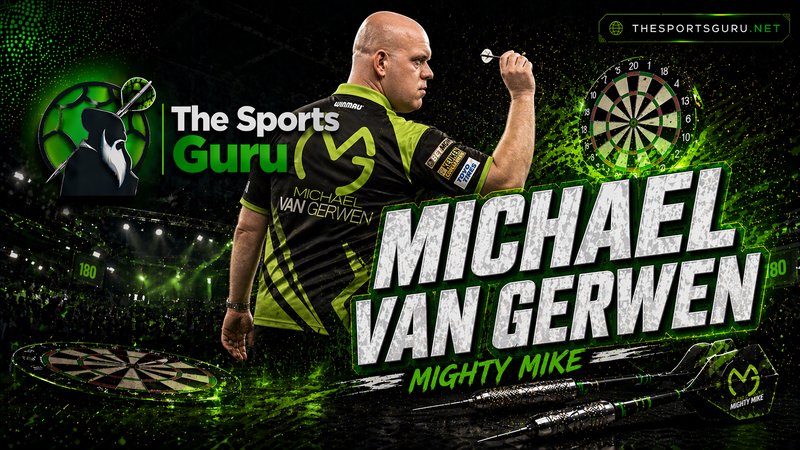
Littler arrives as the man to beat, having already won this event once. Humphries, the 2023 champion, is trying to add a second Grand Prix to his record. Both will find company in a field stacked with past winners: six-time champion Michael van Gerwen, two-time winner James Wade, and Welsh pair Gerwyn Price and Jonny Clayton, who won in 2020 and 2021 respectively. Northern Ireland's Josh Rock and two-time semi-finalist Danny Noppert are also in, while Stephen Bunting and Wessel Nijman make their returns to Leicester.
Bunting, speaking ahead of the tournament, said Littler has "changed" darts since arriving on the scene, though he does not expect the teenager to match Phil Taylor's tally of world titles. It is a reminder that reputation counts for little once the double-start rule takes over - a point Van Veen knows better than most, having produced the tournament's record average in Leicester last year and still lost to Littler.
Why starting on a double is the real opponent
The World Grand Prix is the only event on the PDC calendar that requires players to open every leg on the outer ring or the bullseye, not just finish there. Miss the opening double and a player can burn several visits before a leg even properly begins - the sort of pressure that has ended plenty of favourites' weeks early. The scoring itself stays familiar: 501 points, with a maximum single visit of 180 (three treble twenties), and each successful finish counting as one leg.
What changes is the shape of the matches. The first round is played as best of three sets. That rises to best of five for the second and third rounds, best of nine for the semi-finals, and best of 11 for Sunday's final - an escalation that means the pressure of the double-start rule only intensifies as the week goes on.
Schedule: seven days in Leicester
Round one is spread across two evenings from 6pm: Monday September 28 features Danny Noppert against Niko Springer, Ross Smith against Cameron Menzies, and top seed Luke Littler's opener against Luke Woodhouse, among others. Tuesday September 29 brings second seed Luke Humphries against Dave Chisnall, plus Josh Rock, James Wade and Gary Anderson in action. Round two follows on Wednesday and Thursday from 7pm, with the order of play still to be confirmed, before the quarter-finals on Friday October 2, semi-finals on Saturday October 3 (from 8pm) and the final on Sunday October 4 (also from 8pm).
The 32-player field is built from two routes: the top 16 players on the PDC World Rankings qualify automatically, with a further 16 places going to the leading names on the ProTour Rankings who sit outside that top 16. That second group often arrives less accustomed to the pressure of opening every leg on a double under the arena lights - a factor that, in theory, can matter as much as ranking once the tournament begins.
A trophy few players have ever mastered
The winners' list since the tournament began in 1998 tells its own story. Phil Taylor won it 11 times before his retirement from the event, and Michael van Gerwen has added six titles since 2012. Beyond those two names, repeat winners are rare: James Wade has two, and only a handful of others - Gerwyn Price, Jonny Clayton, Luke Humphries, Mike De Decker and now Littler - have managed one apiece since 2020. Whichever way the seeding runs this week, Leicester's format has a habit of humbling anyone who assumes seeding is destiny.
Which is why the draw sheet matters less this week than the practice board. The Mattioli Arena rewards whoever adapts fastest to opening a leg on a double under pressure, not necessarily whoever walked in as favourite.
Frequently Asked Questions
The tournament runs from September 28 to October 4, 2026, at the Mattioli Arena in Leicester.
Players must start every leg by hitting a double or the bullseye, then finish it the same way, scoring down from 501. It is the only PDC event with this rule for both starting and finishing legs.
The total prize fund is £750,000, with the winner collecting a boosted £150,000 and the runner-up £80,000. Even first-round losers receive £7,500.
Phil Taylor won the event 11 times between 1998 and 2013. Michael van Gerwen, competing again in 2026, has won it six times since 2012.
The top 16 players on the PDC World Rankings qualify automatically, with a further 16 places filled by the leading players on the ProTour Rankings who are outside that top 16.
Research: This article uses the archived evidence supplied for this story. Story inspiration: Sky Sports' original report.