 The Sports Guru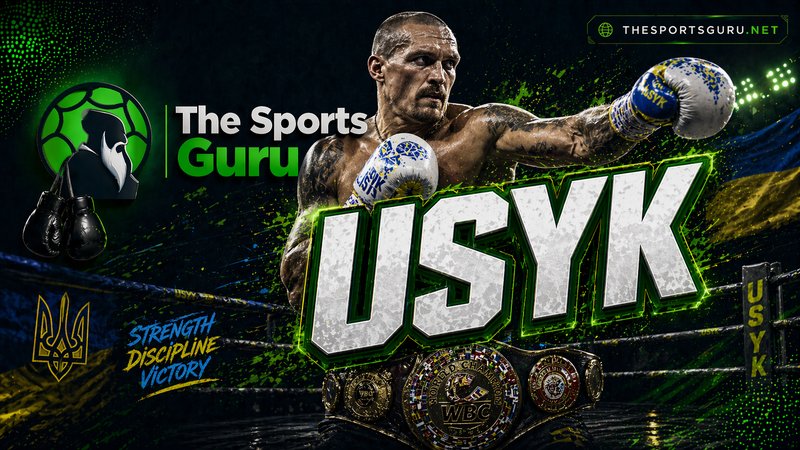
Fabio Wardley is not content simply occupying the WBO heavyweight throne. With a domestic title defence against the dangerous Daniel Dubois on the immediate horizon, the Ipswich man is already mapping a route to Oleksandr Usyk and the remaining belts. This piece examines why Wardley's unconventional profile might give him a genuine argument for that shot, and what stands in his way.
There is a particular kind of confidence that belongs only to fighters who have built everything from scratch. Fabio Wardley arrived in professional boxing without a single amateur bout to his name, a background so unusual in world-title circles that it almost defines him. Now, as WBO heavyweight champion, he is not only planning to defend that title against one of the division's most genuinely threatening punchers, he is already looking past the immediate danger toward Oleksandr Usyk and a unification that would complete one of the sport's most improbable ascents.
That immediate danger is considerable. Daniel Dubois knocked out Anthony Joshua in 2024, a result that announced him as a legitimate force in the division's upper tier. He is heavy-handed, forceful, and motivated by the prospect of reclaiming a version of the world championship he has held before. For Wardley, this weekend is not a stepping stone; it is a serious examination. But the manner in which the champion speaks about the fight reveals something important about the way he is wired. There is no manufactured bravado, no attempt to diminish Dubois. There is instead a quiet, direct acknowledgement of what is at stake, followed by the declaration of intent that has come to characterise Wardley's public voice: "I've got one belt and I'm not planning on stopping there."
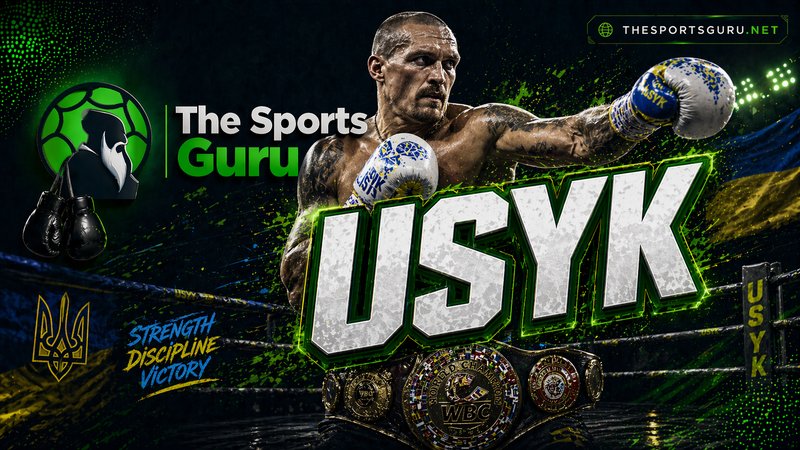
The route Wardley envisions runs through Dubois and then toward Oleksandr Usyk, the man who vacated the WBO belt that Wardley now holds. Usyk remains unbeaten as a professional, an Olympic gold medallist, and the undisputed champion at both cruiserweight and heavyweight before his current reign across the WBA, WBC and IBF titles. Any path to full unification must go through him, and Wardley is under no illusions about that.
The Curveball Theory: Why Wardley Thinks He Has an Answer Usyk Has Never Faced
When Wardley explains his belief that he could trouble Usyk where others have failed, he does not reach for vague assertions about heart or hunger. He frames it tactically, in terms of profile and precedent. The men who have challenged Usyk most recently represent two distinct stylistic archetypes: the unorthodox movement and volume of Tyson Fury on one end, and the more orthodox power-punching of Anthony Joshua and Dubois on the other. Both approaches, in different ways, have come up short.
Wardley's argument is that he represents something neither of those categories fully captures. "In terms of putting people against Oleksandr Usyk, you've almost tried everything in terms of the unorthodox style of someone like Tyson Fury and then the well-schooled style of someone like Joshua or Dubois, for instance, those strong guys," he told Sky Sports News. "Maybe throw a curveball at him, the white collar kid at him, and see what he comes up with."
This is not idle self-promotion. It is a coherent, if still to be tested, tactical proposition. Wardley's development outside traditional amateur structures means his instincts, habits and rhythms are shaped differently from those of fighters who spent years working through the same coaching frameworks. Amateur boxing, particularly at elite level, instils a set of defensive reflexes and positional habits that become deeply ingrained; a fighter who never passed through that system will have developed compensating patterns that can look unfamiliar even to experienced opponents. Whether that difference translates into a genuine competitive advantage against a boxer of Usyk's precision and experience is a question that cannot be answered from the outside. But the logic is not frivolous, and it deserves to be taken seriously rather than dismissed simply because the speaker lacks a gilded amateur record.
What Wardley's theory also highlights is how thoroughly Usyk has neutralised conventional wisdom about heavyweight styles. The Ukrainian's ability to solve problems that should, on paper, not be solvable for a man of his frame and background has made him the sport's most discussed puzzle. Whether a fighter who learned the game as an adult, without the ingrained patterns of youth-level competition, genuinely represents an untried combination of traits is the kind of question that only an actual fight can resolve.
Dubois: Burying the Past, Chasing a Second Reign
Daniel Dubois is not fighting this weekend as a man in search of validation. He is fighting as a man in search of a belt, and there is a meaningful distinction between the two. His losses, including the defeat to Usyk, are matters he says he has processed and moved beyond. "That was just experience for me, learning things. It's in the past now, I feel like I'm better now," he said. "I put all that nonsense behind me and be a man of the future."
The directness of that statement is striking. Dubois is not performing reconciliation with difficult memories; he is asserting that the lessons have been absorbed and the chapter closed. Whether that confidence is justified depends partly on what, specifically, was learned from those experiences, and whether the adjustments made under his current training setup translate into something more difficult for Wardley to handle than the version of Dubois who has appeared before.
For all that Wardley is the champion with the belt on the line, Dubois arrives carrying the heavier punching reputation and the evidence of a knockout win over a man who has himself held multiple heavyweight titles. Wardley has spoken openly about wanting a firefight, which suggests he is not approaching this as a night for strategic caution. That mutual willingness to engage could produce a fight of real brutality, and it is a dynamic that suits Dubois's strengths at least as much as it suits Wardley's. A champion who invites a war against a knockout puncher of Dubois's calibre is making a statement about self-belief, but it is also a tactical concession that the challenger will not be slow to exploit if the opportunity presents itself.
The tactical analysis from trainer Shane McGuigan, who knows Dubois from their previous working relationship, adds a further layer of intrigue. McGuigan's insight into both men's tendencies is unusually precise, and his perspective on what Dubois needs to do to prevail carries weight precisely because of how well he has observed the challenger at close quarters.
Pressure, Self-Criticism and the Mentality That Built a Champion
The most revealing part of Wardley's public statements ahead of this fight is not the ambition directed at Usyk. It is the description of how he operates internally. "No one puts more pressure on my shoulders than me. No one is a bigger critic. No one is harsher on themselves. No one expects more of themselves than me and you see that in my fights and in my performances," he said.
This is a particular kind of competitive psychology, one that does not depend on external narrative or crowd expectation for its fuel. Fighters who are motivated primarily by what other people expect of them can be destabilised when the crowd is not entirely with them, or when a pre-fight storyline collapses. Fighters who are motivated by an internal standard they have set for themselves are harder to rattle, because the source of their drive is not accessible from the outside.
Wardley reinforced this when addressing the question of pressure and how it affects his approach regardless of his status in any given contest. "Whether I'm the favourite or the underdog it doesn't change things for me. I'll always have that mindset and that mentality," he said. For a fighter who is simultaneously a champion and someone whose background still prompts scepticism in certain quarters of the boxing establishment, that psychological consistency is likely to have been earned through repeated experience of both positions.
The no-quit mentality he describes is not a stylistic choice; it is the residue of having built a career without conventional foundations, where every obstacle had to be navigated without the institutional support that elite amateur programmes provide. Wardley's path to a world title was longer and less mapped than those of his immediate peers, which arguably gives the internal drive he describes a more substantive foundation than it might have in a fighter whose journey was more heavily supported.
What Sunday Means and Where the Division Goes Next
The heavyweight division is, at this moment, structured around a central unanswered question: who, if anyone, can genuinely threaten Usyk? The Ukrainian's unbeaten record, his technical precision and his capacity to nullify the physical advantages of larger opponents have made him appear close to invulnerable. The question of which challenger represents the most compelling stylistic test is one the sport keeps revisiting without resolution.
Wardley's suggestion that his unconventional development makes him that challenger is, at minimum, an interesting hypothesis. But it only becomes testable if he comes through Sunday. Dubois has the power to end the conversation before it develops, and that is the immediate reality that all of Wardley's longer-term planning must navigate first.
For Dubois, the stakes are equally clear. He has described this fight as "the biggest moment in my life" and framed the WBO title as "the pinnacle" in terms of what he is currently pursuing. A fighter who speaks in those terms is not treating this as a necessary intermediate step toward something else. He is treating it as the destination, which brings its own kind of focused intensity to the preparation and performance.
If Wardley defends successfully and articulates a genuine claim to a Usyk fight, the division gains a challenger with a genuinely unusual profile at a moment when conventional profiles have been comprehensively addressed. If Dubois takes the belt, the conversation shifts entirely: a fighter who has already faced Usyk and lost would be asking for a second opportunity, which is a different and more complicated argument to construct.
Either outcome reshapes the landscape in a meaningful way. What this weekend confirms, regardless of the result, is that the British heavyweight scene continues to generate the kind of compelling internal matchups that draw global attention. Wardley and Dubois are both credible world-level operators, and the fight between them matters on its own terms, not merely as a qualifier for something larger. The ambition Wardley has declared openly, the target he has named, gives Sunday an extra dimension. Whether he gets to pursue it is the question the next few days will settle.
Frequently Asked Questions
Wardley argues that Usyk has already faced the two main stylistic approaches the division offers: the unorthodox, high-volume movement of Tyson Fury and the more orthodox power-punching of Anthony Joshua and Daniel Dubois. His contention is that having never competed as an amateur, his instincts and rhythms were shaped outside the traditional coaching frameworks that produce those recognisable patterns. He describes himself as a "curveball" that Usyk has not yet had to solve.
Dubois knocked out Anthony Joshua in 2024, a result the article describes as announcing him as a legitimate force in the division's upper tier. He is characterised as heavy-handed, forceful, and motivated by the chance to reclaim a version of the world title he has previously held. The article is explicit that this defence is not a routine outing for Wardley but a genuine examination of his credentials as champion.
Usyk vacated the WBO belt, and Wardley subsequently claimed it, meaning the title came to him rather than through a direct win over Usyk. Usyk still holds the WBA, WBC and IBF titles, so a fight between the two would represent a full unification of the heavyweight division.
Wardley turned professional without having competed as an amateur, which the article describes as exceptionally rare in world-title heavyweight boxing. The piece suggests this means he never absorbed the defensive reflexes and positional habits instilled through elite amateur competition, leaving him with self-taught patterns that may appear unfamiliar to opponents accustomed to reading conventionally trained fighters.
Sources: Reporting draws on UK boxing press coverage of the Wardley-Dubois build-up, with title and record details verified against publicly available fighter profiles and official sanctioning body records.