The Sports Guru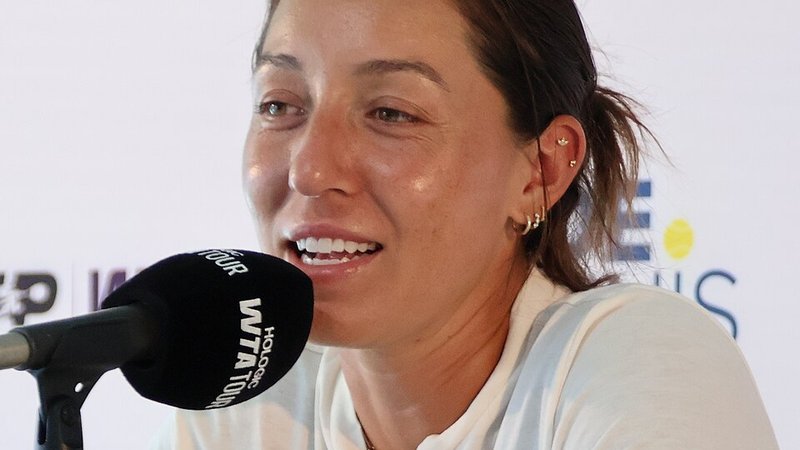
The French Open has confirmed a 9.5% prize money increase for its 2026 tournament, with the most significant rises deliberately directed at qualifying and the opening rounds rather than the latter stages. This article examines what the changes mean for players across the draw, how Roland Garros compares to its fellow Grand Slams, and what else is set to change at the clay-court major this year.
When the French Tennis Federation announced its prize money figures for 2026, the headline percentage grabbed attention. But the more telling story sits beneath it: for once, the players making first-round exits and grinding through qualifying will pocket proportionally more than the champions already banking life-changing sums. That is precisely the redistribution that the sport's leading voices have been arguing for, even if the overall scale of the increase still falls short of what some rivals have offered.
Roland Garros will distribute prize money at a level 9.5% higher than last year's tournament, with singles champions each taking home 2.8 million euros (£2.44 million), a rise of 9.8% on the previous figure. Main draw first-round losers will receive 87,000 euros (£75,700), an 11.5% increase on last year's rate. Qualifying competitors will benefit from the steepest proportional rise of all, with nearly 13% more prize money available across those rounds than was on offer twelve months ago.
The French Tennis Federation (FFT) has nearly doubled the percentage increase it offered last year, and the direction of that uplift aligns meaningfully with what prominent players have been requesting. The argument is not simply about the top line; it is about who in the broader tennis economy actually benefits when the Slams increase their pots.
Where Roland Garros Stands Among the Majors
Context matters when assessing any prize money announcement, and the context here is instructive. The US Open raised its total prize money by 20% ahead of the 2024 edition, while the Australian Open followed with a figure of nearly 16% higher. Roland Garros, at 9.5%, sits below both of those benchmarks despite the near-doubling of its own year-on-year rate of increase. Wimbledon's position in this conversation will become clearer when the All England Club makes its own announcement ahead of the summer.
What distinguishes the French Open's approach is the structure of the increase rather than its headline number. The US Open's 20% rise drew some pointed observations from players, with Jessica Pegula noting that the bulk of the additional money was concentrated towards the later stages of the draw. A 20% prize money rise sounds transformative, but if the vast majority flows to the quarterfinalists, semi-finalists, and champion, its impact on the broader player community is limited. Roland Garros appears to have taken that critique on board, at least in part, by directing its largest percentage rises precisely where the ecosystem argument demands: at the qualifying stage and the first round of the main draw.
This is analytically significant. The players who lose in the first round or scrape through qualifying are typically those managing their own logistics, covering travel, accommodation, coaching, and physiotherapy from tournament earnings that have historically left little margin. An 11.5% jump for first-round losers and a 13% uplift in qualifying money does not resolve the structural cost pressures these players face, but it signals a different set of priorities from a federation listening to the room. It also makes the French Open's approach a more useful model for the prize money debate than headline-chasing percentage rises concentrated at the top of the draw.
Pegula and the Wider Player Campaign
The backdrop to any Grand Slam prize money discussion in 2025 is the sustained and increasingly coordinated campaign from players seeking both greater financial returns and a formal contribution from the Slams towards welfare benefits. Jessica Pegula, ranked world number five in the women's game, has become one of the most prominent voices in that effort, speaking candidly on the subject at Indian Wells earlier this year.
Pegula's position is a nuanced one. She is not advocating confrontation, and she is explicit that no player is seriously considering industrial action against the Slams. Her argument is rooted in the structure of how increases are distributed rather than whether increases happen at all. She acknowledged the US Open's significant step forward, but raised the question of whether concentrating the bulk of additional funds on the tournament's latter stages serves the wider health of the sport. That distinction matters: it reframes the entire prize money conversation from one about total sums to one about how money moves through the professional game's ecosystem.
Pegula also highlighted the growing alignment between the men's and women's tours on this issue, describing unified advocacy as the most effective route to progress. That cross-tour solidarity is relatively new in practical terms, and its presence gives the campaign more structural weight than either tour could generate independently. The French Open's decision to prioritise qualifying and early-round increases, whether consciously shaped by that pressure or not, represents at least a partial answer to the argument Pegula has been making publicly.
Privacy, Cameras, and Fitness Trackers at Roland Garros
Prize money is not the only area where Roland Garros is drawing a line. Tournament director Amelie Mauresmo confirmed at a news conference in Paris that there will be no expansion of camera coverage in player areas at this year's event. The issue became a flashpoint at January's Australian Open, where Iga Swiatek characterised the level of surveillance as akin to watching "animals in the zoo," and Coco Gauff faced the embarrassment of being filmed smashing her racquet in what she had understood to be a private space. Pegula also described the filming as an invasion of privacy.
Mauresmo acknowledged that broadcasters are pushing for greater access to players in off-court moments, framing it as part of a broader appetite to humanise the sport for audiences. But she was unequivocal that Roland Garros would not alter its position on player privacy. The distinction she is drawing is an important one: access to players during competition is a broadcasting staple, but access to their private moments between matches sits in different territory, and the Australian Open experience appeared to demonstrate that the line had been crossed.
On a more welcome practical note, players will be permitted to wear approved fitness trackers during matches at Roland Garros for the first time. At the Australian Open, Aryna Sabalenka, Jannik Sinner, and Carlos Alcaraz were among those asked to remove their devices before matches, which frustrated players who rely on the technology to monitor sleep quality, physical strain, heart rate, and stress levels. The Roland Garros trial will extend across Wimbledon and the US Open, marking a meaningful shift in how the Grand Slams are approaching wearable technology after both the WTA and ATP Tours had already permitted it for some time.
Line Judges Staying Put as Roland Garros Resists Electronic Calling
Perhaps the most distinctive stance Roland Garros is maintaining relates to line-calling technology. The other three Grand Slams have all introduced electronic line calling (ELC), and it became mandatory on the ATP Tour from 2025. Roland Garros remains the lone holdout among the majors, and FFT president Gilles Moretton mounted a robust public defence of the decision at the Paris news conference.
Moretton cited a claimed 10% margin of error in current ELC technology, pointing to an incident at the Madrid Open last year in which Alexander Zverev photographed a ball mark on the clay surface to contest a call the electronic system had already rendered. His broader argument reaches beyond accuracy, however. The FFT president framed the retention of line judges as a matter of supporting the infrastructure of French tennis, with officials employed at weekly tournaments throughout the country representing a community that the federation considers worth protecting. On clay specifically, he noted, the sport has a built-in advantage that purely electronic systems cannot replicate: the ball mark itself is visible, offering a physical check unavailable on hard or grass courts. That is a genuinely distinctive argument, and one that carries more force at Roland Garros than it would at any other major.
It is a position that will strike some observers as conservative and others as principled. What is clear is that Roland Garros is comfortable being the outlier on this particular issue, and that the clay surface gives it a degree of cover that no other major enjoys. Whether the margin-of-error claim withstands scrutiny from ELC advocates is a separate debate, but the federation's position is unlikely to shift in the near term given how explicitly Moretton staked it out.
Verdict: Progress, But the Conversation Is Far From Over
The 2026 French Open prize money announcement tells a story of genuine movement in the right direction, even if the headline figure does not match the ambition of what the US Open and Australian Open have offered in the past year. By targeting its largest percentage rises at qualifying and first-round losers, the FFT is engaging with the structural argument that players have been making rather than simply adding money to the top of the draw and pointing at a large percentage increase.
The accompanying decisions on player privacy and fitness trackers suggest a federation that has been paying attention to the friction points of the Australian Open swing. Mauresmo's firm commitment on cameras and the agreement to trial wearable technology both address player concerns that sit beyond the purely financial, reinforcing the sense that Roland Garros is attempting a broader settlement with its player community rather than a narrowly transactional one.
The unresolved question is whether the pace of change across all four Grand Slams is sufficient for a player group that has found its collective voice and is unlikely to go quiet. Pegula's framing of the issue as one of ecosystem health rather than individual enrichment is a sophisticated argument, and the FFT's prize money structure for 2026 is at least partly designed to answer it. Whether it fully satisfies those pushing for change will become clearer in the months ahead, particularly as Wimbledon's own announcement draws near and players assess the overall direction of Grand Slam investment in those who keep the qualifying draws, and the lower rounds of the main draw, alive.
Sources: Match and event information, player quotes, and prize money figures sourced from BBC Sport's reporting on the French Open 2026 prize money announcement.