 The Sports Guru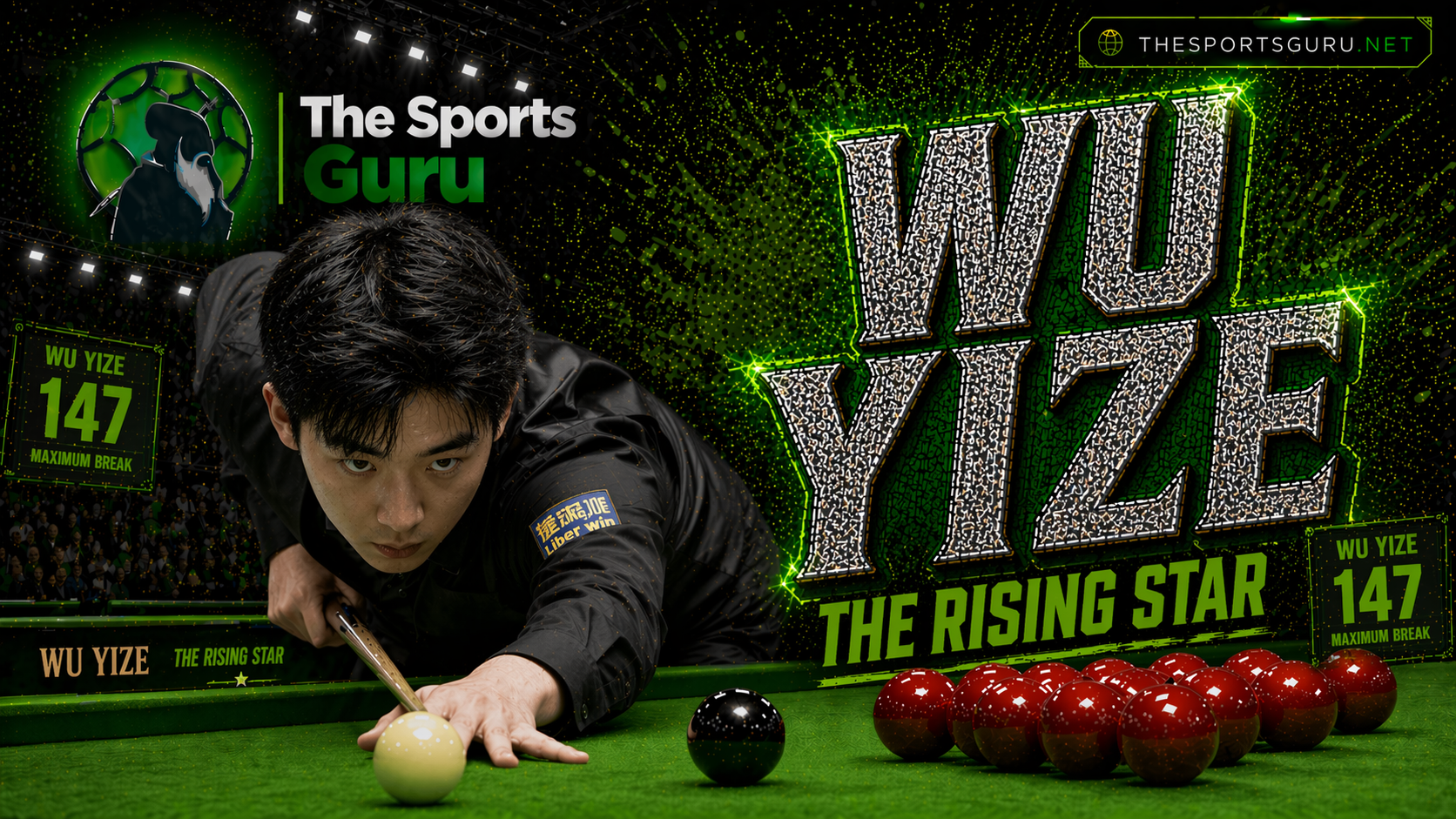
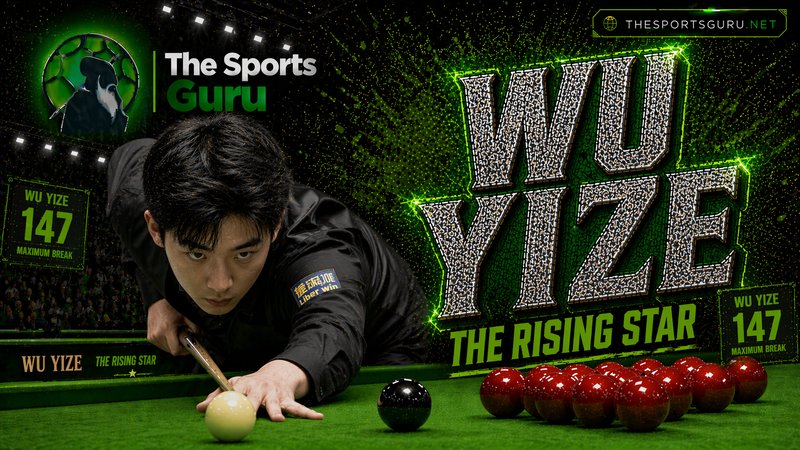
Mark Allen produced one of the great individual fightbacks in recent World Championship memory on Friday, overturning a four-frame overnight deficit against Wu Yize to level their semi-final at 7-7. But the afternoon session will be remembered less for Allen's brilliance than for a chaotic 100-minute frame that has already been called an embarrassment to the sport. This piece unpacks both the drama and the deeper questions that session has raised about snooker's rulebook.
There were two very different stories unfolding simultaneously at the Crucible on Friday afternoon. One was a tale of character and quality: Mark Allen, a man who had spent the previous evening staring down a 6-2 deficit, producing some of the finest snooker of his tournament campaign to haul himself level. The other was a story that the sport's administrators will want to resolve long before another World Championship rolls around, a 100-minute frame of near-total paralysis that Marcel Eckardt, the referee, could only try to manage rather than solve, and which left the crowd bewildered and one of snooker's great former champions visibly frustrated.
That the afternoon session ended all square at 7-7, with the pair heading overnight level, is the scoreline. But scorelines rarely capture the texture of what happened inside the Crucible, and the texture here was unlike anything the venue has produced in its near half-century of World Championship history.
Allen's position coming into the session was not comfortable. Wu Yize had played with the kind of freedom and confidence that younger players can produce when momentum is with them, and four frames is a substantial gap to peg back over a single session at the game's most pressurised venue. The Northern Irishman's response began with a scrappy but telling opener, grinding out a frame in which Wu failed to make the most of a promising position and ended on just 32. It was not pretty, but it was the kind of frame that shifts a match's psychological weight, and Allen appeared to sense it. Players who have been in a hole often need to win ugly before they can win well, and that first frame gave Allen something to build on without requiring him to immediately produce his best snooker.
A Session That Swung in Every Direction
What followed in the second frame of the session was remarkable. A prolonged safety exchange, triggered after Wu compiled a break of 51 but chose not to attempt splitting the remaining cluster of reds, produced a near 30-minute period without a single ball being potted. Wu eventually located a red but missed a cut on the green into the middle pocket, and from that moment Allen seized control, eventually taking the frame on the black. It was an attritional, exhausting frame of snooker that lasted well over an hour, and the Crucible crowd rose to acknowledge Allen at its conclusion.
They were back on their feet almost immediately. Allen followed that marathon frame with a break of 145, his best of the tournament, a clinical and precise clearance that could hardly have stood in sharper contrast to the grinding passage that preceded it. The ability to shift so abruptly from prolonged defensive attrition into that quality of break-building is not something many players can manage; it requires both concentration and a very specific kind of mental reset. Wu, at this stage of the session, was visibly struggling. A moment of fortune arrived when he fluked a black that rattled around two pockets and rolled in, but he was unable to build on it, and Allen converted the chance to level the match at 6-6.
After the interval, Allen's century-making instinct continued. A break of 121 gave him a 7-6 lead, putting him in front in the match for the first time. It was also his ninth century of the tournament, moving him one ahead of Zhao Xintong in the century count for the event. That is a detail worth pausing on: Allen had been four frames behind and was now leading on both the scoreboard and in the tournament's century standings, which tells you something about the quality he produced once he found his rhythm.
The Frame That Stopped the Tournament in Its Tracks
The 14th frame of the match will enter the record books as the longest in World Championship history, completed in one hour and 40 minutes. Its defining feature was a cluster of eight reds jammed around a black sitting on the edge of a corner pocket, a configuration that produced an impasse neither player could navigate without risk and neither referee nor rulebook could cleanly resolve.
For an extended period, the frame produced no potted balls at all. Referee Eckardt was required to ask the crowd to settle as the tension and confusion grew. There were suggestions from those involved that a re-rack might be necessary. Allen ultimately fouled the black, a resolution of sorts, but the frame then continued at length before Wu eventually clinched it to level the match at 7-7. That the session ended two frames short of its scheduled conclusion gives some indication of the time the 14th frame consumed.
A Structural Problem Snooker Cannot Ignore
Steve Davis's reaction, delivered on BBC coverage after the session, was blunt and worth taking seriously. The six-time world champion has seen everything this tournament can produce across four decades, and his view that the situation represented "an embarrassment to snooker" carries weight not because of his celebrity but because of his experience. When a frame at the sport's flagship event produces 30-plus minutes without a single pot and leaves spectators, players, and officials visibly uncertain about how to proceed, that is a problem that transcends the individual match.
The specifics of what made the 14th frame so intractable are instructive. Eight reds clustered around a black over a corner pocket is not a configuration the rules handle elegantly. Both players were in a position where attempting to pot or disturb the cluster carried enormous risk, while the safety battle around the rest of the table had reached a stalemate. The rulebook's provision for re-racks exists but involves a process that, as Friday demonstrated, is not straightforward to implement mid-frame at the sport's most high-profile event.
Davis's call for the referees' and players' associations to address this is not merely reactive frustration. Similar cluster situations have caused problems at lower levels of the game for years, and the World Championship stage simply amplified the awkwardness to a global audience. The particular difficulty is that any rule change needs to give referees clear, objective criteria for intervention, rather than leaving them to exercise personal judgement under pressure in front of a packed Crucible. Whether the solution lies in modified re-rack procedures, clearer referee intervention protocols, or something else entirely is a matter for those bodies to determine. But Friday's session made the case for urgency more powerfully than any theoretical discussion could.
What the Scoreline Means Going Forward
Strip away the noise and the historical footnote, and the semi-final between Allen and Wu remains fascinatingly poised. Allen's recovery from 6-2 down to 7-7 is the kind of turnaround that can break an opponent's belief, and the manner of it, with a 145 break, a 121 break, and nine tournament centuries in total, suggests Allen is playing with genuine confidence. He has not simply survived; he has produced some of the best snooker of his World Championship career in the process.
Wu, for his part, has not collapsed. He did win the contentious 14th frame to level matters, and a player who had the composure to build a four-frame overnight lead is unlikely to be mentally fragile. The Chinese left-hander has shown throughout this tournament that he is capable of long scoring spells and tactical discipline, and his ability to bounce back from the loss of several frames in succession will be tested when play resumes. The question is whether the psychological initiative has shifted: Allen now carries the momentum of a remarkable comeback, while Wu carries the knowledge that he held a commanding lead and could not close it out.
Verdict: History Made, Questions Raised
Friday's afternoon session at the Crucible delivered everything the World Championship is capable of producing, the brilliant and the bizarre, often within minutes of each other. Mark Allen's recovery was a genuinely impressive piece of competitive snooker, a master class in staying patient under pressure and then accelerating when the opportunity arrived. His century count, his break-building quality, and his ability to win scrappy frames when his best form was not available all pointed to a player who arrived at the Crucible this year with a serious intention.
But the session will be defined in the short term by the 100-minute frame, and in the medium term by whether the sport acts on Davis's challenge. The configuration that caused the impasse was not the result of careless play; it was a product of the game's geometry and the way safety exchanges can develop at the highest level. That does not make it any less problematic as a spectacle, and the sport owes its audience and its players a clearer framework for resolving such situations in future.
With the semi-final locked at 7-7, what resumes will be decided by whoever holds their nerve best across the remaining frames. Allen has demonstrated that momentum and quality can co-exist; Wu has demonstrated that he can absorb setbacks and keep competing. Whatever happens next, the Crucible has already delivered something nobody who watched it will quickly forget, for reasons both inspiring and uncomfortable in equal measure.
Frequently Asked Questions
Allen began the session four frames behind Wu Yize, having trailed 6-2 after the overnight portion of the match. By the end of the afternoon he had won five of the session's frames to level the semi-final at 7-7, meaning the pair returned overnight with everything to play for.
The frame produced a near 30-minute period in which no ball was potted, largely triggered by a prolonged safety exchange after Wu compiled a break of 51 but declined to attempt splitting a cluster of reds. Referee Marcel Eckardt could only manage the situation rather than resolve it, and the spectacle left the Crucible crowd bewildered and at least one prominent former champion visibly frustrated. The episode has raised questions about whether snooker's rulebook is adequate for situations of near-total match paralysis.
Allen compiled a break of 145 straight after the attritional frame ended, which the article describes as his best of the tournament. The sharpness of that shift, from prolonged defensive grinding to a clinical century-plus clearance, is highlighted as a mental and technical quality that relatively few players are capable of producing.
The break of 121 that gave Allen a 7-6 advantage was his ninth century of the tournament, moving him one ahead of Zhao Xintong in the overall century count for the event. The article notes that this figure is particularly striking given that Allen had been four frames behind only hours earlier.
Wu had played with notable freedom and confidence during the earlier portion of the match, building a four-frame cushion. By the afternoon session he was visibly struggling, and despite a moment of fortune when a fluked black rattled into a pocket, he was unable to convert that luck into momentum, allowing Allen to take control of the match.
Sources: Match details, statistics, and quotes from Sky Sports' coverage of the World Snooker Championship semi-final between Mark Allen and Wu Yize, published 1 May 2026.