 The Sports Guru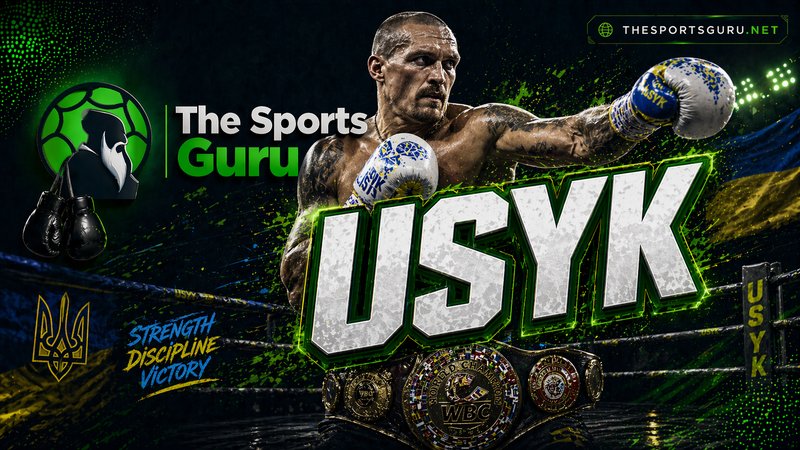
Oleksandr Usyk retained his WBC heavyweight title in Egypt on Sunday, but this was nothing like the routine defence many had forecast. We examine how a kickboxer on just his second professional bout pushed the unified champion to the absolute limit, why the stoppage has provoked fierce debate, and what the night ultimately tells us about where Usyk's reign stands right now.
The backdrop was extraordinary, the Pyramids of Giza rising against the night sky as Oleksandr Usyk walked to the ring to defend his WBC heavyweight title. What unfolded over the next eleven rounds, however, made the setting feel almost incidental. A kickboxer in only his second professional boxing bout had the unified heavyweight champion in genuine trouble, trailing on the scorecards and struggling to impose himself on a man who simply refused to be intimidated by reputation or ring pedigree. Usyk survived, but the manner of his survival has raised more questions than his victory answers.
For long stretches of the fight, Rico Verhoeven was the aggressor, the one dictating the physical terms of the contest. He used his size and power to bully Usyk onto the ropes, caught him with a strong right hand in the eighth round, and kept up the pressure through the ninth and tenth. Usyk, at 39, was not moving freely. He was caught more than once, and the pace that has historically made him so difficult to pin down was conspicuously absent. That lateral movement, the quality that allowed him to dismantle Tony Bellew at cruiserweight and frustrate Anthony Joshua across two fights, was the most telling absence in Giza. Heading into the penultimate round, the champion was behind on the scorecards, and the notion of one of boxing's greatest upsets was no longer a punchline.
Then came the moment that changed everything. A crisp right uppercut from Usyk landed flush, sending the towering Verhoeven to the canvas for the first time in the fight. What followed was a flurry of punches and a referee's wave-off at 2:59 seconds of the eleventh round, with one second remaining on the clock. The champion had survived. The manner of it, though, means the conversation will not end here.
A Stoppage That Will Be Argued About for Months
Controversies at the final whistle are nothing new in boxing, but the timing of this one is particularly sharp. Verhoeven had been down, yes, but he was articulate and composed in his post-fight interview, and he was insistent the intervention came too soon. Speaking on DAZN after the bout, he made his position clear.
"I thought it was an early stoppage. The referee knows we are almost at the end of the round. Either let me go out on my shield, let the bell go, or let us go out in the 12th. It was so close. I thought we were pretty equal on the scorecards." - Rico Verhoeven
Verhoeven's composure in delivering that assessment matters. This was not a man stumbling through a post-fight daze. He was coherent, specific, and calm. His argument, that the bell was a second away and the twelfth round remained, carries genuine weight. Referees carry the most difficult job in sport and their decisions in real time deserve respect, but stopping a fight with a single second on the clock, when the man on the canvas is a decorated kickboxing world champion making his second professional boxing appearance, will be scrutinised carefully in the coming days. The question of whether Verhoeven would have beaten the count and come back for round twelve is one boxing will not be able to answer. That ambiguity is precisely what fuels the case for a rematch.
It is worth noting that Usyk's decisive intervention, the right uppercut and subsequent barrage, demonstrated that his timing and his instinct for the critical moment remain undimmed even when the rest of his performance is well below his own standards. Champions who can find a finishing sequence when their backs are against the ropes, who can produce precision under pressure, are not easily dismissed. But the circumstances that made those final punches necessary in the first place are the more instructive part of the story. A champion should not need a last-second rescue against an opponent in only his second professional contest, and that is the sentence any serious opponent will underline when they study this tape.
What Bellew's Assessment Really Tells Us
Tony Bellew is not a man given to hyperbole without evidence. A former cruiserweight world champion who has shared a ring with some of the sport's elite, his reading of a heavyweight fight carries authority. His verdict on the Usyk-Verhoeven contest was damning in a very specific way.
"It's the only time in his whole career I've seen Usyk outworked on a consistent basis. At the back end of each round, he was losing and getting out landed. Rico Verhoeven has come out of this a winner. His hand might not have been raised but given what we expected, he just nearly sprung the biggest surprise boxing has ever seen." - Tony Bellew
Bellew's framing is analytically important. He is not saying Verhoeven was better than Usyk over eleven rounds. He is saying Usyk was consistently outworked, which is a different and more precise claim. Being outworked does not necessarily mean being outskilled, but in a sport where punch volume, pressure and ring control all factor into scorecards, it reflects a strategic and physical imbalance that the champion had not corrected by the time the decisive sequence arrived. Crucially, Bellew's phrase "on a consistent basis" implies this was not a single bad spell but a pattern that repeated across rounds, which makes it harder to attribute simply to a slow start or a tactical miscalculation. For a fighter of Usyk's calibre, that is a meaningful data point.
Bellew also called explicitly for a rematch, and on the available evidence that seems entirely reasonable. Verhoeven arrived with almost no professional boxing experience and made a unified heavyweight champion look uncomfortable for the better part of eleven rounds. That is not a performance that gets filed away quietly. The kickboxing world will be energised by it, the boxing public will be curious about it, and promoters will see commercial logic in revisiting it. Bellew's view, that Verhoeven deserves another opportunity given what he produced, reflects a broadly defensible sporting principle: when the margin is this thin and the finish is this contentious, you run it back.
The Broader Picture: Usyk at 39 and the Question of Decline
It would be reductive to declare from a single difficult night that Usyk is in decline. Champions who have unified the heavyweight division do not lose their ring intelligence or their finishing ability overnight. Yet age is not a variable that respects reputation, and the signs across this fight were ones that will be noted carefully by any future opponent studying the tape. Usyk was not moving freely. His foot speed, historically one of the attributes that makes him so elusive, was reduced. He was caught on the ropes by a man making his second professional appearance. Those are observable facts, not conjecture.
The historical parallel worth considering is that fighters who retain the capacity for one devastating finishing sequence, even in a fight they are losing, can remain dangerous long into their late thirties. The right uppercut in the eleventh round was not a desperate, wild swing. It was precise. It was timed. It was the kind of punch that only comes from thousands of hours of practice and the ability to remain calm when the situation is urgent. Usyk has that quality. The question is whether he has the physical platform to deploy it consistently against elite opposition as his thirties end, and whether a rematch with Verhoeven would tell us something the first fight could not. On Sunday night in Giza, the physical platform looked less reliable than at any previous point in his professional career.
Sheeraz and Catterall Make Their Marks on a Landmark Night
The undercard in Giza produced its own meaningful results. Hamzah Sheeraz captured his first world title with a second-round stoppage of previously unbeaten Alem Begic in the WBO super-middleweight title fight. Begic was stopped by a body shot and failed to beat the count, ending what had been an unbeaten professional record. Sheeraz's physical dominance was evident from the opening bell, and the finish, clean and decisive, was the product of sustained pressure rather than a single moment of fortune. A world title secured against an unbeaten opponent, finished inside two rounds, is precisely the kind of statement performance that tends to accelerate a young fighter's standing in a competitive division.
Jack Catterall, meanwhile, secured the WBA 'regular' welterweight belt with a wide points win over Shakhram Giyasov. The Chorley fighter scored a first-round knockdown and controlled the contest throughout, with the scorecards reading 118-109, 119-108 and 116-111 in his favour. The victory also earns Catterall a mandatory shot at WBA 'super' champion Rolando Romero, meaning his trajectory in the welterweight division now has a defined next destination. On a night dominated by the main event's chaos, both men delivered performances that will shape their careers in the months ahead.
Verdict: Usyk Wins, But the Narrative Has Shifted
Oleksandr Usyk left Giza with his WBC heavyweight title intact and his unbeaten record preserved. Those are facts, and they matter. But the narrative surrounding his reign has shifted in a way that a comfortable defence would not have allowed. He was consistently outworked by a kickboxer in his second professional fight. He trailed on the scorecards heading into the final two rounds. He needed a knockdown and a stoppage inside the last two minutes to avoid one of the sport's most extraordinary results. The champion survived; the champion's aura, at least temporarily, did not emerge entirely unscathed.
For Verhoeven, the evening represents something close to a moral triumph even in defeat. He came in treated by most observers as a curiosity at best, a profitable mismatch at worst. He left having produced, by Tony Bellew's assessment, the only sustained period of outworking that Usyk has experienced across his entire professional career. Whether or not the stoppage was premature, his showing has fundamentally changed how the boxing world views his potential in the sport. The conversation about a rematch will continue, and given everything that unfolded in those eleven rounds beside the Pyramids, it is a conversation that deserves to be taken seriously.
Frequently Asked Questions
Verhoeven is a kickboxer competing in only his second professional boxing bout, meaning he arrived with virtually no orthodox boxing pedigree. Despite that, he used his size and physicality to trouble the unified heavyweight champion across the majority of the contest, which made his performance all the more striking.
The referee waved off the contest at 2:59 of round eleven, leaving one second on the clock. Critics of the decision argue that Verhoeven, who had been knocked down, should have been allowed to hear the bell and potentially contest a twelfth round, particularly as he was composed and articulate in his post-fight interview.
Usyk was trailing on the scorecards heading into round eleven. Verhoeven had bullied him onto the ropes, landed a strong right hand in the eighth, and maintained pressure through the ninth and tenth, with Usyk's characteristic lateral movement notably absent throughout.
Speaking on DAZN, Verhoeven argued the intervention came too early and suggested the referee should either have let the bell end the round or allowed the fight to continue into the twelfth. He believed the two fighters were roughly level on the scorecards at that stage.
The article notes that the pace and movement which defined Usyk against Anthony Joshua and Tony Bellew were conspicuously absent in Giza. However, his right uppercut finish demonstrated that his timing and instinct for the decisive moment remain sharp, even when the broader performance falls well below his established standard.
Sources: Reporting builds on UK sports press coverage of the event, with title statuses and fight results verified against official boxing records and governing body sources.