 The Sports Guru
Rico Verhoeven came agonisingly close to one of boxing's most improbable results before a disputed 11th-round stoppage ended the night in controversy. Here, we examine what the Dutchman is asking for, why the bell dispute matters so much, and where the heavyweight picture goes from here.
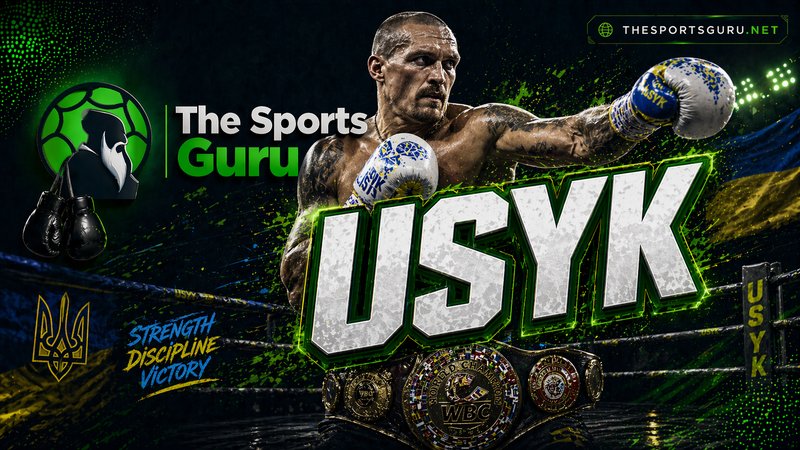
There is an argument that no fight in recent memory ended with quite as much unresolved business as Rico Verhoeven versus Oleksandr Usyk. When referee Mark Lyson stepped in during the 11th round in Cairo, he did not merely halt a contest; he detonated a dispute that has since spread from ringside into official channels, with Verhoeven's team lodging a formal appeal with the WBC the morning after the bout. The Dutchman is not simply venting frustration. He is making a precise, measured demand: an apology from the officials, and a clear path back to a rematch.
What makes Verhoeven's position compelling is that it is grounded in specific facts rather than wounded pride alone. Replays of the stoppage suggested the bell signalling the end of round 11 may already have sounded before Lyson intervened. The referee himself, according to Verhoeven's long-time trainer Peter Fury, told Fury on the flight home that he had not heard the bell. Verhoeven says he did not hear it either, though he did hear what he described as the clapper approximately 10 seconds before the round ended. That is a narrow but consequential ambiguity, and it is the kind of ambiguity that changes legacies. For context, referees operating in large, open-air or unfamiliar venues have historically been more susceptible to timing and acoustics failures precisely because they lack the familiar audio environment of established boxing arenas; the bell dispute here is not simply a matter of individual error.
"[I want] just an apology. What else can we do? I can't demand anything else," Verhoeven told BBC Sport. "Mistakes can be made because we're all human and that's OK. But all I'm looking for actually is: 'yeah, sorry guys, this could have gone differently - this is something we have to look at and hopefully this doesn't happen in the future'." The restraint in that statement is notable. Verhoeven is not trying to overturn the result. He is asking for institutional honesty, which is a harder thing for governing bodies to grant than a trophy.
A Crack in the Invincible
To appreciate the scale of what unfolded in Cairo, it helps to understand the gap that most observers believed existed between these two fighters. Oleksandr Usyk entered the fight undefeated across 25 professional contests, a two-weight undisputed champion who had systematically outclassed every credible heavyweight placed in front of him. Verhoeven, for all his extraordinary achievements in kickboxing - more than 4,000 days as world champion in that sport - had just one professional boxing bout on his record prior to Saturday, a 2014 win over a journeyman.
On paper, this was a mismatch. In practice, Verhoeven troubled Usyk for long stretches, came close to what would have been one of boxing's most staggering upsets, and was then dropped in the 11th round before the stoppage ended the argument. The open scoring system had the contest level after round eight, and Verhoeven - who felt he was ahead on the cards - admitted that discovering that information took a significant mental toll as the fight progressed into the championship rounds. That psychological dimension is worth taking seriously: open scoring places a cognitive burden on fighters that closed scoring does not, and a competitor discovering he is level rather than comfortably ahead must recalibrate his strategy in real time, mid-fight, against one of the most technically precise heavyweights of the modern era.
His own assessment of what the performance proved is characteristically direct. "His legacy has been amazing anyway, but I definitely feel we made a crack in the guy that was considered invincible," he said. That framing matters beyond rhetoric. Usyk's aura of near-untouchability has been one of the defining features of the heavyweight division over the past few years; even a performance that officially ends in a stoppage loss for Verhoeven has complicated that narrative in a way no fighter had previously managed.
What is analytically significant here is the training environment Verhoeven operated within. Coached by Peter Fury for more than a decade, the Dutchman is not a novice when it comes to elite preparation. Fury has handled world-level talent throughout that period, and the fact that Verhoeven absorbed championship-level sparring and applied it effectively against the pound-for-pound conversation's upper tier suggests the performance was not simply the result of puncher's luck or a champion taking his opponent lightly. There was genuine structural quality to Verhoeven's campaign through the mid-rounds.
The Referee Took It From Both of Them
Verhoeven's most revealing observation about the stoppage is not the one you might expect. Rather than focusing purely on what he personally lost, he makes a point about Usyk. "He did not just take it from me, he took it from Usyk," Verhoeven said. "If he had the chance to knock me out in the 12th round, he would have done it to settle the fight without debate." That is an argument that cuts through the usual post-fight grievance cycle. Verhoeven is not simply claiming injustice for himself; he is arguing that a clean resolution was denied to everyone in that arena, including the champion.
It is a psychologically astute position to take. By acknowledging that Usyk might well have finished the job in round 12 anyway, Verhoeven avoids the trap of sounding like a man who thinks he was on his way to victory. He is instead positioning himself as someone who was denied the chance to test that question definitively. "We cannot look into the future. We cannot predict anything," he said. "If we listened to all the predictions I wouldn't have gone past the first half of the fight, and I did."
He also referenced his own resilience as a factor that made an early stoppage particularly frustrating. "In other championship fights I've been dropped multiple times earlier and still come back to win. I know that's one of my superpowers. I can get hit, recover, and come back." That is not idle self-promotion. A fighter with Verhoeven's kickboxing career has absorbed and recovered from elite-level striking across hundreds of competitive rounds, and the ability to endure pressure and reset is a documented feature of his competitive record, not merely a claim made in the aftermath of a difficult night. Whether that recovery capacity would have been sufficient against Usyk in a 12th round is genuinely unknowable, but it is a legitimate point about his athletic history, and it adds texture to why his team moved quickly to file the WBC appeal.
The Queue for Usyk and the Ngannou Alternative
Whether Verhoeven gets his rematch is complicated by the wider politics of the heavyweight division. Agit Kabayel, the German contender, is the mandatory WBC challenger for Usyk's title and was present in the ring in Cairo to make his claim known immediately after the final bell. Mandatory challengers carry contractual weight that promotional goodwill cannot simply override, and Usyk's team will have to navigate that obligation before any voluntary defence can be arranged.
Verhoeven acknowledges his own unfamiliarity with boxing's political machinery. "I'm just coming into the sport of boxing so this world is new for me. I don't know exactly how things work. I just go with the flow," he said. That honesty is refreshing but also practically significant. Without an experienced promotional infrastructure pushing for the rematch clause or a sanctioning body mandate behind him, Verhoeven's path back to Usyk depends largely on commercial appetite - and that appetite will be shaped by whether Saturday's controversy is remembered as a story worth continuing.
If the rematch does not materialise quickly, Verhoeven has indicated he is open to a fight with Francis Ngannou, another crossover heavyweight who has tested the sport's upper tier. Ngannou pushed Tyson Fury close on his boxing debut before being stopped by Anthony Joshua. A Verhoeven versus Ngannou bout would carry its own promotional logic: two enormous, physically imposing athletes who came to professional boxing from other combat sports and who both have unfinished business with the traditional hierarchy of the heavyweight division.
From a career-pattern perspective, Verhoeven's situation has some historical echoes worth noting. Fighters who perform beyond expectation in a single high-profile fight against an elite opponent often find that one performance recalibrates the entire market for their services. The controversy attached to the stoppage amplifies that effect. The question is whether Verhoeven has enough of a professional boxing record - at 37, with just his second fight now behind him - to sustain a credible run at the top level, or whether Saturday's night represents a singular, extraordinary moment that the sport's infrastructure will struggle to build around.
Verdict: The Bell That Changed the Conversation
What Saturday in Cairo ultimately produced was not a clean ending but an open question, and open questions in boxing tend to generate more commercial energy than settled ones. Verhoeven's call for an apology is unlikely to produce one - governing bodies rarely issue formal admissions of error with any speed or grace - but the act of filing the WBC appeal ensures the controversy stays in the official record rather than fading into social media noise.
The more durable outcome of this dispute may be structural. If Lyson genuinely did not hear the bell, that points to a venue and timing system issue that the WBC has a genuine interest in reviewing, not out of fairness to Verhoeven specifically, but because the same problem could distort the outcome of a less controversial fight in the future. An apology directed at Verhoeven would, in effect, be an acknowledgement that the systems around the fight failed, and that is a harder pill for any sanctioning body to swallow publicly.
For Verhoeven himself, the label he has chosen - "the uncrowned king" - is telling. It positions Saturday not as a defeat absorbed but as a title withheld by circumstance. Whether the heavyweight division accepts that framing depends on what comes next. A rematch with Usyk under clear conditions would answer the question definitively. Anything less leaves the conversation where the referee left it: suspended at the sound of a bell that, apparently, not everyone in the building heard.
Frequently Asked Questions
Verhoeven's team argues that the bell signalling the end of round 11 had already sounded before referee Mark Lyson stepped in to stop the fight. Trainer Peter Fury says Lyson admitted on the flight home that he had not heard the bell, and Verhoeven himself says he heard what he described as the clapper approximately 10 seconds before the round was due to end. The team lodged a formal appeal with the WBC the morning after the bout.
No. Verhoeven has stated clearly that he is not seeking to overturn the result, but is instead asking for an official apology from the officials involved and acknowledgement that the situation should be reviewed to prevent similar incidents. He told BBC Sport that mistakes can be made because "we're all human," and that an honest admission is what he is looking for.
According to the article, referees operating in large or open-air venues are historically more susceptible to timing and acoustics failures because they lack the familiar audio environment of established boxing arenas. This means the dispute is not attributed purely to individual error on Lyson's part, but is placed in a broader context of environmental factors that can affect what officials hear during a bout.
The open scoring had the contest level after round eight, and Verhoeven admitted that learning he was level rather than ahead took a significant mental toll as the fight moved into the championship rounds. The article notes that open scoring places a cognitive burden on fighters that closed scoring does not, forcing Verhoeven to recalibrate his strategy in real time against one of the most technically precise heavyweights in the sport.
Verhoeven had just one professional boxing bout on his record prior to the Usyk fight, a 2014 win over a journeyman. His elite-level background is in kickboxing, where he spent more than 4,000 days as world champion, making his performance in troubling Usyk across multiple rounds particularly striking given how limited his boxing experience was.
Sources: Reporting draws on UK sports press coverage of the Usyk-Verhoeven fight in Cairo, with fighter records and sanctioning body information verified against official boxing sources.