The Sports Guru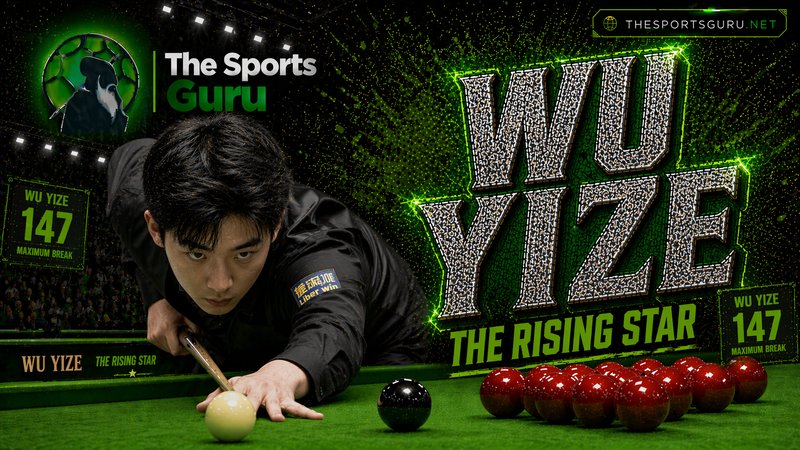
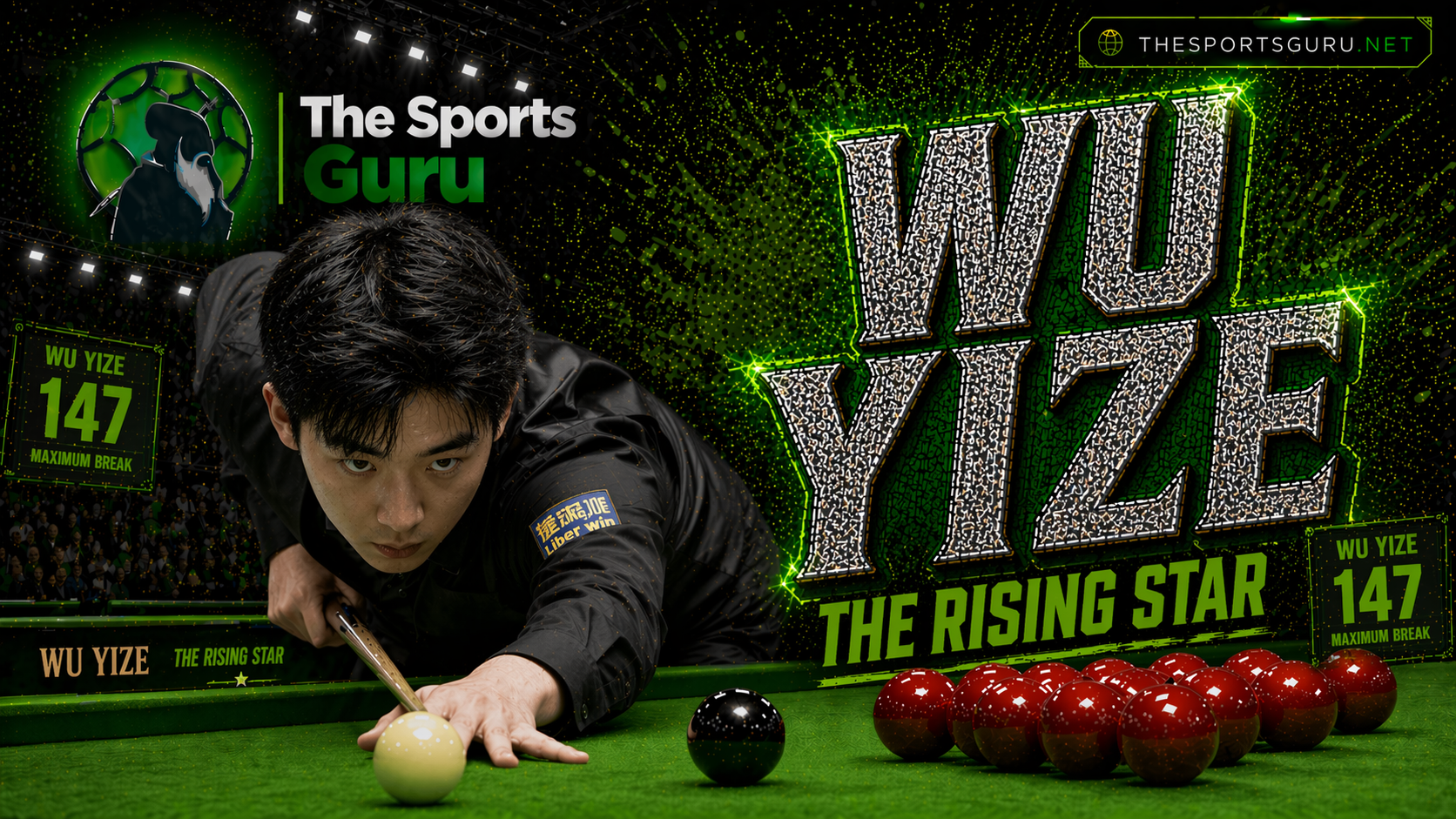
This piece goes beyond the scoreline to examine what Wu Yize's victory truly represents: a generational shift in world snooker, the remarkable swings of a final that refused to settle, and what the result means for the sport's rapidly expanding Chinese fanbase. We also place Wu's achievement in its proper historical context alongside the sport's all-time greats.
There are moments in sport when you can feel the weight of the occasion pressing down on everyone in the room. At the Crucible on Monday evening, that weight landed squarely on a 22-year-old from China, and Wu Yize absorbed it, redirected it, and turned it into an 85-point break that ended one of the most relentlessly contested World Snooker Championship finals in recent memory. The final score read 18-17 in Wu's favour, but the bare numbers barely hint at the scale of what unfolded across those 35 frames.
What made this final so gripping was not simply its closeness, but the way both players kept finding new reserves of determination after appearing spent. Wu had been ahead for much of the match, only to be repeatedly dragged back to parity by a Shaun Murphy who refused to concede anything. The match levelled at 15-15, 16-16 and 17-17 before a single deciding frame settled everything. This was not a champion who coasted to the title. This was a champion who earned it, frame by gruelling frame.
Wu had entered Monday's final two sessions holding a 10-7 lead, built on the strength of Sunday's opening two sessions. That cushion looked reassuring. What followed in the afternoon was anything but. Murphy swept through the first five frames of the day, compiling breaks of 76, 52, 59 and 60 as he punished every mistake Wu offered and suddenly led 12-10. For a player as young and inexperienced in a final as Wu, that kind of swing could have been terminal. It was not.
The Afternoon Collapse and the Response That Defined the Title
The three frames Wu took at the end of the afternoon session told you a great deal about the kind of player he is. Murphy was allowed just six points across that entire stretch, while Wu accumulated 287 of his own, threading in breaks of 64 and 61 along the way. It was clinical, composed and, given the circumstances, quite extraordinary. What is particularly telling is that Wu did not simply wait for Murphy to miss: he imposed himself on each frame from the outset, dictating the pace in a way that older, more experienced finalists sometimes struggle to do when trying to claw back a deficit. From 12-10 down, Wu had swung the match back to 13-12 in his favour before the evening session even began.
That momentum carried into the evening. Wu claimed the first frame of the final session to make it four consecutive frames won and extend his lead to 14-12. It looked, briefly, like the match might be nearing its conclusion. Murphy had other ideas. He levelled at 15-15, then again at 16-16 and 17-17, each equaliser landing like a fresh challenge that Wu had to meet head-on. The pattern was relentless: Wu pulls clear, Murphy reels him back in. By the time the 35th frame was reached, both players were operating on pure nerve.
The penultimate frame had offered Wu the chance to close it out a frame early. He missed a black off its spot that would have sealed the title. Murphy, characteristically, made no such gift of it: he cleared and forced the decider. It was a pivotal moment and one that could easily have cracked a less resilient competitor. Instead, when Murphy had the first chance in the final frame and could not convert, Wu stepped in and compiled his match-winning break of 85. The Crucible, which had spent two weeks growing attached to this young Chinese talent, erupted.
A Name in the History Books, Right Beside Hendry
Wu Yize is now the second-youngest World Snooker Champion in the sport's history. Only Stephen Hendry, who was 21 when he lifted the first of his seven world titles in 1990, claimed the prize at a younger age. That is the company Wu now keeps, and the comparison is not merely a journalistic convenience. Hendry's 1990 win announced a player who would go on to dominate the sport for the better part of a decade. Whether Wu fulfils a similar trajectory remains to be seen, but the natural talent, the attacking instinct, and the mental composure he displayed this fortnight suggest the foundations are firmly in place.
There is also a broader historical dimension to Wu's victory. He follows Zhao Xintong as the second consecutive world champion from China, cementing a shift in snooker's centre of gravity that has been building for years. Chinese players have been rising through the rankings with increasing speed, supported by a domestic fanbase whose enthusiasm for the sport has grown considerably. Winning back-to-back world titles is not an accident of the draw or a fortunate run of form. It reflects the depth that Chinese snooker now possesses and the quality of the academies and coaching structures producing players capable of competing with, and now defeating, the best that Britain and the rest of the world can offer. The significance of that depth is worth stressing: Zhao and Wu are not outliers produced by a single exceptional talent pathway; they represent the leading edge of a generation that has come through together.
The crowd reaction to Wu's victory illustrated something that cannot be manufactured. Chants of "Wuuuuu" rolled around the Crucible throughout the fortnight, and Wu himself initially misread what he was hearing. "At the beginning, I had a misunderstanding," he said through a translator. "I thought people were booing me. But then the staff told me they were cheering me on." It is a charming admission from a player who, for all his talent at the table, is navigating the experience of becoming a major sporting figure in a country not his own. The Crucible crowd, famously hard to win over, had clearly taken him to their hearts long before he potted the winning ball.
Murphy's 21-Year Wait and a Gracious Defeat
For Shaun Murphy, this was a painful loss but one delivered with considerable grace. Murphy was himself 22, three months older than Wu, when he won his only world title 21 years ago. He knows better than most what this moment means for a young player, and to his credit he said so plainly. Earlier in the season, after a match against Wu in China that Murphy won, he had spoken publicly about the young Chinese player's potential. "I hate being right," he said after Monday's defeat. "Some time earlier in the season we had a great game out in China, which somehow I managed to win, and I came out afterwards and said he will be world champion one day. It's just a real shame it was today."
That quote carries the dual weight of a man who can both recognise greatness and feel its sting acutely. Murphy's performance across the final was, by any reasonable measure, outstanding. He fought from 7-10 down to lead 12-10, pulled level four times in the evening session, and pushed the match to the final frame before his challenge finally ended. "I couldn't have given it any more," he said. "I couldn't have tried any harder. I can't do any more than that." There is no argument to be made against that. Murphy gave everything and it still was not quite enough, which says as much about Wu's quality as it does about Murphy's effort.
Tactically, Murphy's approach in the afternoon session was astute. He identified early in Monday's play that Wu was making errors under the specific pressure of the occasion, and he capitalised with a series of breaks that required him to play to his own strengths rather than simply reacting to his opponent. The breaks of 76, 52, 59 and 60 were not flukes: they were the product of a player who has spent two decades learning how to take a match by the scruff of the neck. Crucially, each of those breaks was constructed with the kind of positional discipline that limits an opponent's opportunities to get back to the table, a trademark of Murphy's game at its best. The problem for Murphy was that Wu found the same ability to impose himself when it mattered most.
What Attacking Snooker Just Won
One of the most striking aspects of Wu's campaign at the Crucible was the style in which he played. His attacking approach, the willingness to commit to shots that carry risk, became his signature over the fortnight and drew the crowd to him early. It is a style that is not always associated with winning world titles, where patience and safety play often grind down opponents over the course of a 35-frame match. Wu demonstrated that it is possible to maintain attacking intent across the full duration of such a marathon without it becoming a liability, provided the talent and decision-making underneath it are sufficiently refined.
That is a genuinely encouraging development for the broader health of the sport. World Snooker Championship finals can occasionally become attritional affairs where safety play dominates and the excitement is concentrated in relatively short bursts. This final was different. Both players contributed to a match that felt alive throughout, with the momentum shifting multiple times across all four sessions. Wu's breaks of 64 and 61 in the crucial late-afternoon sequence, and his decisive 85 in the final frame, were constructed under conditions of intense pressure. Scoring under that kind of stress is a different skill from scoring in a routine frame, and Wu passed every test the occasion set him.
Verdict: A Champion Built for the Long Term
Wu Yize is 22 years old and is now a world champion. The arithmetic alone is startling. But what separates the players who win world titles young and build on them from those who win once and never quite reach those heights again is what comes next: the ability to learn, to adapt and to handle the expectations that a world title inevitably creates. On the evidence of this fortnight, Wu has the character and the shot-making to back up his ambitions. He was tested in every conceivable way across this final and found an answer each time it mattered.
For snooker, this result continues a period of genuine change at the sport's summit. Two consecutive world champions from China, the youngest generation of talent pushing through at the top of the rankings, and a final that kept 35 frames of an audience gripped: these are not bad problems for a sport to have. Wu Yize did not simply win the 2026 World Snooker Championship. He announced himself as the player around whom the sport's next chapter is likely to be written. Whether or not that prediction proves as accurate as Murphy's own forecast, made earlier this season on the other side of the world, is a story that will take years to tell. But the opening chapter, at least, has been written with considerable authority.
Frequently Asked Questions
Murphy levelled at 15-15, 16-16 and 17-17 by refusing to concede momentum whenever Wu threatened to pull clear. His most decisive response came after trailing 12-10, when he had punished Wu's errors with breaks of 76, 52, 59 and 60 during a five-frame run in the afternoon session to seize the lead.
Wu won the final three frames of the afternoon session, conceding just six points across that stretch while accumulating 287 of his own, including breaks of 64 and 61. Rather than waiting for Murphy to falter, Wu imposed himself from the outset of each frame, swinging the match back to 13-12 in his favour before the evening session began.
Wu had the opportunity to claim the title one frame early but missed the black off its spot, which would have sealed the championship. Murphy took full advantage, clearing the table to force a 35th and deciding frame, making it one of the most pressurised moments of the entire match for Wu.
Murphy had the first opportunity in the final frame but could not convert it. Wu stepped in and compiled a break of 85 to win the frame and the match 18-17, bringing the two-week Crucible contest to a close in his favour.
Wu began Monday holding a 10-7 lead built across Sunday's opening two sessions. That advantage was wiped out during the afternoon when Murphy won five consecutive frames, demonstrating that no cushion in this final was ever truly secure and that Wu would ultimately have to win the title outright under sustained pressure rather than managing a comfortable margin.
Sources: Reporting draws on coverage of the 2026 World Snooker Championship final at the Crucible, Sheffield, with historical statistics and records verified against official World Snooker sources.