 The Sports Guru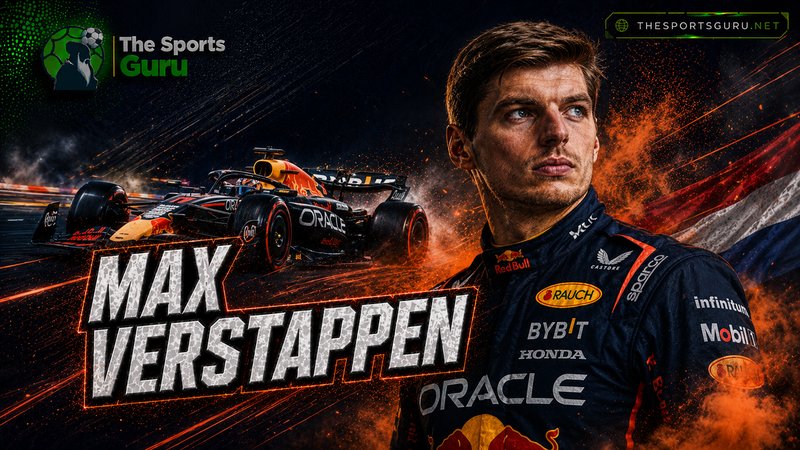
Red Bull began 2026 well adrift of Mercedes, yet Max Verstappen now holds pole at Sepang. This article explains how a new floor changed the picture, why the heat makes Sunday's Bahrain Grand Prix in Malaysia so hard to call, and where Mercedes' own update leaves the title fight.
For much of 2026 Red Bull were the team doing the chasing. At Sepang on Saturday the roles flipped. Max Verstappen claimed his first pole of the season, with Lewis Hamilton alongside him in second, nearly 0.3 seconds slower in qualifying. Hamilton's ambition for Sunday was modest: to "just try my best to hold on to him tomorrow". Red Bull's car was, on average, more than 0.5secs a lap slower than Mercedes across the first half of the season, so pole at Sepang marks a big swing.
A pole that needed explaining
The numbers look strange at first glance. Verstappen finished within two points of a fifth world title last year after a fightback the BBC's Andrew Benson ranks among the greatest ever seen, yet he arrived in October with no pole to his name in 2026. Formula 1 has come back to Sepang for the first time since 2017, and Verstappen has set the standard all weekend.
A personal storyline ran in parallel. While Red Bull lacked speed, there were doubts about whether Verstappen would remain for 2027, and McLaren pursued him. During the summer break he agreed a two-year contract extension, saying he believed in the Red Bull project and was happy to put in the work to fix things. This pole is the first visible payback for that decision.
What the floor changed
Verstappen reached Malaysia on a run of three consecutive podium finishes. Red Bull also carried an upgrade built around a new floor, which had put them within less than 0.2secs of winning in Baku the previous Sunday. Benson's view is that in the tropical heat, through the long, demanding corners of a circuit with perhaps the roughest asphalt of the year, the package has "more than proved its worth".
Verstappen's own explanation is straightforward. The parts added to the car have worked, he said, and that brings lap time and better overall balance. With tyres so sensitive to balance, that in turn gives still more speed. When it is very hot, he added, drivers want a stable, connected feel, and Red Bull have found a little bit more of it lately.
That is the analytical core of the weekend. A floor that helped in Baku and looks better again at Sepang hints that the gain is not tied to one kind of circuit, although two data points do not make a trend. What we can say is that the improvement is showing where the tyres suffer most, and that is where Sunday will be decided.
Hadjar feels the difference
The clearest view from inside the Red Bull garage belongs to Isack Hadjar. He sat out the first three races after the summer break with a wrist broken while boxing as part of his training programme. Back in Baku, he said, he "jumped in a car that's way better" than the one he left in Budapest. After three races away, the contrast was sharper than if he had stayed in the car, and he called the last two weekends surprising.
Hadjar qualified third at Sepang but will start eighth, penalised for using more engine parts than permitted. It is a costly slip for a driver who had just shown the pace of the car, and it takes a potential second Red Bull out of the leading pack. Verstappen will have no team-mate close by to help with strategy or to hold up rivals.
Heat, tyres and the shape of the race
Benson expects tyre degradation to dominate in stifling temperatures, whether or not the threatened rain stays away. The abrasive surface is punishing the rubber and, he notes, sharply reducing how many useful laps teams can complete on set-up work. That suits a car that turned up with good balance over one still hunting for it.
Antonelli sees the race similarly. Track position and strategy will matter, he said, and stopping first to gain time on a rival running fresh tyres, the undercut, is incredibly powerful. He would not rule out two stops or three, conceding "we don't know", and predicted it would be "roasting hot out there". Analytically, that uncertainty is Verstappen's chief danger: even the pole-sitter with the best balance can be jumped if rivals pit earlier and his tyres fade.
Mercedes: strong in fast corners, short elsewhere
Kimi Antonelli, who leads the world championship, qualified fourth, which becomes third on the grid once Hadjar's penalty applies. Benson says he fell slightly short because an unusual tyre strategy was combined with a mistake on an early run, and that he can normally be counted on to figure in the race.
The bigger question concerns the aerodynamic upgrade Mercedes introduced this weekend. Benson reports that they have fallen behind in development this year, seemingly in part because they spent heavily early on. It is their first major update since the Canadian Grand Prix in June, and it has not yet delivered the improvement they wanted. The open issue is whether the parts are to blame or the unusual conditions of the weekend.
Antonelli's account points to a mixed picture. With the new package the car's operating window has shifted, he said, and the team is working out where performance peaks. Mercedes were very quick in high-speed corners but lacked pace in low-speed ones, and they need to find out why. That is a diagnosis rather than a verdict.
Russell's awkward Sunday
George Russell won in Baku, but his momentum has stalled. He is 66 points behind Antonelli in the standings, starts four places further back than the Italian, and Benson describes him as somewhat perplexed by his own and the team's shortage of pace. According to Benson, Antonelli's priority is protecting his margin over his team-mate.
That creates an uncomfortable puzzle for Mercedes. If the package is at fault, both cars carry the problem. If the conditions are responsible, Russell's Baku victory suggests the car can still perform elsewhere.
What Sunday has to answer
Hamilton lines up next to Verstappen, matching his best grid slot of the year, and the pairing recalls their no-holds-barred title fight five years ago. His own comments show he does not expect to match Verstappen's speed. The more realistic contest may lie behind them, where Hamilton, Antonelli and Russell are split by strategy, tyre wear and how well each team understands its new parts.
The real examination of Red Bull's upgrade is not Saturday's pole but whether Verstappen's balance survives a long, hot stint on a punishing surface. If it does, the story of 2026 may owe less to who started fastest than to who kept developing.
Frequently Asked Questions
Max Verstappen took pole at Sepang, his first of 2026. Lewis Hamilton qualified second, nearly 0.3 seconds slower.
They brought an upgrade centred on a new floor. In Baku the previous Sunday it had put them within less than 0.2secs of victory.
Hadjar qualified third but starts eighth after a grid penalty for exceeding his permitted number of engine parts.
Not yet as hoped. It is their first big update since the Canadian Grand Prix, and it has not delivered the step they expected. Antonelli said it was strong in high-speed corners but lacking in low-speed ones.
Russell trails his Mercedes team-mate by 66 points.
Research: This article uses the archived evidence supplied for this story. Story inspiration: BBC Sport's original report.