 The Sports Guru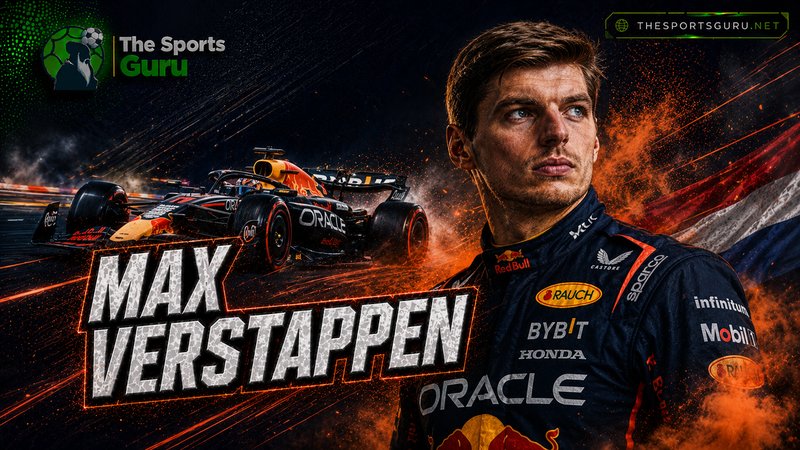
Max Verstappen won at Sepang, but the result sits awkwardly beside a start that the rulebook did not cover. This article explains why the win, the title implications and Lewis Hamilton's recovery all trace back to decisions made before the racing began, and what remains unresolved heading to Singapore.
Max Verstappen gave Red Bull their first victory of 2026 at Sepang, yet the most consequential calls of the day arrived before any proper racing: a software fault that had cars barely moving, a scrambled grid and a rulebook silent on both. Once the race settled, the winner was never in doubt. Nearly everything else about the Bahrain Grand Prix in Malaysia was.
Verstappen's win was the tidy part
The Dutchman launched on intermediate tyres, with the circuit still soaked after a torrential tropical downpour, and the opening seconds went against him. He and Lewis Hamilton shared the front row, but both lost places immediately as Mercedes drivers Kimi Antonelli and George Russell took first and second.
On lap six Verstappen got back past Russell, then closed on Antonelli just as a safety car came out on lap nine so marshals could clear Valtteri Bottas's Cadillac, which had spun at Turn 13. Under that neutralisation the leaders swapped to slicks. Once racing resumed, four laps later, Verstappen took Antonelli at Turn Four, and Russell also got ahead of the Italian on the corner exit.
After that he pulled away and ran his own race. A second safety car, triggered by Alex Albon's stopped Williams, put everyone on fresh tyres for a four-lap sprint, and Verstappen again went unchallenged. He has now won 72 F1 races, and he already owns four world titles.
What stands out is the car behind it. BBC Sport's picture caption credits the team's "homemade" power train for the result. Whether that marks a lasting turnaround is a judgement call, not something the afternoon proved. One race in odd conditions is a thin sample, and it would be premature to call it a settled recovery.
Hamilton turned a bad tyre call into a podium
Hamilton's day began badly. He picked soft slicks for a start on a surface far too wet for them, and he and the other drivers who gambled the same way fell straight to the back. Within a few laps he sat 17th, almost a minute adrift, and his afternoon looked finished.
Yet tyre strategy rarely ends on lap one. He stayed on track under the safety car rather than pitting, kept his starting softs, and once the racing resumed he began working through traffic. By lap 24 he had reached the rear of Isack Hadjar's fourth-placed Red Bull.
The pair made their stops together on lap 31. Hadjar kept to softs, while Hamilton had to fit mediums. For many laps afterwards he sat right behind the Frenchman, trying repeatedly without finding a way through. The late safety car changed that, since it allowed Hamilton to move onto his favoured softs, and one lap after the restart he swept past Hadjar into Turn One to take third. Charles Leclerc also got by Hadjar near the end, giving Ferrari third and fourth.
It pays to separate the two halves of this. The climb through the field after the first safety car was Hamilton's own doing. The podium itself needed a second neutralisation to supply fresh rubber and a restart. A driver who falls almost a minute back and still ends up third has shown real racecraft, though he also needed the day to give him a late opening.
Antonelli's lead is huge, but the title is not yet his
Mercedes held the front two positions for much of the early running, then finished with one car second and the other parked. Antonelli passed Russell at Turn Four on lap 21, which appeared to fix the order of the top three. Then Russell stopped just before Turn One with a power unit failure, five laps from the end and before the late safety car period had finished.
The championship arithmetic is striking. Antonelli now leads Russell by 84 points with six or seven races to go. Both the gap and the uncertainty over the races left come from BBC Sport, so any clinch date would be speculation. What the report does say is that the breakdown effectively ended Russell's already faint title hopes, and its caption says the failure "almost certainly" ended a fight many expected him to win this year. Antonelli, it says, took a giant leap towards a first title, which is not the same as winning it.
That distinction matters, because hedged language is easily flattened into a verdict. Antonelli still has work to do. An 84-point cushion with six or seven rounds left is big, but the report stops short of calling the contest over, and so does this article.
The start is the unanswered question
Heavy rain, followed by a string of odd technical troubles, pushed the start back by an hour and a half. The formation laps began behind the safety car, and problems surfaced at once. Verstappen and Hamilton were among the first of several drivers whose cars were hit by a software fault, leaving them creeping round.
The FIA blamed a mix of the weather, low speed, the mandatory wet-weather energy management settings and the track layout. During the hold-up it released a software update that lifted the constraint on energy limits so teams could cure the fault. Most affected teams got moving again, but the field was out of sequence, and argument followed over where the cars should line up for the restart.
BBC Sport calls the situation unprecedented and says the rules did not cover it. They do prescribe positional penalties for a driver who fails to recover a place lost on a formation lap by a certain point on the circuit, but that provision was set aside when the grid was reformed in its original order. The FIA took some time to settle on that decision.
Here the analysis has to stay disciplined. Nothing in the archived material says anyone gained or lost from the choice, and it offers no motive. What it does show is that Verstappen and Hamilton, two of the early victims of the fault, started from the front row and were overtaken by both Mercedes cars almost immediately. Restarting in the original order did not alter who won. It does expose a gap in how the FIA handles a formation lap that goes wrong, and BBC Sport lists questions over race organisation, especially the start, among the afternoon's key stories.
Smaller stories that still count
Elsewhere, the midfield had its own scare. After Russell stopped, Lando Norris seemed to be distracted by the Mercedes and had to use the gravel at Turn One to avoid hitting team-mate Oscar Piastri. He fell from eighth to 11th, then climbed back to ninth, just behind Fernando Alonso. Piastri took sixth after what BBC Sport describes as a dispiriting weekend for McLaren.
Alonso's eighth place was only the third time Aston Martin have scored this year, and it came with their best showing of the season. Liam Lawson was seventh for Racing Bulls, while team-mate Arvid Lindblad rounded out the top 10.
The backdrop was unusual as well. Malaysian fans got their first race since 2017 because Bahrain paid to stage it at Sepang after unrest in the Middle East. Per the report, the day started pleasantly before the rain arrived. The event carried the Bahrain name but belonged to a circuit with its own history.
What comes next
A gruelling triple-header that began in Azerbaijan and passed through Malaysia ends in Singapore on Sunday 11 Oct. It is another night race in hot, humid conditions, so there is no easing off for the teams. Whether the FIA tackles the formation-lap gap before then is not something the archived material answers, and any rules clarification will be worth watching for.
Frequently Asked Questions
Max Verstappen won for Red Bull, ahead of Kimi Antonelli's Mercedes. Lewis Hamilton finished third for Ferrari, with team-mate Charles Leclerc fourth.
Heavy rain started the hold-up, and technical trouble on the formation laps extended it to an hour and a half. The FIA pointed to the weather, low speed, wet-weather energy management settings and the circuit layout, and released an update to cure the fault.
Antonelli took second and now leads Russell by 84 points with six or seven races left. Russell stopped from third place with a power unit failure, five laps from the end.
He began on soft slicks on a wet track and dropped to 17th, almost a minute back. He worked through the field, then passed Hadjar for third one lap after the late restart, once the safety car let him go back to softs.
Research: This article uses the archived evidence supplied for this story. Story inspiration: BBC Sport's original report.